先天性心脏病患儿的多媒体宣教研究
2015-08-07李晓静郑彬彬马红等
李晓静 郑彬彬 马红等
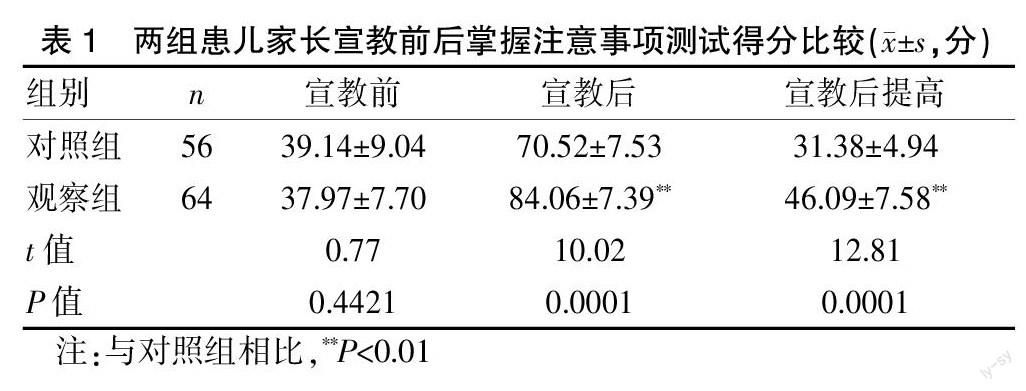
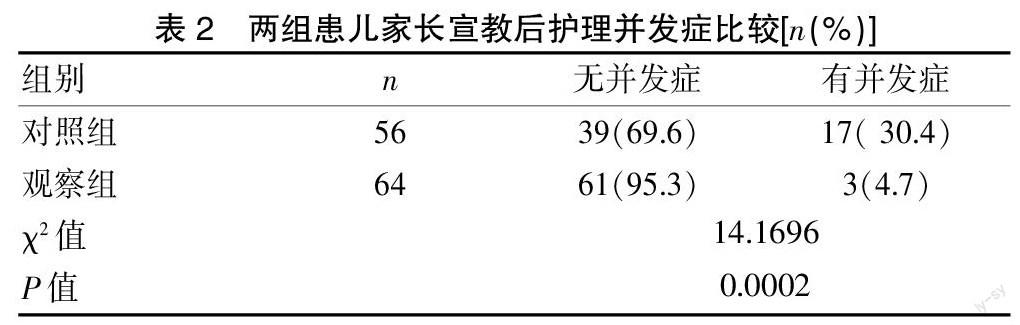
[摘要] 目的 研究多媒体健康宣教对先天性心脏病婴幼患儿术后护理的影响。 方法 将120例先天性心脏病婴幼患儿随机分为对照组56例和观察组64例。对照组由护士进行常规的术后口头宣教,观察组让家属观看制作的“先天性心脏病患儿的术后护理”宣教视频短片,两组患儿在宣教后进行相应的护理。比较两组测试评分和患儿术后护理并发症的发生率。 结果 两组家属宣教后测试比较,观察组的宣教后测试评分明显高于对照组(P<0.01),护理并发症明显减少(P<0.01)。 结论 多媒体健康教育宣教效果显著,明显提高了健康宣教的效果,从而提高了先天性心脏病婴幼患儿术后的护理质量,减少并发症的发生。
[关键词] 多媒体宣教;先天性心脏病;护理
[中图分类号] R193;R654.2 [文献标识码] B [文章编号] 1673-9701(2015)21-0127-03
[Abstract] Objective To observe the effect of multimedia education on congential heart disease children of nursing. Methods All 120 patients were divided into the control group (56 cases) and the multimedial group (64 cases) randomhy. In the multimedial group, nursing for postoperative children with congenital disease CD was used for guidance while the control group was guided by traditional oral health guidance, the appropriate nursing countermeasures for all cases after guidance. The test score and the nursing incidence of postoperative complications were compared. Results Test score of multimedial group were significant higher than those in the control group after guidance(P<0.01), the nursing complications of mulitimedial group were significantly lower than those in the control group after guidance(P<0.01). Conclusion Multimedia health education can significantly improve the patient's education effect, improve nursing quality in patients with congenital heart disease and reduce complications.
[Key words] Multimedia; Congenital heart disease; Nursing
我国每年约有15 万例先天性心脏病新生儿出生,发病率约为0.4%~1.2%,其中1/3 属于重症或复杂型先天性心脏病[1]。复杂型先天性心脏病手术患儿因术中创伤、心脏肿胀,术后极易出现心功能不全。先天性心脏病患儿术后血流动力学不稳定,术后97%以上的患儿均有不同程度的心肺功能不全。近年来,由于婴幼儿心胸外科手术增多[2],因此术后护理难度增大,护理任务加重。因而在普通病房,家属的护理配合非常重要,尤其是有效地接受患儿术后护理知识的健康宣教。合理有效的健康宣教及护理对改善先心患儿的心脏功能以及术后生活质量有着重要意义。日常模式的术后护理宣教以口头宣教为主,家属很难牢记宣教内容。为了让家属更好地配合医护人员,我院现改用多媒体宣教的方法,可明显提高先心患儿术后的宣教效果,提高护理质量,现报道如下。……
