相对剥夺视角下的权力腐败研究
2015-06-04于铁山
于铁山
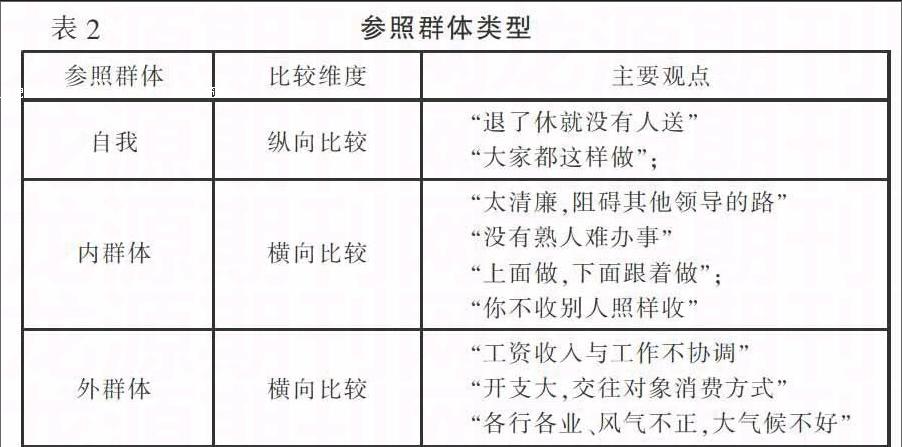
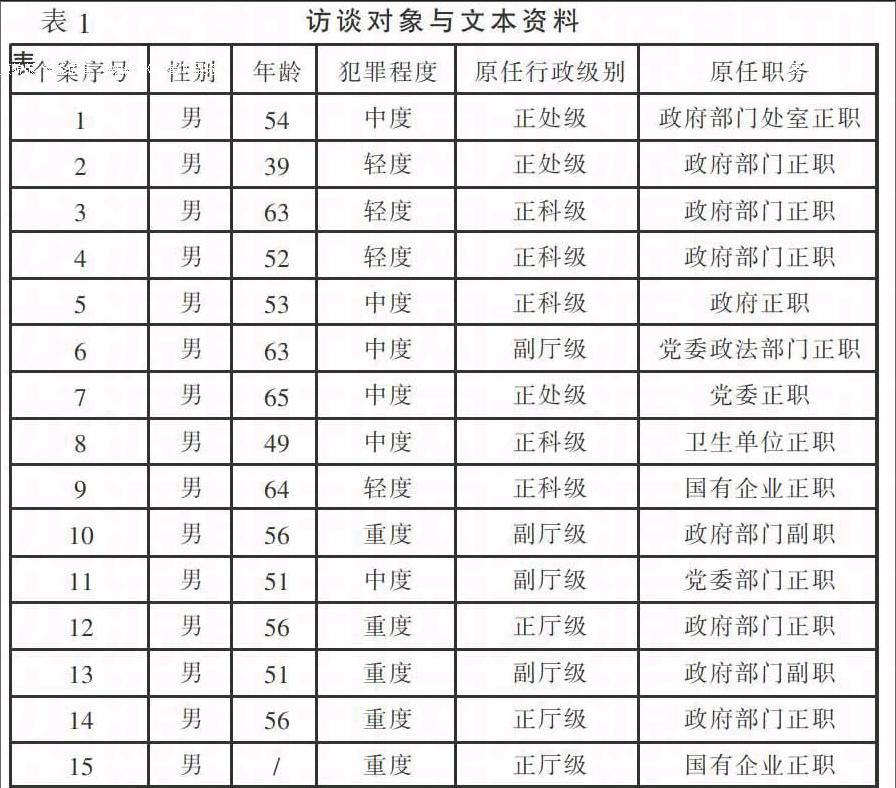
摘 要: 基于相对剥夺理论为研究视角,以对广东15个腐败个案的深入访谈,进而探讨权力腐败的社会成因。研究发现,权力腐败中的相对剥夺参照系可概括为三个方面:自我比较、内群体比较与外群体比较。前者属于纵向比较,后两者属于横向比较。当前权力腐败中相对剥夺感的出现既有深厚的历史与文化根源,也与社会转型带来的社会结构的分化有关。探寻相对剥夺感有助于发现权力腐败的再生产机制。
关键词: 权力腐败; 相对剥夺感; 个案研究
中图分类号: C913.5 文献标识码: A DOI:10.13411/j.cnki.sxsx.2015.02.022
Abstract: Based on the relative deprivation theory as the research angle of view, interviewing Guangdong 15 corruption cases explores the social causes of corruption. It was found out that the relative deprivation of power corruption can be classified into three aspects: self comparison, comparison of inner group and comparison of outer group. The former belongs to the longitudinal comparison, the latter belonging to the horizontal comparison. The relative deprivation of the current power corruption dates from historical and cultural roots, as well as the differentiation of social structure and social transformation. This paper intends to explore the reproduction mechanism to make use of relative deprivation to find power corruption.
Key words: authority corruption; relative deprivation; case study
一、问题的缘起
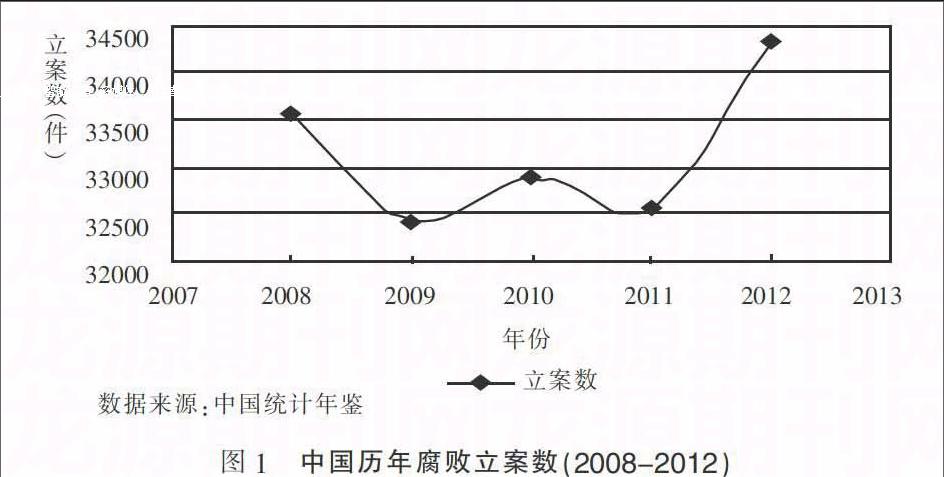
众所周知,腐败的基本涵义是指追求私人利益而滥用公共角色或资源。[1]12第17届国际刑法学大会从法律层面认为腐败是指“任何公职人员在任何时候,以实际的或者潜在的行使或者不行使公职人员的职能为交换条件,为自己、他人或者任何机构索要、同意接受或者接受不论何种性质的不正当利益”。据统计,中国官方报道的传统腐败现象多达80余种,近年来则陆续出现了一些新的腐败形式。[2]179-231权力腐败一般而言包括四个方面的因素,分别是权力腐败的主体,权力腐败的动机,权力腐败的手段与权力腐败的后果。[3]4笔者着眼于权力腐败的动机,探讨权力腐败的发生机制。从腐败的总体情况而言, 近年来我国的腐败立案数不断上升(见图1)。据中国统计年鉴显示,2012年全国共立案腐败案件34326起,深入研究腐败问题具有重要的理论与现实意义。
二、文献述评与研究假设