黑人女歌手高唱苗语歌
2013-08-01
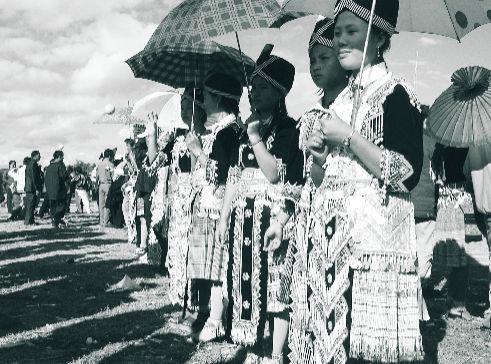
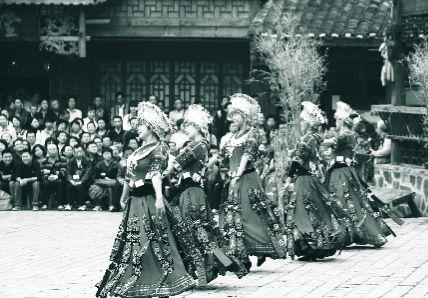
Michel Martin (Host): Now wed like to introduce you to an 1)up-and-coming singer who is using her voice to cross boundaries of language and culture. Jasmine Tierra is African-American. She grew up singing 2)gospel music, but thats not where shes making her mark now. She has become a YouTube sensation by singing in 3)Hmong. Thats the language of an Asian ethnic group that traces its roots to regions of China, Vietnam, Laos and Thailand. Heres “Raise Your Head High” from Jasmine Tierras 4)debut album which is titled “One Step at a Time”.
(Soundbite of song, “Raise Your Head High”)
Martin: Jasmine Tierra, in fact, has been singing and writing songs in the Hmong language for years, winning fans and even competitions in Hmong music. She even performed at the First Annual Hmong Music Awards. And she is with us now to tell us more. When you first heard the Hmong language can you describe it for me?
Jasmine Tierra: It sounds like a melody. When they speak they use different tonations for each word.
Martin: And how did you first get interested in the culture?
I understand that you had moved around a lot when you were growing up, but that you settled—your family settled in the St. Paul area?
Tierra: I attended Arlington High School in St. Paul, Minnesota, and the population was 57 percent Hmong. I befriended a girl named Panyia Kong. And shes a really excellent singer, as well. Shes Hmong. And she gave me some of her albums—her Christian Hmong albums. At first it started off with me just listening to the CDs, and then I would come back and then she would start singing one of the songs, and then I would join in with my broken Hmong.
Martin: How did you get the idea of actually try to master enough to sing at a Hmong music festival?
Tierra: Ive always had a lot of 5)guts growing up. So my friends, my Hmong friends, they told me that, you know, they would let me know their opinions on how they thought I sounded when I sung Hmong songs. Thats what took me to the competitions, was just hearing them say hey, yeah, you know, youre pretty good. And I just wanted to test my own self and I got on stage in front of thousands of Hmong families. Everyone was pretty shocked at the first Hmong New Year event that I performed for. I even saw people cry tears of joy.
Martin: Really? Wow. Are any of the songs on the album songs that youve sung in competition or these are all songs that you wrote?
Tierra: All songs that I wrote. None were sung at the competition.
Martin: Oh, OK. So lets just pick the title track then, “One Step at a Time.”
(Soundbite of song, “One Step at a Time”)
Martin: What was the inspiration for this song? And why did you decide to make it the 6)title track?
Tierra: The inspiration was my grandmother. All of my life growing up, she would just say things to me, if she sees me trying to rush to a certain goal, she would just say, hey, you know, take it one step at a time. Thats what I wrote this song off of because its true, you know? In every aspect of your life, you really do need to take it one step at a time, whether youre trying to reach your goal, youre falling in love. You know you have to first crawl before you walk.
Martin: Speaking of crawl before you walk, you then decided to make a whole album out of songs in Hmong and English. How did that idea come about?
Tierra: You know, at first I told myself I was only going to do one. And I dont know how it turned out to be 12. But it started off with me just challenging myself. I, you know, this is something I never thought I would do, and why not just go ahead and take it all the way and see what happens.
Martin: Do you think theres something that people find particularly 7)intriguing about the fact that you are AfricanAmerican and singing in Hmong, as opposed to somebody else?
Tierra: I believe so. Ive even heard, because there are a lot of 8)Caucasian Mormon Americans who speak Hmong in Minnesota. So and Ive heard the elder Hmong speak and say that its, you know, its different to see an African-American speaking their language because theyre used to seeing, you know, the Mormon American Caucasians speaking their language. But I mean Im not the only African-American that speaks in Hmong there, but they find it more interesting.
Martin: Well, I was noticing that on the YouTube, on some of your YouTube videos—which are posted, both of your live performances and also videos attached to the, in support of the album—for the most part the comments are very positive which is what, she speaks Hmong better than I do, you know? And, or she speaks Hmong than a lot of our kids do. She is to be congratulated. And people literally saying Im crying, Im crying tears of joy now. Why do you think it 9)evokes that, like tears? Im just, Im interested in that.
Tierra: There is a little bit of 10)controversy going on at the moment with them wanting their youth to speak in their language more. Because, you know, you come to America and you do tend to want to, you know, to blend and you do kind of lose roots just a little bit naturally. And I feel as if theyre happy to see someone want to embrace it and help them keep it 11)enforced. And I believe thats where most of the appreciation comes from.
Martin: Well, lets hear another song too, that theres another one about that whole question of mom and appreciating roots, for example, and its called “My Mother.”(Soundbite of song, “My Mother”)
Martin: I can see a lot of people crying at that song.
Tierra: Oh.
Martin: I mean I think that speaks to a lot of peoples feelings about their mom, whether theyre Hmong or not. I do wonder though, does anybody ever 12)give you the business and say, you know, who do you think you are singing this music, this is not yours?
Tierra: I mean I expected that. You know, Im doing something different, of course, everyone is not going to be with me 100 percent. And I look at this as an opportunity to maybe break down some racial walls. And I just love singing no matter what language its in.
米歇尔·马丁(主持人):现在我们来介绍一位崭露头角的歌手,她用歌声跨越了语言和文化的障碍。贾斯敏·蒂拉是非裔美国人,从小唱福音歌曲,但并非这种音乐使她取得了今天的骄人成绩,而是因为唱苗语歌而在YouTube引起了轰动。苗语是亚洲一个少数民族的语言,根源可以追溯到中国、越南、老挝和泰国的一些地区。下面我们来欣赏贾斯敏·蒂拉的首张专辑《一步一个脚印》里的歌曲《抬起你的头》。
(《抬起你的头》的音乐片段)
马丁:事实上,贾斯敏·蒂拉演唱和写苗语歌曲已经有几年时间,赢得了歌迷,并在苗语音乐比赛中获奖,甚至还在首届年度苗语音乐颁奖礼上献唱。她现在来到我们当中跟我们分享更多,当你第一次听到苗语的时候,描述一下你的感受是怎样的?
贾斯敏·蒂拉:那就像是悦耳的旋律,他们说话的时候每个字都用不同的语调。
马丁:你怎样开始对这种文化感兴趣的?我知道你在成长过程中频繁搬家,但后来你定下来了,你的家人就定居在圣保罗地区。
蒂拉:我在明尼苏达州圣保罗的阿灵顿高中读书,那里57%的人都是苗族。我跟一个名叫潘雅·孔(音译)的女孩做了朋友,她也是个很优秀的歌手,并且是苗族人,她给了我她的一些专辑——一些有关基督教的苗语专辑。刚开始我只是听听CD,回来听她唱其中某首歌,接着我也用蹩脚的苗语一起唱。
马丁:你是怎么想到确确实实尝试去掌握这门语言,并在苗语音乐节上演唱的?
蒂拉:我的成长总是充满着勇气,我的朋友,我的苗族朋友告诉我,你知道,当我唱苗语歌曲时,他们会就我的发音让我知道他们的意见和想法。……