糖尿病肾病中与铁死亡相关中枢基因的识别
2024-06-07赵升李文川董兰连容李玥娇何凤
赵升 李文川 董兰 连容 李玥娇 何凤
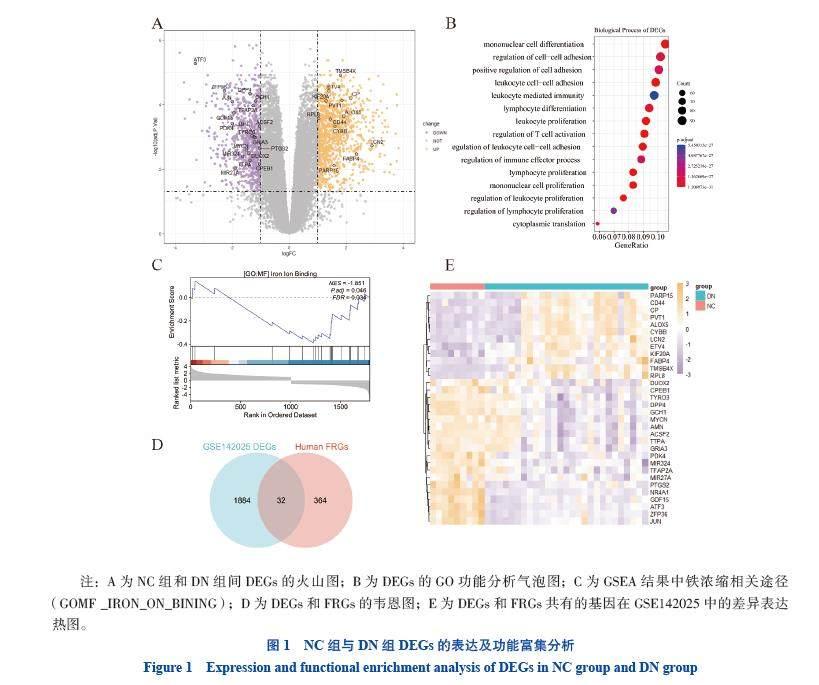
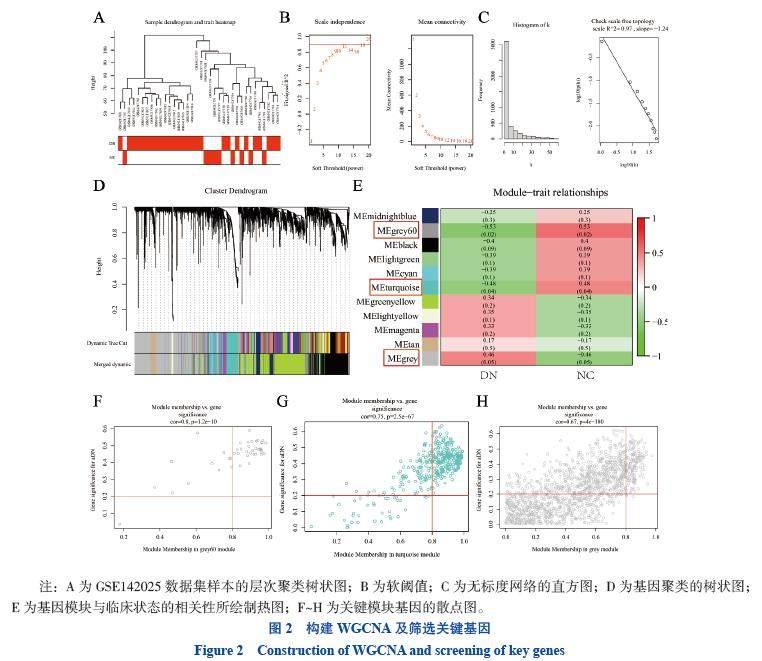
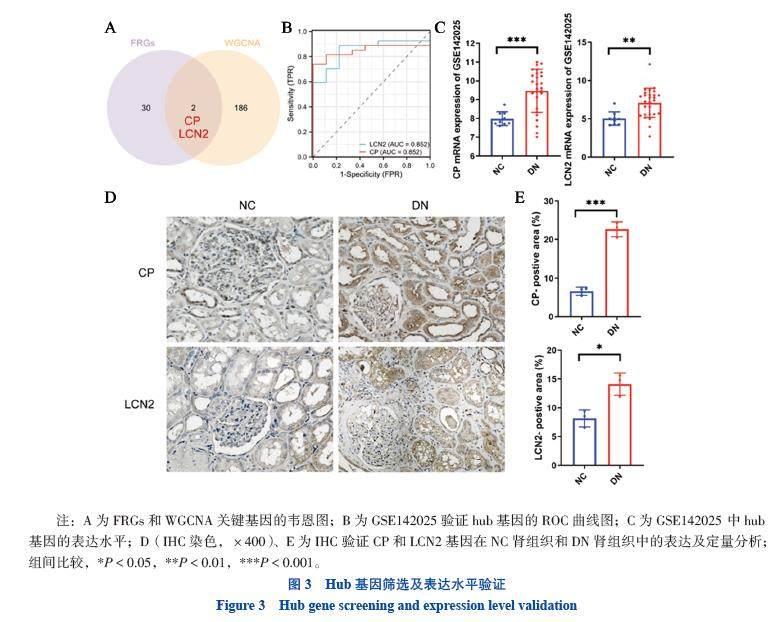
【摘要】目的 通过生物信息学分析,识别在糖尿病肾病(DN)进展中发挥重要作用的铁死亡相关基因,为DN的治疗提供新见解。方法 对RNA测序数据集GSE142025进行DN差异表达基因(DEGs)的分析和筛选,并进行了基因本体论(GO)功能注释和基因集富集分析(GSEA)。随后,构建加权基因共表达网络分析(WGCNA)来识别关键基因。通过韦恩图将DEGs和关键基因所共有的铁死亡相关基因(FRGs)确立为中枢(hub)基因。应用受试者操作特征(ROC)曲線验证hub基因的临床诊断价值,并采用免疫组织化学染色(IHC)法检测 hub 基因在3例 DN 患者及3例正常肾组织中的表达量。结果 在DN组和对照组(NC组)筛选出1 916个DEGs。GO功能富集分析显示,DEGs主要参与炎症相关的生物过程,GSEA分析提示DEGs在铁离子结合的生物过程中显著富集。WGCNA构建的12个共表达模块中,grey60、turquoise和grey模块与DN的相关性最高。根据筛选标准从3个模块中挑选出188个关键基因,其中与DEGs共有的FRGs有2个,分别为铜蓝蛋白(CP)基因和脂质运载蛋白-2(LCN2)基因。ROC曲线验证二者皆具有良好的临床诊断价值。IHC结果显示,2个基因在DN患者组织样本中表达均上调(P均< 0.05),与生物信息学的分析结果相一致。结论 CP和LCN2可能通过抑制肾组织中的铁死亡参与DN疾病的发展,可作为DN潜在的生物标志物和治疗的新靶点。
【关键词】糖尿病肾病;加权基因共表达网络分析;铁死亡;铜蓝蛋白;脂质运载蛋白-2
Characterization of hub genes associated with ferroptosis in diabetic nephropathy
ZHAO Sheng, LI Wenchuan, DONG Lan, LIAN Rong, LI Yuejiao, HE Feng
(Department of Nephrology, the Second Affiliated Hospital, School of Medicine, South China University of Technology,
Guangzhou 510180, China)
Corresponding author: HE Feng, E-mail: eyhefeng@scut.edu.cn
【Abstract】Objective To identify hub genes associated with ferroptosis in the progression of diabetic nephropathy (DN) through bioinformatics analysis, offering novel insights into DN treatment. Methods Differentially expressed genes (DEGs) in DN were screened using RNA sequencing dataset GSE142025, and Gene Ontology (GO) and Gene Set Enrichment Analysis (GSEA) were utilized for functional annotation. Subsequently, the Weighted Gene Co-expression Network Analysis (WGCNA)was conducted to pinpoint key genes. Venn diagrams aided in identifying hub genes among ferroptosis-related genes (FRGs) common to DEGs and key genes. ROC curves were employed to assess the clinical diagnostic potential of these hub genes. Immunohistochemistry (IHC)was conducted to detect the expression levels of hub genes in DN patients and normal kidney tissues. Results 1 916 DEGs were identified between the DN and control (NC) groups. GO enrichment analysis revealed that DEGs were mainly involved in inflammation-related biological processes. GSEA analysis found significant enrichment in processes related to iron ion binding. Among 12 co-expression modules constructed by WGCNA, grey60, turquoise, and grey modules showed the highest correlation with DN. 188 key genes were selected from 3 modules based on the screening criteria, among which 2 were FRGs shared by DEGs, namely ceruloplasmin (CP) gene and lipocalin-2 (LCN2) gene. ROC curves confirmed high clinical diagnostic value of these two genes. IHC results showed upregulated expression of both two genes in DN patient samples (both P < 0.05), consistent with the findings of bioinformatics analysis. Conclusion CP and LCN2 could be involved in the progression of DN by inhibiting ferroptosis, serving as promising biomarkers and treatment targets for DN.
【Key words】Diabetic nephropathy; WGCNA; Ferroptosis; Ceruloplasmin; Lipocalin-2
糖尿病肾病(DN)是糖尿病的微血管并发症之一,也是终末期肾病(ESRD)的主要原因[1-2]。尽管对糖尿病患者已有全面的医疗健康管理策略,但DN发病率仍呈逐年上升的趋势[3]。DN发病的机制涉及血流动力学的变化、代谢失衡以及炎症免疫等多重因素[4-7]。目前尚无有效延缓DN进展的特效药物,因此需要研究新的生物标志物来提高DN的早期诊断准确性,从而及时干预,延缓ESRD的发生。……