渭河陕西段沉积物中重金属污染综合评价
2021-12-17黄悦张风宝杨明义李玄添
黄悦 张风宝 杨明义 李玄添
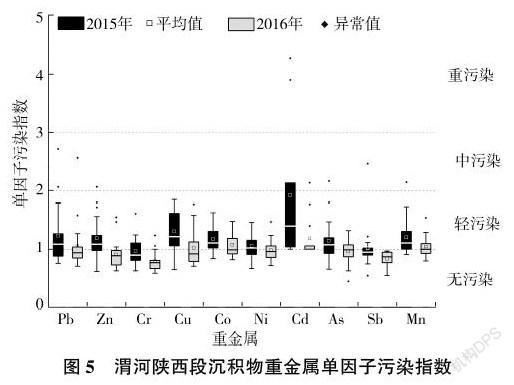
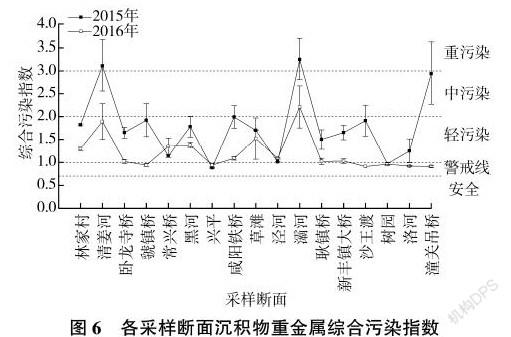
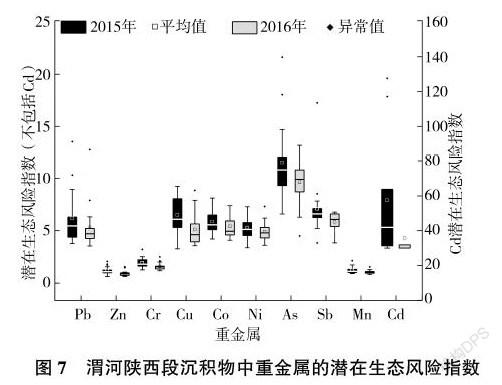
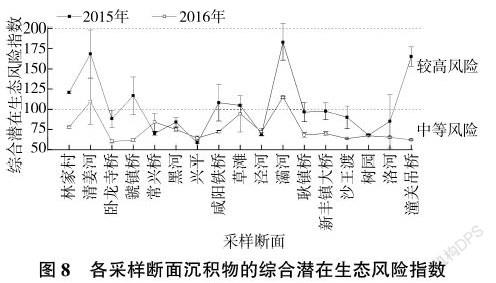
摘 要:为分析渭河陕西段沉积物中重金属的污染程度,对沉积物中10种重金属元素Pb、Zn、Cr、Cu、Co、Ni、Cd、As、Sb、Mn的含量进行分析,采用地累积指数、富集系数、污染负荷指数、内梅罗综合污染指数及潜在生态风险指数对沉积物中重金属污染进行综合评价,结果表明:2015年沉积物中除Cr外其他9种重金属均高出陕西土壤背景值1.49%~91.49%,Cd高出最多;2016年只有Pb、Cu、Co、Cd、Mn分别高出陕西土壤背景值6.21%、2.10%、7.92%、17.02%、4.41%,除Cr、Cd外重金属含量年际之间差异均不显著;10种重金属的污染程度及潜在生态风险整体较低,其中Cd及清姜河、灞河断面污染最严重,应加强对渭河周边农业及交通污染的防控,同时密切关注城市生活污水处理及入渭支流对干流的污染输入影响。
关键词:沉积物;污染评价;重金属;渭河陕西段
中图分类号:X522;TV211.1+1 文献标志码:A
doi:10.3969/j.issn.1000-1379.2021.12.016
引用格式:黄悦,张风宝,杨明义,等.渭河陕西段沉积物中重金属污染综合评价[J].人民黄河,2021,43(12):80-85,99.
Abstract: In order to analyze the pollution degree of heavy metals in the sediments of the Shaanxi section of the Weihe River, the contents of 10 heavy metal elements Pb, Zn, Cr, Cu, Co, Ni, Cd, As, Sb and Mn in the sediments were analyzed by using the geoaccumulation index, enrichment coefficient, pollution load index, Nemero comprehensive pollution index and potential ecological risk index for comprehensive evaluation of heavy metal pollution in sediments. The results show that in 2015, except for Cr, the other 9 heavy metals in the sediments are all higher than Shaanxi soil background values of from 1.49% to 91.49% and Cd is the highest; in 2016, only Pb, Cu, Co, Cd and Mn are higher than that the background values of 6.21%, 2.10%, 7.92%, 17.02% and 4.41%. Except for Cr and Cd, the inter-annual differences in heavy metal content are not significant. The pollution levels and potential ecological risks of the 10 heavy metals are generally lower, and the 17 sampling sites are medium in general. Among them, Cd, Qingjiang River and Bahe River are the mostly polluted. The prevention and control of agricultural and traffic pollution around the Weihe River should be strengthened and pay close attention to the urban domestic sewage treatment and the input of pollution from the tributaries to the main river.
Key words: sediment; pollution assessment; heavy metals; Shaanxi section of the Weihe River
重金屬污染因其生物累积能力强、环境持久性、隐蔽性、高毒性而引起了人们的极大关注[1]。近年来,经济和工业的迅猛发展,工业生产、冶金和采矿等活动正在改变重金属元素的生物地球化学循环过程,加剧了环境污染,造成濒危物种数量增加和生态环境恶化等问题[2]。大量重金属通过岩石、土壤风化作用及污水排放等方式进入河流,释放到水体中的重金属与悬浮颗粒物相结合并在沉积物中不断积累,因此沉积物是河流中重金属的主要储存库[3]。一旦环境条件(气候、pH值等)发生变化,重金属会从沉积物中释放出来,造成水体二次污染,重金属还可能被水生动植物吸收,进而通过食物链进入人体[4-5]。……
