桃蚜取食对抗、感蚜辣椒品种水杨酸、茉莉酸信号途径的影响
2021-12-08范东哲,陈青,梁晓,伍春玲,刘迎,窦宏双,吴岩
范东哲,陈青,梁晓,伍春玲,刘迎,窦宏双,吴岩
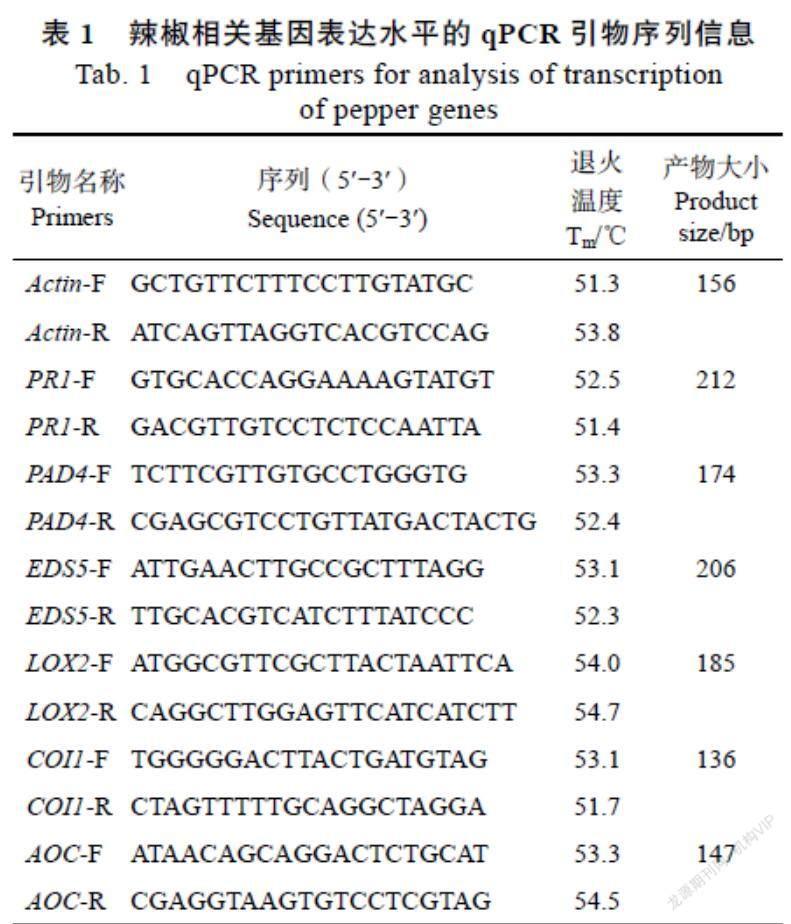


摘 要:為了明确水杨酸及茉莉酸信号途径在辣椒抗蚜性中的重要作用,本研究在获得遗传稳定的抗、感蚜参照辣椒品种的基础上,系统开展了桃蚜为害前后抗、感蚜参照辣椒品种叶组织中水杨酸、茉莉酸含量及相关基因表达量的差异分析。结果表明,桃蚜为害后,水杨酸含量在抗蚜辣椒品种‘猪大肠(ZDC)和感蚜辣椒品种‘大羊角椒(DYJJ)中均比为害前显著提高,而茉莉酸含量在ZDC中显著提高,在DYJJ中则先显著降低之后又恢复到为害前水平。水杨酸信号途径相关基因PR1、EDS5、PAD4的表达量在ZDC、DYJJ被桃蚜为害后均能够显著诱导,并且桃蚜为害早期PR1和EDS5基因在ZDC中的表达量显著高于DYJJ。ZDC被桃蚜为害后,茉莉酸信号途径基因LOX2、AOC的表达量比为害前先显著提高,之后又逐渐降低至为害前水平,而这2个基因在DYJJ中的表达被显著抑制,并且也显著低于ZDC中的表达水平。研究结果表明,抗蚜辣椒品种可以同时激活水杨酸、茉莉酸信号途径抵御桃蚜为害,而感蚜辣椒品种激活水杨酸途径、显著抑制茉莉酸途径则有利于桃蚜为害。本研究从以上2个防御信号途径初步揭示了辣椒的抗蚜性分子机理。
关键词:桃蚜;抗、感参照蚜辣椒品种;水杨酸信号途径;茉莉酸信号途径
中图分类号:S433.1;S641.3 文献标识码:A
Myzus persicae Feeding Effects Salicylic Acid and Jasmonic Acid Signaling Pathways in Aphid-resistant and Aphid-susceptible Pepper Cultivars
FAN Dongzhe1,2,3, CHEN Qing2,3*, LIANG Xiao2,3, WU Chunling2,3, LIU Ying2,3, DOU Hongshuang2,3, WU Yan2,3
1. School of Plant Protection, Hainan University, Haikou, Hainan 570228, China; 2. Environment and Plant Protection Institute, China Academy of Tropical Agricultural Sciences / Key Laboratory of Pests Comprehensive Governance for Tropical Crops, Ministry of Agriculture and rural affairs / Hainan Engineering Research Center for Biological Control of Tropical Crops Diseases and Insect Pests, Haikou, Hainan 571101, China; 3. Hainan Key Laboratory for Biosafety Monitoring and Molecular Breeding in Off-Season Reproduction Regions, Sanya, Hainan 572000, China
Abstract: In order to clarify the important role of salicylic acid and jasmonic acid signal pathways in pepper aphid resistance, the study was based on obtaining genetically stable resistant and susceptible pepper varieties, and systematically carried out the difference analysis of salicylic acid and jasmonic acid content and related gene expression in leaf tissue of the aphid-resistance and aphid-susceptible reference peppers cultivars before and after damaged by Myzus persicae. After damaged by M. persicae, the content of salicylic acid in the aphid-resistant pepper variety ZDC and the aphid-susceptible pepper variety DYJJ increased significantly, while the content of jasmonic acid increased significantly in ZDC. In DYJJ, it decreased significantly and then returned to the pre-damage level. The expression levels of salicylic acid signaling pathway related genes PR1, EDS5, PAD4 could be significantly induced after ZDC and DYJJ damaged by M. persicae, and the expression level of PR1 and EDS5 genes in ZDC was significantly higher in ZDC and DYJJ in the early stage of damage. After ZDC was damaged by green peach aphid, the expression level of the jasmonic acid signaling pathway genes LOX2 and AOC increased significantly, and then gradually decreased to the pre-damage level. The expression of the genes in DYJJ was significantly inhibited and also significantly lower than that in ZDC. The results of this study indicate that pepper-resistant varieties can simultaneously activate salicylic acid and jasmonic acid signal pathways to resist the damage of green peach aphid, while the aphid-susceptible pepper variety activates the salicylic acid pathway and significantly inhibits the jasmonic acid pathway, which is beneficial to the green peach aphid infestation. This study initially revealed the molecular mechanism of peppers aphid resistance from the above two defense signal pathways.
Keywords: Myzus persicae; aphid-resistant and aphid-susceptible reference standard pepper cultivar; salicylic acid; jasmonic acid
DOI: 10.3969/j.issn.1000-2561.2021.10.030
辣椒(Capsicum annuum L.)是重要的世界性蔬菜,也是海南省冬季瓜菜的第一大蔬菜品种,一直受到国家和省部领导的高度重视和密切关注。2017年,海南省的辣椒种植面积约为4.55万hm2,约占海南省瓜菜生产总面积的15.3%[1]。……