基于异构卷积的轻量级图像分类网络
2021-12-07喻明毫高建瓴胡承刚
喻明毫 高建瓴 胡承刚
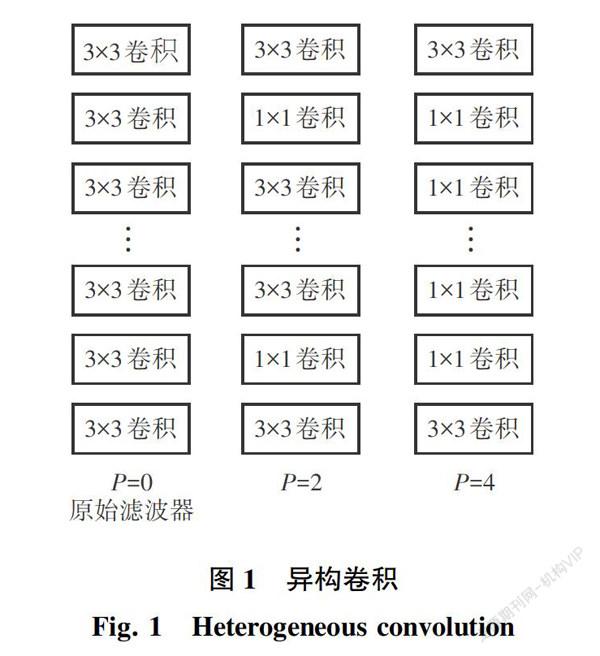
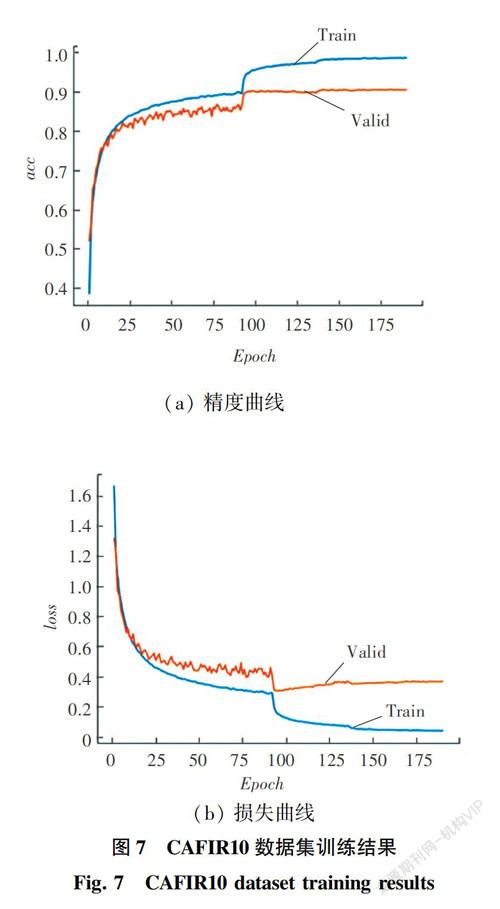
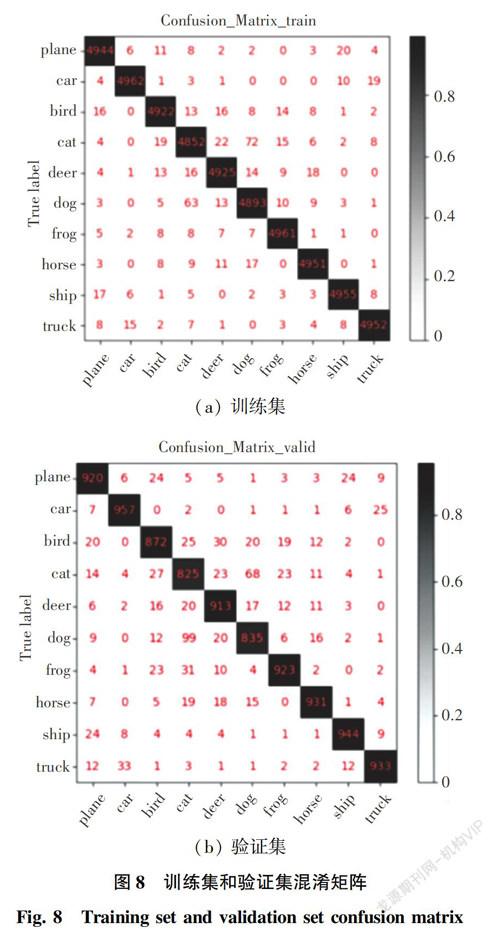
摘 要: 目前大多数大型神经网络都存在参数量大、计算难度高等问题,想要在移动端设备使用,则会受到计算资源的限制。虽然现有轻量级网络出现解决了一定的计算量的问题,但同时其网络中大量使用1×1点卷积,使得其成为了现在轻量级网络的计算瓶颈。针对点卷积造成的计算瓶颈的问题,首先提出使用GhostModel来代替其中一部分点卷积,然后结合异构卷积对残差结构进行改进并提出ResHetModel_A、B两个改进的模块,使用改进模块构成轻量级网络HSNet。最后对注意力特征图进行分析,在网络加入注意力机制来提高网络表达。在CAFIR10和CAFIR100数据集上的分类实验证明网络的有效性。最后在ImageNet大型数据集上实验表明HSNet具有一定的泛化性。
关键词: 轻量级网络; 点卷积; 异构卷积; 残差结构; GhostModel
文章编号: 2095-2163(2021)07-0196-06中图分类号:TP391文献标志码: A
Lightweight image classification network based on heterogeneous convolution
YU Minghao, GAO Jianling, HU Chenggang
(College of Big Data and Information Engineering, Guizhou University, Guiyang 550025, China)
【Abstract】The problems of large parameter quantity and high computational difficulty exist with most large neural networks. If large neural networks want to apply to mobile devices, they are constrained by computing resources. Although existing lightweight networks solve some computational problems, at the same time, its network uses massive 1×1 point convolutions, which has become a computational bottleneck of the current lightweight network. In order to solve the problem of computing bottleneck caused by point convolution, first propose to use GhostModel to replace part of the point convolution, then combined with heterogeneous convolution to improve the residual structure, propose two improved modules ResHetModel_A and B, and use the improved modules to form a lightweight network HSNet. Finally, the attention feature map is analyzed, and attention mechanism is added to the network to improve network expression. The classification experiments on the CAFIR10 and CAFIR100 datasets prove the effectiveness of the network. Finally, experiments on the ImageNet large dataset show that HSNet has a certain generalization.
【Key words】lightweight network; point convolution; heterogeneous convolution; residual structure; GhostModel
0 引 言
計算机视觉的发展推动人工智能不断进化,而作为计算机视觉强大进步源泉的深度学习,则在计算机视觉领域子任务,诸如图像分类、目标检测、图像分割等方面做出了重大贡献。与神经网络相结合的图像处理算法相较于传统的图像处理算法有巨大的精度优势。在大数据的时代,利用神经网络在数据中学习图像特征,继而进行分类、检测、分割等任务。目前,基于深度学习的图像分类网络层出不穷,大量优秀的网络不断问世,人们研究的重点是如何将图像分类精度提高,不断加深、加宽模型,虽然网络在精度上表现越发出众,但网络效率问题也随即产生。……