渤海湾西第四纪以来差异性沉积特征及其构造指示
2021-11-06鲁庆伟

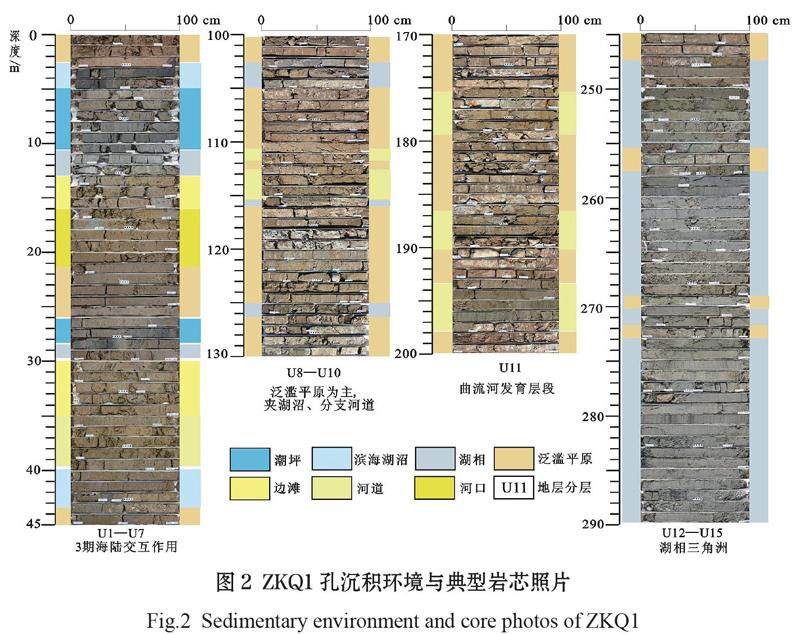

摘 要:基于沧县隆起400 m ZKQ1孔沉积特征、综合测井、测年(AMS14C、光释光)以及磁性地层等综合研究,并与前期6个钻孔磁性地层对比,表明该区域前中更新世盆—山快速發育,黄骅坳陷和沧县隆起两大Ⅲ级构造单元以及次一级构造单元(里坦凹陷、天津西凹槽、板桥凹陷和港西凸起)均存在较高的沉积速率和明显的差异性沉积演化。中更新世时期,该区存在沉积间断,各构造单元差异性沉积不明显,趋于准平原化,仅局部残留少许的沉积物容纳空间,证实了该区沧东断裂、天津断裂及大城断裂等主干隐伏断裂上延至中更新世地层。晚更新世以来,该区域发育3期区域性的“面状分布”的海侵层,其层位、沉积厚度及沉积速率稳定,整体处于稳定沉降期。
关键词:渤海湾西;构造;第四系;差异性沉积;磁性地层;沧县隆起;黄骅坳陷
Abstract: Based on the study of the sedimentary characteristics, comprehensive logging ,dating (AMS14C, OSL) and magnetic strata of 400 m ZKQ1 hole in Cangxian Uplift, and the comparison with the previous 6 paleomagnetic borehole magnetic strata, this paper shows that there are obvious differences in sedimentary evolution between different tectonic units (Huanghua Depression, Cangxian Uplift) and different parts of the same tectonic unit (Litan Sag, Tianjin Groove, Banqiao Sag and Gangxi High). In the Middle Pleistocene, there was sedimentary discontinuity with no evident difference deposition for different tectonic units, tending to be peneplain with only a little local residual sediment space in this region. This shows that the main buried faults, such as Cangdong Fault, Tianjin Fault and Dacheng Fault, extend to the Middle Pleistocene strata. Since the late Pleistocene, there have been 3 regional "planar distribution" transgression layers in this region, with generally stable horizon, thickness and rate of deposition indicating that the whole area stays in the stable sedimentation period.
Keywords: western Bohai Bay; structure; Quaternary; sedimentary differences; magnetic strata; Cangxian Uplift; Huanghua Depression
渤海湾西天津南部平原区为第四系厚层松散沉积物所覆盖,无基岩出露。钻孔揭露地层有新生界第四系、新近系和古近系以及更老地层,地质构造主要依靠地震、重力、电磁法等物探手段进行推断,划分了天津市域构造单元(天津市地质矿产局,1992189-216)。研究区主要涉及沧县隆起和黄骅坳陷等两大Ⅲ级构造单元,二者以沧东断裂为界。且各构造单元内存在多个次一级构造单元(天津市地球物理勘探中心,2008156-196)。构造单元控制边界多以隐伏断裂为主,且以北东-北北东向和北西-北北西向断裂最为发育,横向上表现为隆凹相间的构造格架,局部呈棋盘状。……