基于TAM模型的大学生共享汽车使用意愿研究
2021-10-20黄南芬
黄南芬


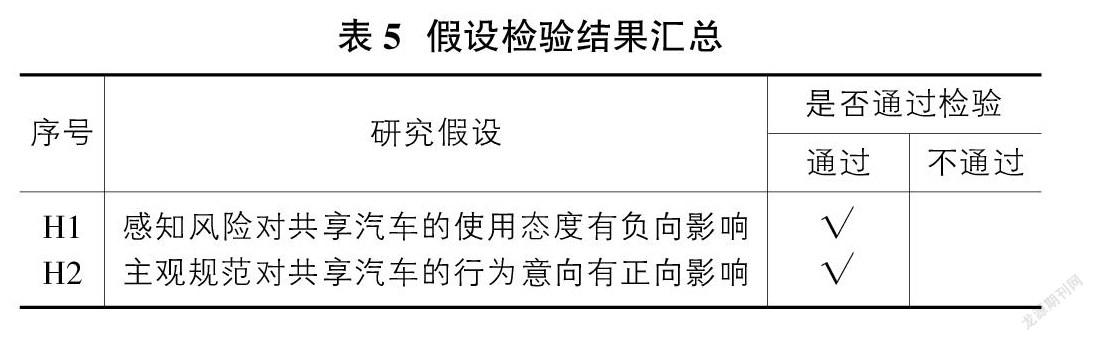
摘要: 共享汽车作为低碳、环保的出行方式,在解决交通需求的同时提升资源的有效利用率。“十四五”规划提出了增加停车场、充电桩等措施,为共享汽车发展提供了机遇。本文在技术接受模型(TAM)的基础上,引入感知风险和主观规范来构建大学生共享汽车使用意愿模型并进行问卷调查。运用SPSS软件对进行分析,得出:感知风险对使用态度有负面影响,主观规范对行为意向有积极影响,最后提出提升大学生共享汽车使用的建议。
Abstract: As a low-carbon and environment-friendly travel mode, car-sharing improves the effective utilization of resources while solving the traffic demand. The 14th Five-Year Plan proposes measures to increase parking lots and charging piles, which provide opportunities for the development of shared vehicles. The paper builds on the technical acceptance model (TAM), introduces perceptual risk and subjective specifications to build college student car sharing use-willingness models and conduct questionnaires. Using SPSS software, concluded that the perceived risk has a negative impact on the use attitude, and the subjective norms have a positive impact on the behavior intention. Finally, it put forward suggestions to improve the use of car-sharing for college students.
关键词: 共享汽车;TAM模型;感知风险;主观规范
Key words: car sharing;TAM model;perceived risk;subjective norms
中图分类号:F272 文献标识码:A 文章编号:1674-957X(2021)20-0165-02
0 引言
2020年全国汽车保有量2.81亿辆,环境污染、资源紧张、交通堵塞等问题凸显,50个主要城市平均路网高峰行程延时指数1.609。而汽车驾驶员数量4.18亿人,大量有证无车的“本本”族有用车需求。共享汽车能优化资源配置,缓解交通拥堵,具有较好的经济、环境效应。
目前,共享汽车由一线城市向二三线城市发展,以20-30岁年轻人为主,其发展很大程度取决于用户的使用意愿。随着生活水平的提高,大学生的出行、社交需求增加。目前,全国有4000万在校大学生,他们对新兴事物接受快、学习能力强,是共享汽车潜在消费群体。因此,本文研究大学生共享汽车使用的影响因素,以促进用户习惯的培养和共享汽车的发展。
1 研究综述
技术接受模型(TAM)由Davis提出,常用于分析对新技术、新产品的接受程度和影响因素。袁霞引入创新性、环保意识和感知风险研究共享汽车使用影响因素[1];余静财等引入主观规范等因子,认为可增加车辆维护,引导居民意识,促进共享汽车发展[2]。……