敦煌莫高窟唐前期正卷立体化莲瓣纹样分析
2021-09-16高晏卿
高晏卿
内容摘要:敦煌莫高窟所见正卷立体化莲瓣纹样,以前端作三分弧形且翘起为特征。这种纹样在唐高宗、武则天时期的两京地区极为流行,武周及其以后逐渐减少。而在唐前期的敦煌,正卷立体化莲瓣呈现与两京地区同步发展的态势,自唐前期第二期开始广泛使用,进入唐前期第三期后以瓣代花形式不再流行,多作为卷草中的花瓣或草叶表现。
关键词:敦煌莫高窟;宝相花;卷草;正卷立体化莲瓣
中图分类号:K879.21 文献标识码:A 文章编号:1000-4106(2021)04-0059-13
Abstract:The three-dimensional patterns of lotus petals in the Mogao Caves are characterized by petals that turn up at the tops and are organized in successive arcs. This pattern was very popular in both Changan and Luoyang in the periods ruled by Emperor Gaozong and Empress Wu Zetian during the Tang dynasty and gradually declined after Wu Zetian's period of reign. An identical process of development can be observed at the Mogao caves beginning in the second phase of the early Tang dynasty. Following this period, the form of using petals as an integral lotus flower declined in popularity and was replaced in the third phase of the early Tang dynasty by the petals or leaves of the flower being positioned at the center of curling vines.
Keywords:Mogao Grottoes; baoxiang flower; curling vines; three-dimensional lotus petals
莲瓣纹样是中国佛教美术中使用最多的装饰元素之一。初唐以來常见一种前端作三分弧形且向内翘起的正卷立体化莲瓣。这种表现形式不见于南北朝、隋代,而在敦煌莫高窟唐前期第二期洞窟中大量出现。以往学界虽在研究宝相花等问题时论及该纹样,但未曾针对其展开具体分析[1-6]。已知此种正卷立体化莲瓣纹样实例,比较集中地分布在敦煌莫高窟、洛阳龙门石窟等佛教遗迹中(图1),亦常常以线刻等形式表现于唐长安、洛阳一带出土墓志以及金银器上。本文以敦煌莫高窟正卷立体化莲瓣的流行与变化为中心,探讨其与唐两京地区的关系,以期厘清其在唐代前期的整体发展面貌。
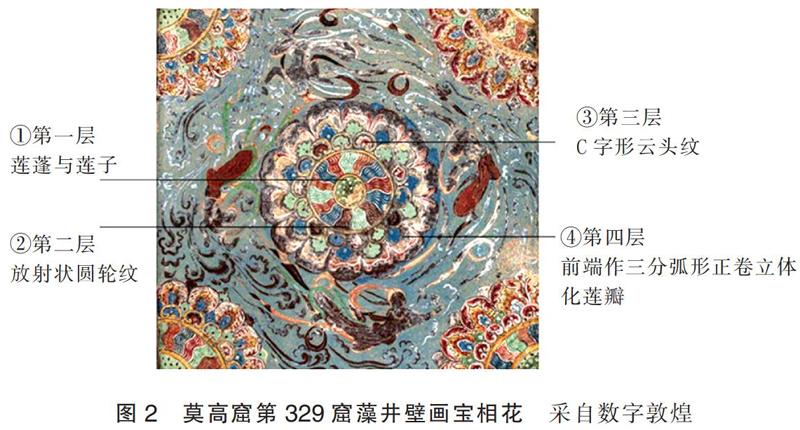
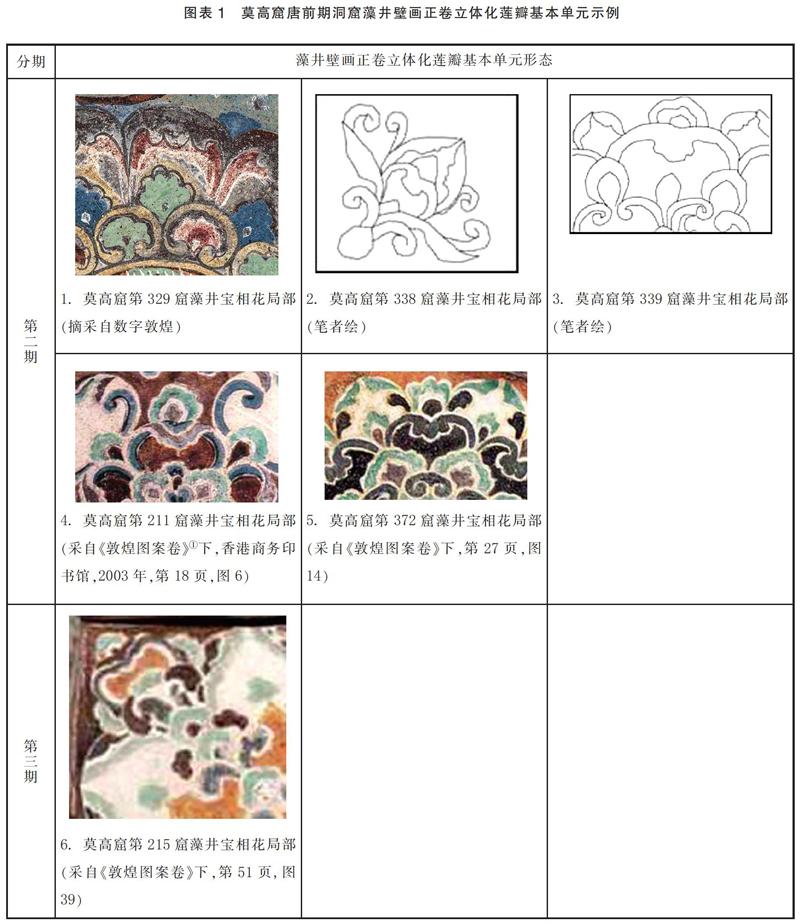
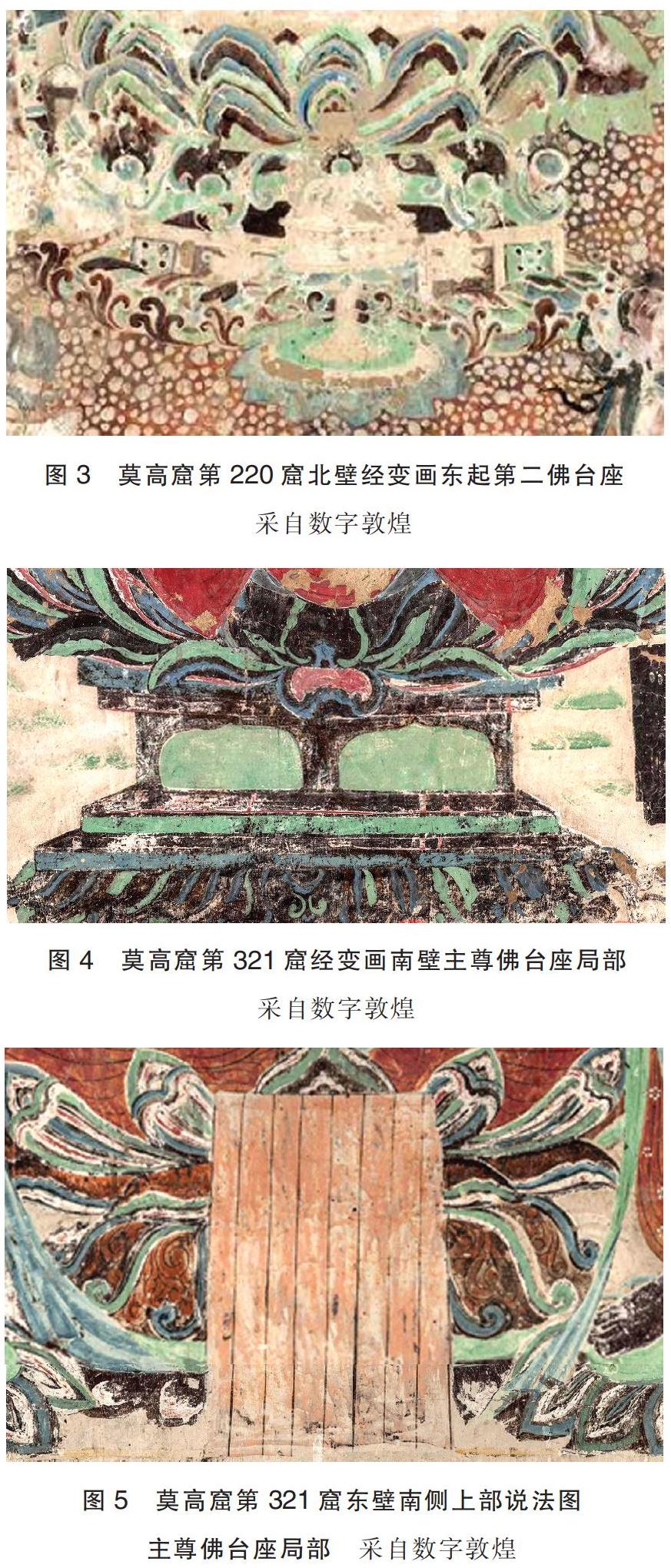
莫高窟所见花瓣前端作三分弧形且翘起的正卷立体化莲瓣,往往绘于藻井或尊像头光的装饰纹样中,组合构成宝相花,抑或作为带状卷草纹样的局部构件,描绘于四壁及佛龛边缘。此外,在一些说法图、经变画中,佛座、华盖及花柱等装饰也绘出正卷立体化莲瓣。……