广西西部地区大学生心理韧性、人际信任与心理健康的相关性研究
2021-08-20练家豪马迎教蒙明虑杨益东覃健张志勇
练家豪 马迎教 蒙明虑 杨益东 覃健 张志勇
【摘要】 目的 了解桂西地區大学生心理健康的现状,探索桂西地区大学生的心理韧性、人际信任对其心理健康的影响。
方法 采用症状自评量表(SCL90)、人际信任量表(ITS)、青少年心理韧性量表及自编一般情况调查表,运用分层整群抽样的方法,抽取桂西地区1144名在校大学生进行问卷调查。
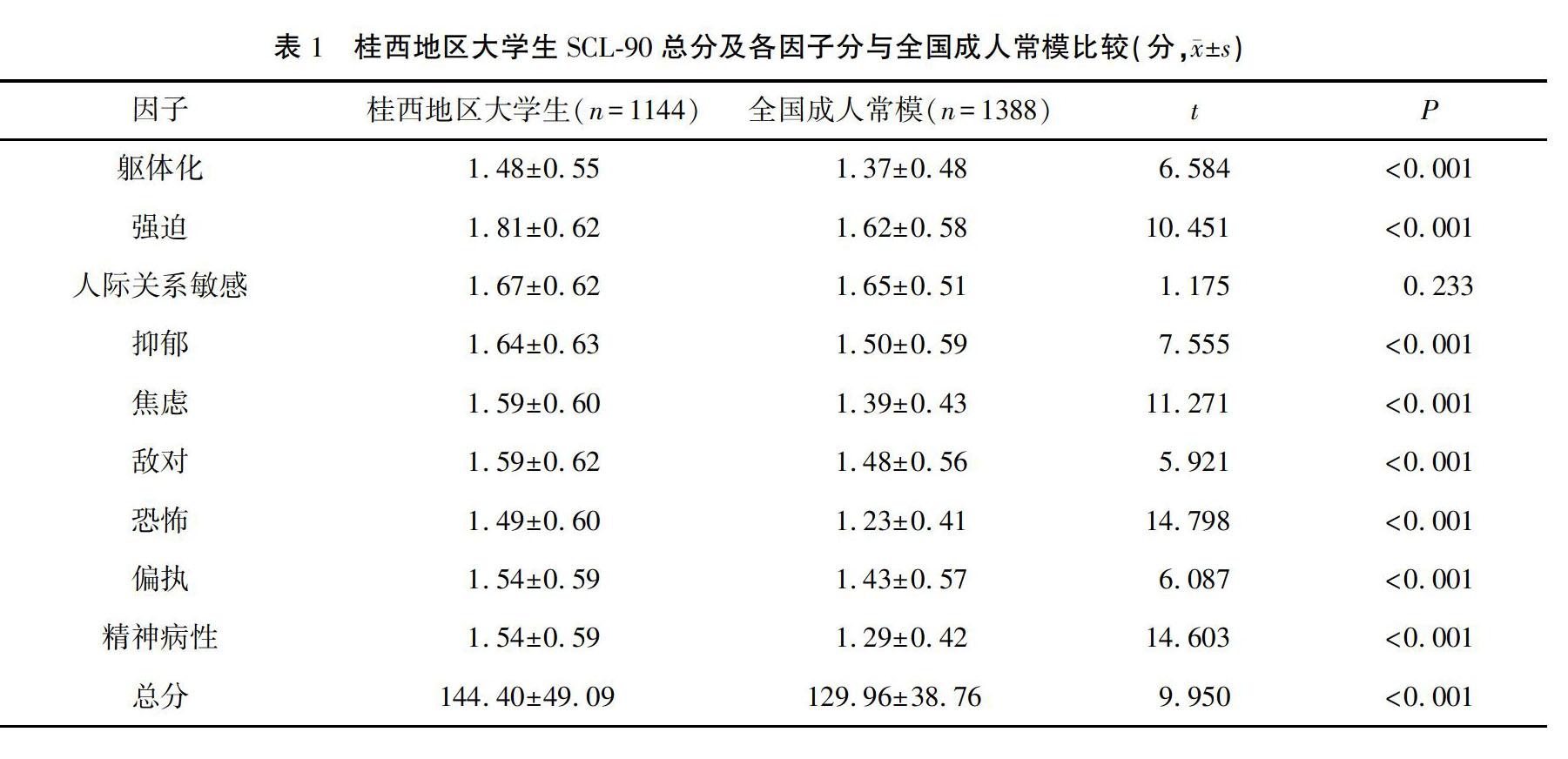
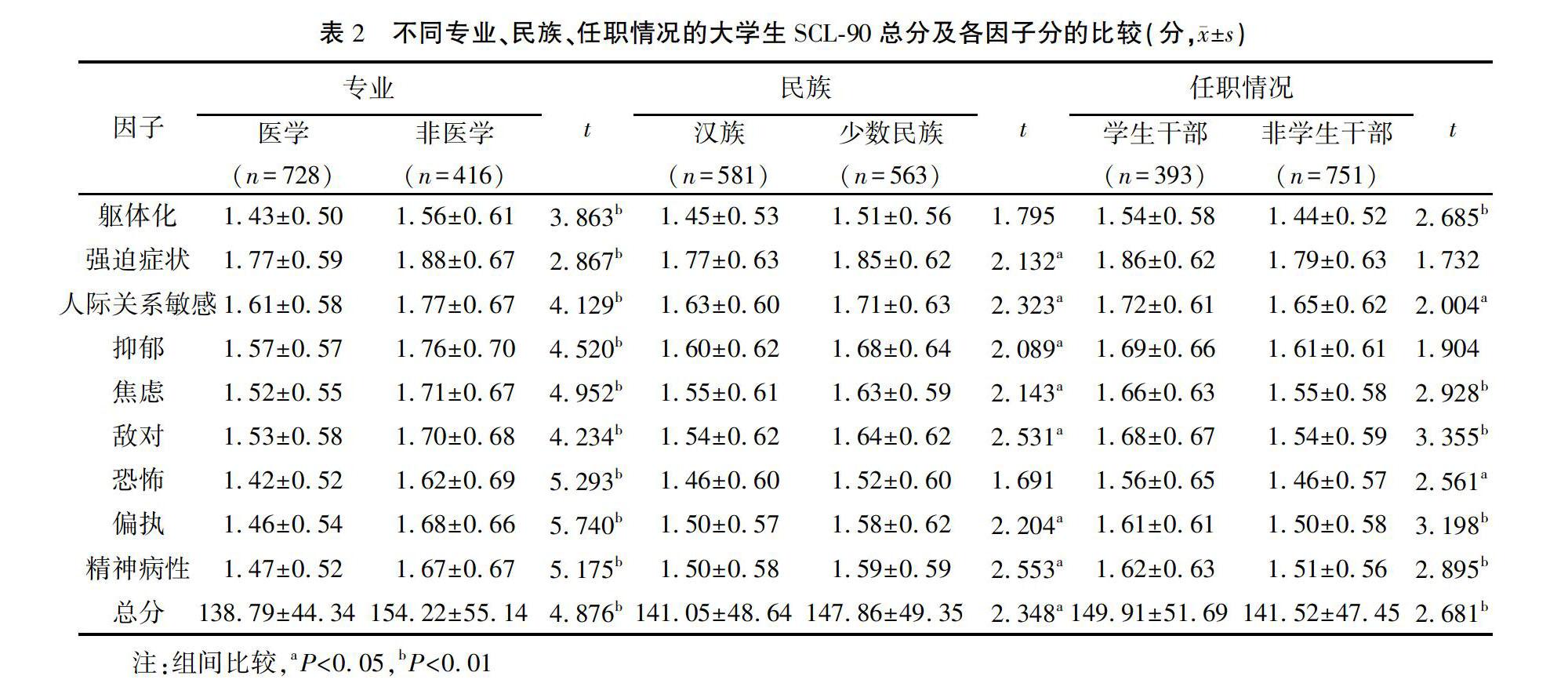
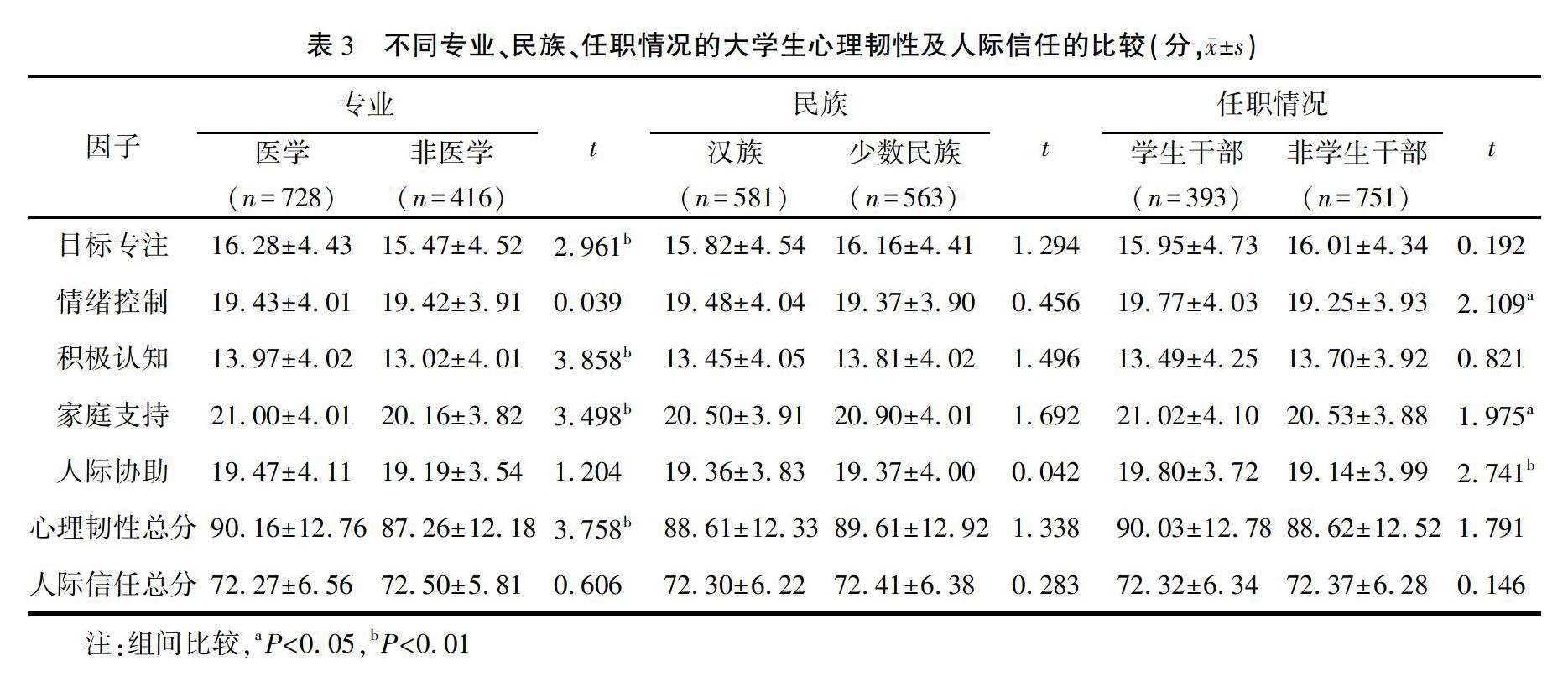
结果 桂西地区大学生SCL90总分及各个因子分均高于全国成人常模。不同专业、民族、任职情况的大学生心理健康水平存在差异:非医学生的SCL90总分及各因子分均高于医学生(P<0.01);少数民族学生的SCL90总分及强迫症状、人际关系敏感、抑郁、焦虑、敌对、偏执、精神病性因子分均高于汉族学生(P<0.05);学生干部的SCL90总分及躯体化、人际关系敏感、焦虑、敌对、恐怖、偏执、精神病性因子分均高于非学生干部(P<0.05);医学生的心理韧性总分及目标专注、积极认知、家庭支持因子分高于非医学生(P<0.01);不同专业、民族、任职的大学生人际信任水平无差异。除强迫症状因子与心理韧性中的目标专注、积极认知无相关外,SCL90总分及各因子分与ITS总分、心理韧性总分及各因子分均呈负相关( -0.301 ≤r总分≤-0.092, P<0.01;-0.348≤r因子≤-0.072, P<0.05)。心理韧性总分、父母离异情况、专业、ITS总分、民族、生活费情况、父亲文化程度、任职情况、年级共9个因素可以预测桂西地区大学生的心理健康水平,R2=0.171。
结论 桂西地区大学生心理健康水平偏低,建议加强心理健康教育,重点关注少数民族学生、学生干部和非医学专业学生的心理状况。心理韧性、人际信任是桂西地区大学生心理健康水平的重要影响因素, 提高心理韧性水平和人际信任水平有利于提高桂西地区大学生心理健康水平。
【关键词】 桂西地区;大学生;心理健康;心理韧性;人际信任
中图分类号:R395.5;G44 文献标志码: DOI:10.3969/j.issn.10031383.2021.06.009
Study on correlation among resilience, interpersonal trust, and mental health of college students in western Guangxi
LIAN Jiahao1, 2, MA Yingjiao2, MENG Minglyu2, YANG Yidong2, QIN Jian1▲, ZHANG Zhiyong1, 3▲
(1. School of Public Health, Guangxi Medical University, Nanning 530021, Guangxi, China; 2. School of Public Health and Management,Youjiang Medical University for Nationalities, Baise 533000, Guangxi, China; 3. School of Public Health, Guilin Medical University, Guilin 541001, Guangxi, China)
【Abstract】 Objective To investigate the mental health status of college students in western Guangxi, and to explore the influence of mental resilience and interpersonal trust on their mental health.
Methods Symptom check list (SCL90), interpersonal trust scale (ITS), adolescent resilience scale and selfdesigned general situation questionnaire were used to investigate 1144 college students in western Guangxi by stratified cluster sampling.
Results The total score of SCL90 and each factor score of college students in western Guangxi were higher than those of the national adult norm. There were differences in the mental health levels of college students with different majors, ethnic groups and working conditions: the total score of SCL90 and each factor score of nonmedical students were higher than that of medical students (P < 0.01); the score of SCL90 and the factor score of obsessivecompulsive symptoms, interpersonal sensitivity, depression, anxiety, hostility, paranoia, and psychosis among minority students were all higher than those of Han nationality students (P < 0.05); the score of SCL90 and somatization, interpersonal sensitivity, anxiety, hostility, terror, paranoia, and psychosis among student cadres were all higher than those of nonstudent cadres (P < 0.05); the scores of resilience, goal focus, positive cognition and family support factor of medical students were higher than those of nonmedical students (P < 0.01); there was no difference in interpersonal trust level among college students of different majors, nationalities, and positions. Except that there was no correlation between obsessivesymptom factors and target concentration and positive cognition in resilience, SCL90 total score and each factor score were negatively correlated with ITS total score, resilience total score and each factor score (-0.301≤r total score≤ -0.092, P < 0.01; -0.348 ≤ r factor ≤ -0.072, P < 0.05). Resilience total score, parents' divorce, major, ITS total score, ethnicity, living expenses, father's education level, employment status and grade could predict the mental health levels of college students in western Guangxi, R2=0.171.
Conclusion The mental health level of college students in western Guangxi is relatively low. It is recommended to strengthen mental health education and focus on the mental health of minority students, student leaders, and nonmedical students. Resilience and interpersonal trust are important influencing factors for the mental health of college students in western Guangxi. Improving mental resilience and interpersonal trust is conducive to improving the mental health of college students in western Guangxi.
【Key words】 western Guangxi; college students; mental health; resilience; interpersonal trust
随着社会的快速发展,大学生的心理问题越来越突出。心理健康水平降低可导致抑郁、自杀意念风险升高[1],由此引发的大学生抑郁、自杀等负性事件屡见报道[2]。广西壮族自治区西部由百色、河池、崇左三市构成,简称桂西地区,是集“老少边山穷”于一体的民族聚居地区,区域内的大学生大多来源于桂西和区内周边地区,少数民族大学生较多。受民族地区特有的民族文化、生活方式及家庭和社会环境等影响,民族地区的大学生心理健康状况可能有不同于一般人群的特征。……