Giant Pandas’ Behavior 大熊猫的生活习性
2021-08-12坎迪丝·宋文闫清波译
坎迪丝·宋文 闫清波译
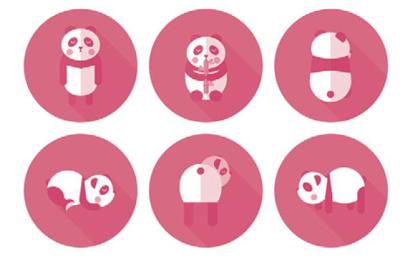
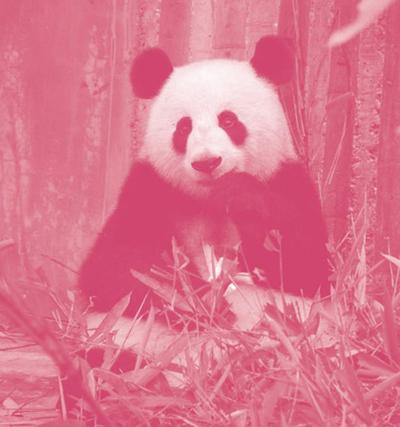
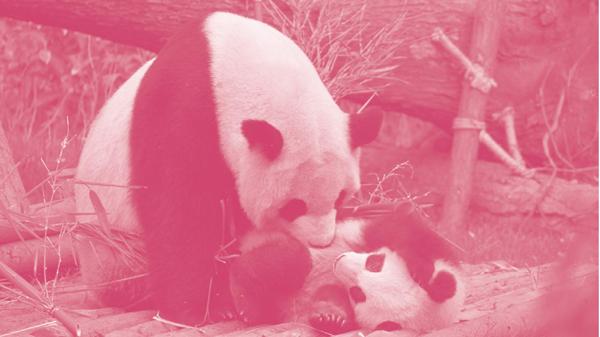
Giant pandas spend their lives eating bamboo and walking around the forest floor. They are good climbers and can also swim. They dont build dens (except to put cubs in) or hibernate. They prefer shallow slopes and solitary living. If it is too cold up in the mountains they head down to the valleys where it is warmer.
Low-stress lifestyle
Because of their low-energy diet they avoid stressful situations and exertion, preferring shallow slopes and solitary living. They use scent markers to avoid one another. Giant pandas dont roar like other bears, but bleat like goats, or honk, growl, and bark to communicate1. Cubs whine and croak for attention.
Eating habits—14 hours a day
The giant pandas spend as long as 14 hours eating per day. A giant panda needs about 12 to 38 kilograms of food per day, approximately 40% of its own weight. The giant pandas prefer eating tender stems, shoots and leaves of bamboo, all of which are richer in nutrition and lower in fibrins.
Pandas eat golden bamboo. Each season they eat the best bits2. In April the best bit is the woody part3. At other times they eat the tips and discard the wood.
Wild giant pandas eat grasses, wild fruits, insects, mice, even lambs in the surrounding villages and leftovers in rubbish dumps as well.
Sleeping habits—2–4 hours sleep between meals
In addition to eating for about half a day, the giant pandas spend the rest of their time in sleeping.
In the wild, the giant pandas sleep for 2 to 4 hours between its two meals, whose favorite sleeping poses include lying flat on their backs, lying on their sides, lying on their stomachs, stretching their paws and rolling themselves up into balls.
The keepers feed giant pandas twice a day at regular times in the zoo, therefore, the giant pandas spend most of their spare time in rest, and they seem very lovely even during their sleeping time.
How they sleep
Pandas get into positions of various kinds with their seemingly clumsy bodies. Their favorite sleeping position is putting their hind paws on the trees with their front paws shading their eyes.
Fond of climbing trees—to protect themselves
The pandas are very nimble in climbing trees and run rapidly in danger. They propose to their partners, run away from danger and evade stronger competitors by climbing trees.
The giant pandas also walk into the valley, sneak into mountain villages or residences, which play with round-shaped utensils as toys and later abandon them in the wild.
Once in a while, the giant pandas also show their kindness to sheep and pigs by sharing food and rooms with them.
Solitariness—they like being alone
Panda families dont live together. They are solitary, each female having a well-defined range. Males generally live apart, except for in the short breeding season (March to May), when they compete for female attention. Females raise the cubs alone.
With an uncommunicative and eccentric temperament, the giant pandas prefer freedom of being alone, and sleep in the daytime and look for food in the night. In addition to one month spent with their partners during mating season, most of their time is spent alone.
Docile temperament—seldom attacking men or other animals
The giant pandas have a very docile temperament in most cases, and they often lower their heads or shade their faces with front paws to conceal their true appearances when they come across a man for the first time. Seldom actively attacking men or other animals, the giant pandas always evade them when coming across them.
However, the giant pandas consider their cubs holy and untouchable once they give birth, and they will burst into rage at such small things as their cubs being watched by visitors. The giant pandas can stretch their paws and open their mouths wide like cats to make themselves more comfortable. They can also shake water off themselves like dogs after a heavy rain.
Communication—scent markings and sounds
Most communication among giant pandas is reached by scent markings left on the habitat, by which they can find their previous partners during mating season.
After finding their partners, they will communicate with sound, which is barely understood by humans, and they will remain silent when simply but playing. Therefore, we could predicate their behaviors simply by their sounds.
Scent markings for dividing territory
The secret to keeping peace in the habitat is dividing territory by scent markings. The giant pandas leave their glandular secretions4 on tree stumps, walls and ground in their habitats, by which they gather together or evade stronger competitors.
In the non-mating season, the giant pandas would walk away as soon as they smell scents of newcomers. In the mating season, the scent of a female giant panda means that she is ready for male pandas to mate.
In addition to glandular secretions, urine is also employed by pandas for scent markings. While making markings, the giant pandas usually shake their heads with mouths half open, and then strip the barks from trees where they urinate to attract attention of other pandas.
Mating from March to May
The female giant pandas are monestrous5, which usually falls in March to May and only lasts 2 to 3 days each time. The female giant pandas will leave their partners after mating and rear their cubs alone.
Giving birth from July to September
Giant panda gestation6 is about 83 to 200 days, and usually give birth from July to September. Cubs usually were born in hidden hollow trees or natural dens, where the branches and dry hays well-prepared by mother pandas are available. Normally, the giant pandas are monotocous and rarely multiparous. Even the female giant pandas have two cubs at one birth in the wild, they would choose to take care of one and abandon the other.
Owing to feeding on bamboos, the giant pandas need to spend long time in eating to get enough energy each day, and they will leave their cubs to hunt for food for 2 to 4 hours each day even in their child-care periods.
大熊猫终生以竹子为食,在林地四处走动。它们善于攀爬,也会游泳。它们不建窝(除了哺育幼崽),也不冬眠。大熊猫多在缓坡活动,喜欢独居。如果山上太冷,它们就会转移到更暖和的山谷。
轻松的生活方式
由于日常饮食能量低,所以大熊猫会避免紧张和劳累,喜欢在缓坡活动和独居。它们利用气味做标记,以免互相干扰。大熊猫不像其他熊类一样大声吼叫,而是像山羊一样咩咩叫,或者通过鸣叫、咆哮和吠叫进行交流。熊猫幼崽会发出呜呜声和呱呱声,以引起母亲注意。
饮食习惯:每天进食14小时
大熊猫每天进食时间长达14小时。一只大熊猫每天需要12到38公斤左右的食物,约为其体重的40%。大熊猫喜食嫩竹茎、竹笋和竹叶,这些食物营养更丰富,纤维蛋白含量更低。
大熊猫吃最好的竹子。它们会随季节变化,采食竹子的精华部分。4月份,竹茎是最佳选择;而其他时间,它们食用竹笋和竹叶,不再吃竹茎。
野生大熊猫以草、野果、昆虫、老鼠为食,甚至也会吃附近村庄的羊羔和垃圾堆里的剩菜。
睡眠习惯:两餐之间睡2至4小时
大熊猫每天约一半时间都在进食,其余时间用来睡觉。
在野外,大熊猫在两次进食间隙睡2至4小时。平躺、侧躺、俯卧、伸展四肢或缩成一团都是它们喜好的睡觉姿势。
在动物园里,饲养员每天两次定时给大熊猫喂食,所以它们大部分时间都在休息,大熊猫即使睡觉时看起来也很可爱。
睡眠姿势
大熊猫的身体看似笨重,却能摆出各种各样的姿势。……
