基于栅格地图的环境建模在清扫机器人路径规划中的应用
2021-08-06周欣沅张玲马永帅
周欣沅 张玲 马永帅

【摘 要】论文采用栅格法建立环境地图模型,利用沿边走的路径规划算法进行室内清洁机器人无障碍与避障路径规划仿真试验。结果表明,在静态环境中,扫地机器人可以根据内螺旋式路径规划方法完成清扫任务,面积覆盖率高,重复率低,且能成功避开所设置的障碍物和边界,进行自动定位和转向。该方法与随机式路径规划方法相比效果很好。
【Abstract】The paper uses the grid method to establish the environment map model, and uses the side-walking path planning algorithm to carry out the simulation test of the obstacle-free and obstacle-avoidance path planning of the indoor cleaning robot. The results show that in the static environment, the cleaning robot can complete the cleaning task according to the internal spiral path planning method, with high area coverage rate and low repetition rate, and can successfully avoid the obstacles placed and boundaries, and carry out automatic positioning and steering. Compared with the random path planning method, the effect of this method is very good.
【關键词】清扫机器人;栅格法;环境建模
【Keywords】cleaning robot; grid method; environment modeling
【中图分类号】TP242;TP212 【文献标志码】A 【文章编号】1673-1069(2021)07-0183-02
1 引言
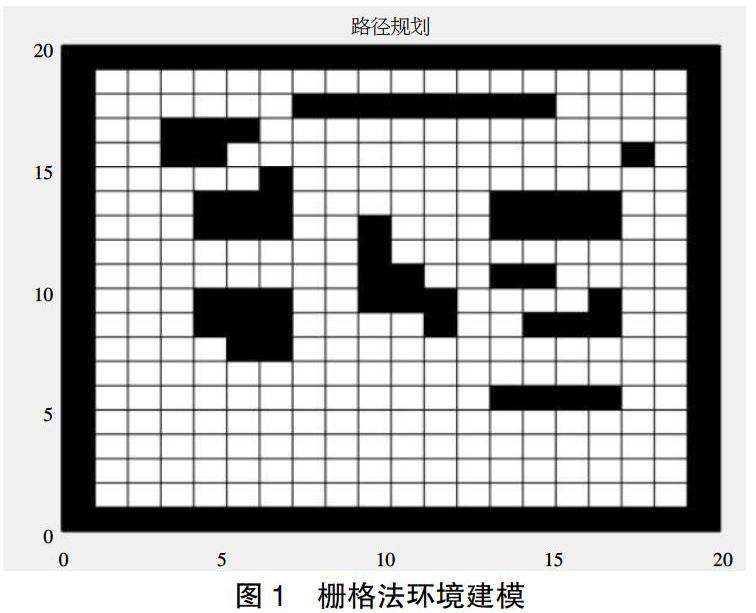
随着科技发展,机器人技术趋于成熟。如何才能使扫地机器人真正做到高效率、高智能、低成本的清扫工作是目前研究的重点,其中工作环境的模型选择及路径规划是实现工作区域全覆盖这一目标的难点[1]。为此,环境栅格地图构建与路径规划算法是实现此目标的两项关键技术。本文使用栅格法对地图环境进行环境建模,采取沿边行走内螺旋式路径规划算法进行路径规划与仿真实验。
2 环境建模方法
环境建模方法是将机器人工作的虚拟现实环境转化成能自身准确识别环境信息的过程。目前,环境建模方法主要有:拓扑法、几何法和栅格法。拓扑法大大减少了几何路径特征规划的基本工作量和复杂度,实现了从高维向低维的转化。难点体现在如何定义拓扑节点[2]。几何法是将传感器采集到的环境信息转化为常见的物理几何特征,并表示出来。优点是精确度高、结构性紧凑、容易准确地判断位置信息和识别目标;缺点是提取几何特征时需要足够多的传感器数据。……
