长江中游春播与夏播玉米籽粒脱水及机收质量差异分析
2021-08-03梁如玉黄益勤展茗刘志辉王燕刘永忠杨仁能汪恒进
梁如玉 黄益勤 展茗 刘志辉 王燕 刘永忠 杨仁能 汪恒进
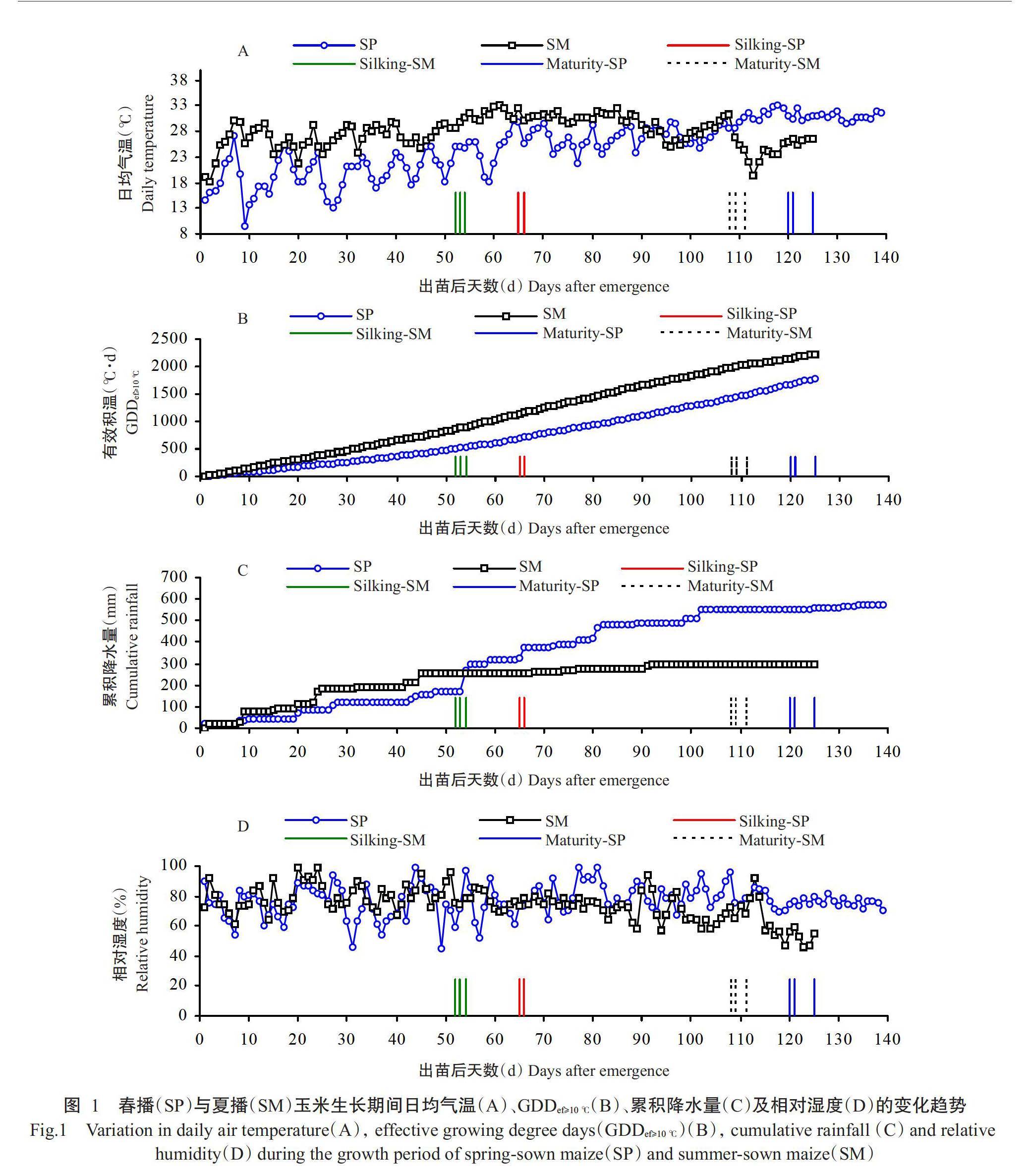
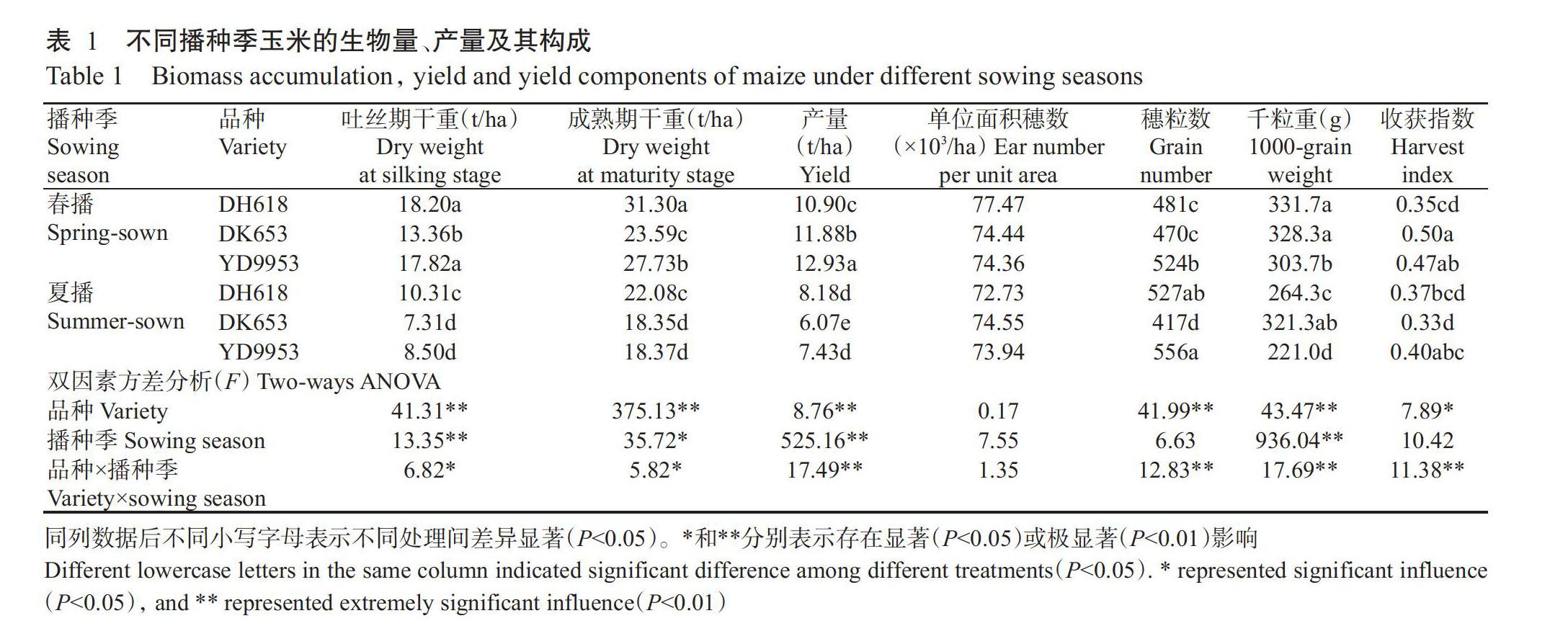
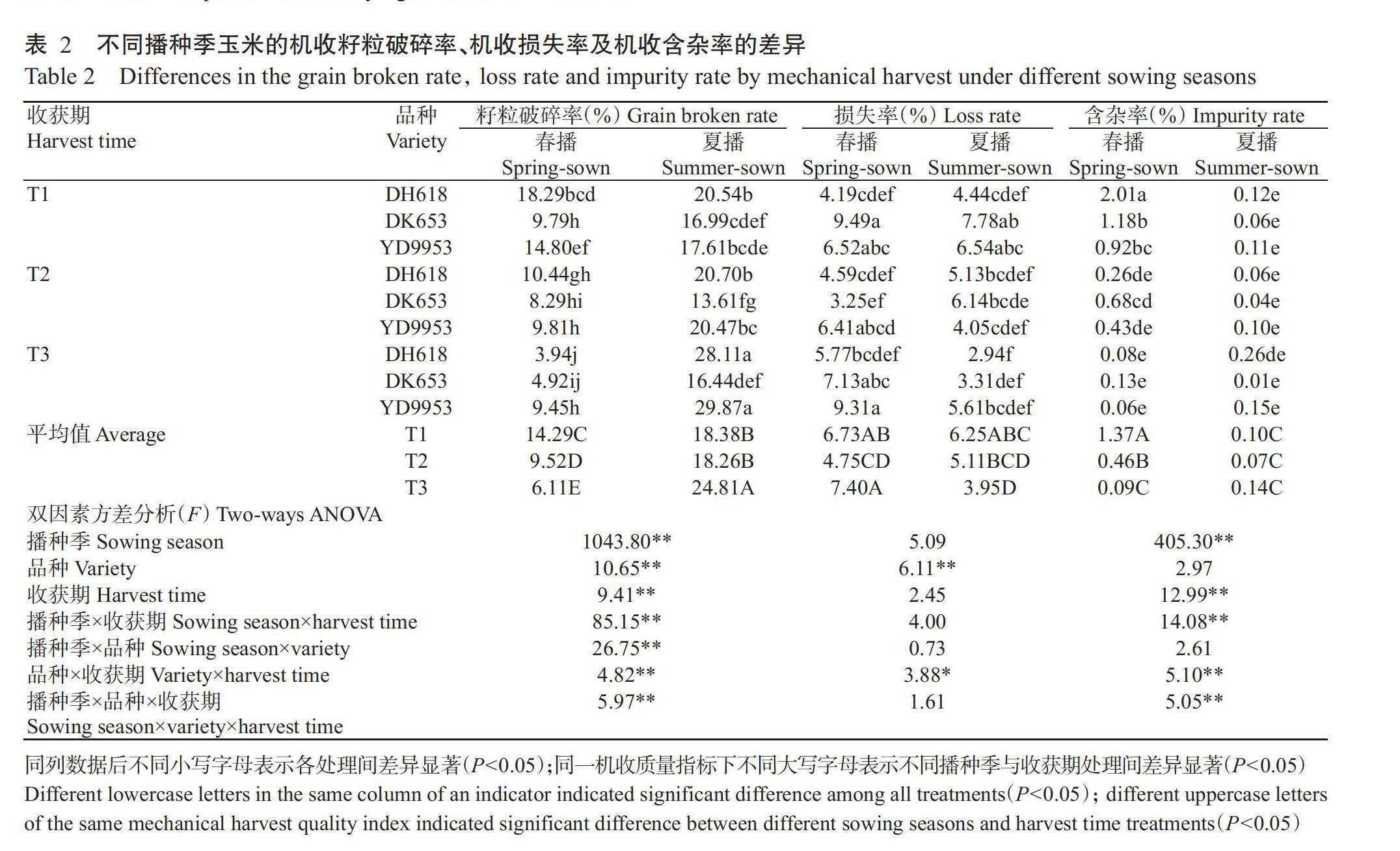
摘要:【目的】明確长江中游春播与夏播玉米机收质量、籽粒脱水的差异及其影响因素,为长江中游两熟制玉米机械化收获配套种植模式及农艺措施的优化提供参考依据。【方法】于2019年在长江中游(湖北省荆门市)选用3个当地的主栽玉米品种[登海618(DH618)、迪卡653(DK653)和豫单9953(YD9953)],设春播和夏播2个播种季,于生理成熟期(T1)、生理成熟后7 d(T2)及生理成熟后14 d(T3)分期进行籽粒机械收获,比较分析春播与夏播玉米的产量、籽粒脱水动态、机收质量及其对延迟收获的响应差异,并通过回归分析研究机收籽粒破碎率的主要影响因子及籽粒脱水与吐丝后活动积温(GDD≥10 ℃)的关系。【结果】春播与夏播玉米生长期间气象条件差异明显,春播玉米较夏播玉米生育期长、干物质积累多,3个品种的春播产量显著高于夏播产量(P<0.05,下同),平均提高64.6%。春播与夏播玉米的机收含杂率均低于3.00%,但机收籽粒破碎率与损失率偏高,是影响机收质量的主要原因。春播玉米收获时的籽粒含水量(15.7%~35.5%)高于夏播玉米(14.6%~21.5%),且均随收获期延迟而明显下降。春播玉米机收籽粒破碎率随籽粒含水量的增加而呈直线升高趋势(R2=0.543,P=0.024),夏播玉米机收籽粒破碎率与籽粒含水量则呈二次曲线关系(R2=0.509,P=0.118)。春播玉米的籽粒体积(0.27~0.36 cm3/粒)明显大于夏播玉米(0.19~0.32 cm3/粒),玉米籽粒体积与机收籽粒破碎率存在显著的负二次曲线关系(R2=0.452,P=0.009)。春播与夏播玉米的籽粒含水量与GDD≥10 ℃呈显著的Logistic曲线关系,不同播种季玉米籽粒脱水速率对GDD≥10 ℃的响应也存在明显差异,籽粒水分下降至相同水平时,春播玉米所需的GDD≥10 ℃均高于夏播玉米。【结论】长江中游春播与夏播玉米生长及收获期间的气象条件差异导致其机收产量、机收质量及籽粒脱水过程存在明显差异。与夏播玉米相比,春播玉米生育期更长,生物产量较高,机收籽粒破碎率较低,但二者的机收损失率相当。在长江中游延迟收获对夏播玉米机收质量影响不明显,但延迟7 d收获可有效降低春播玉米机收籽粒破碎率与机收损失率。
关键词: 玉米;春播;夏播;籽粒脱水;机收质量;长江中游
中图分类号: S513.04 文献标志码: A 文章编号:2095-1191(2021)04-0897-11
Comparison of grain dehydration and mechanical harvest quality between spring-sown maize and summer-sown maize in the middle reaches of Yangtze River
LIANG Ru-yu1, HUANG Yi-qin2, ZHAN Ming1*, LIU Zhi-hui1, WANG Yan1,
LIU Yong-zhong1, YANG Ren-neng1, WANG Heng-jin1
(1 College of Plant Science and Technology, Huazhong Agricultural University/Key Laboratory of Crop Ecophysiology and Farming System in the Middle Reaches of the Yangtze River, Wuhan 430070, China;
2Food Crop Institute, Hubei Academy of Agricultural Sciences, Wuhan 430070, China)
Abstract:【Objective】To clarify the differences in mechanical harvest quality and grain dehydration dynamics between spring-sown maize(SP)and summer-sown maize(SM) and the influencing factors, provide reference for matching planting modeand agronomic measures for mechanical harvest of double-cropping maize in the middle reaches of Yangtze River. 【Method】Three main local maize varieties, including Denghai 618(DH618), Dika 653(DK653) and Yudan 9953(YD9953), were selected in the field experiment in the middle reaches of Yangtze River(Jingmen, Hubei) in 2019.They were successively sown as spring maize and summer maize, and were mechanically harvested at physiological maturity (T1), 7 d(T2) and 14 d(T3) after physiological maturity, respectively. The differences in yield, grain dehydration dynamics, mechanical harvest quality and its response to delayed harvest between spring maize and summer maize were analyzed. Regression analysis was used to study the main influencing factors for the gain broken rate and the relationship between grain dehydration and the accumulated temperature after silking(GDD≥10 ℃). 【Result】The results showed the meteorological conditions during the plant growing season were different between SP and SM. The SP had longer growth period, more dry matter accumulation than that of SM. The average yield of three varieties in SP was significantly higher than that of SM with average increase of 64.6%(P<0.05, the same below). The impurity ratesin SP and SM were all lower than 3.00%. However, the grain broken rate and loss rate were all higher, which were the main problems in maize mechanical harvest quality in this region. The grain water content of SP(15.7%-35.5%) was higher than that of SM(14.6%-21.5%), and remarkably dropped along with the delay in harvest. The grain broken rate of SP linearly increased with the increase of grain water content(R2=0.543, P=0.024), while the broken rate of SM showed a quadratic curve relationship with grain water content(R2=0.509,P=0.118). The grain volume of SP(0.27-0.36 cm3/grain) was greater than that of SM(0.19-0.32 cm3/grain), and there was a significant negative quadratic relationship between grain volume and the grain broken rate(R2=0.452,P=0.009).Both of SP and SM presented an obvious Logistic model linking the grain water content and the GDD≥10 ℃. However, the responses of grain moisture dehydration to the GDD≥10 ℃ were quite different between SP and SM. When the grain water content decreased to the same level, the SP required more GDD≥10 ℃ than SM according to the logistic models. 【Conclusion】The differences of meteorological conditions between SP and SM maize growing period resulted in significant differences in mechanical harvest yield, mechanical harvest quality and grain dehydration process in the middle reaches of the Yangtze River. Compared with SM, SP has longer growth period, higher biomass and yield, lower grain breakage rate, but has similar mechanical loss rate. In the middle reaches of the Yangtze River, delayed harvest has no obvious effect on the mechanical harvest quality of summer maize, but delayed harvest for about 7 d can effectively reduce the broken rate and loss rate in mechanical harvest of spring maize.
Key words: maize; spring-sown; summer-sown; grain dehydration; mechanical harvest quality; the middle reaches of Yangtze River
Foundation item: National Key Research and Development Program of China(2016YFD0300308)
0 引言
【研究意義】玉米是长江中游第三大粮食作物,也是当地养殖业的主要饲料用粮,目前产需矛盾突出(展茗等,2010)。受市场需求增加的影响,湖北省玉米种植面积不断扩大,2018年玉米播种面积达78.1万ha(雷昌云和羿国香,2019)。高产高效机械化是长江中游玉米规模化生产的必然趋势,但目前我国玉米籽粒机械收获的推广区域主要集中在西北、东北和黄淮海地区(王克如等,2016;李璐璐等,2017;郝引川等,2018;梁效贵等,2019),长江中游尚处于起步阶段,普遍存在玉米机收籽粒破碎率及损失率高等问题(李少昆,2017)。……