基于特征迁移的室内定位算法研究
2021-07-28万祥
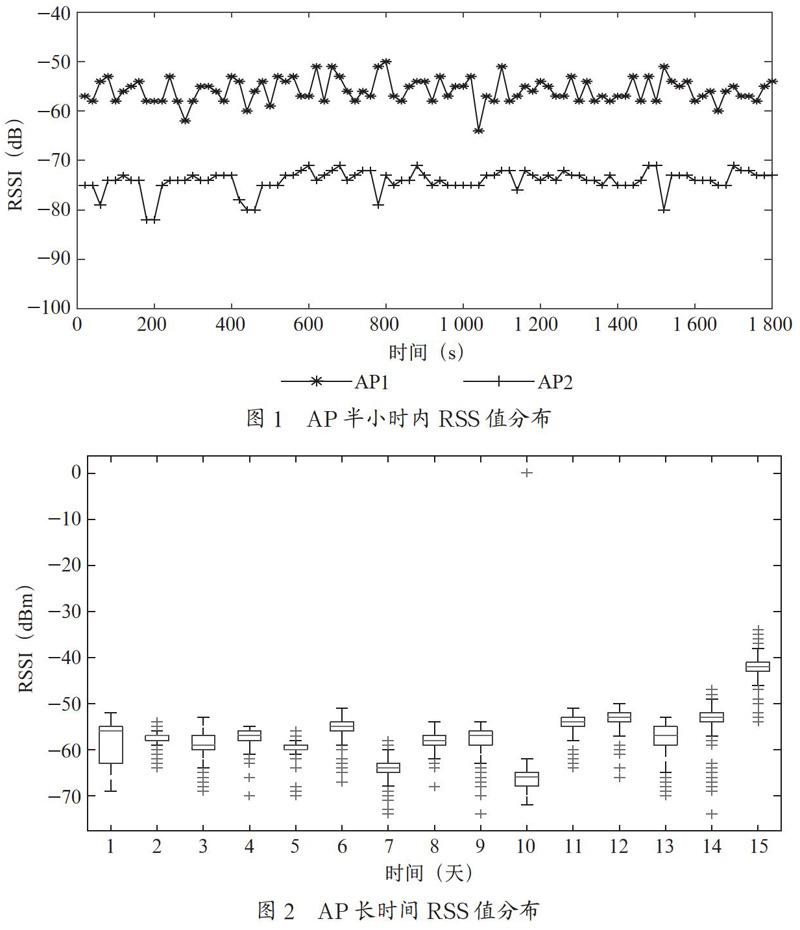
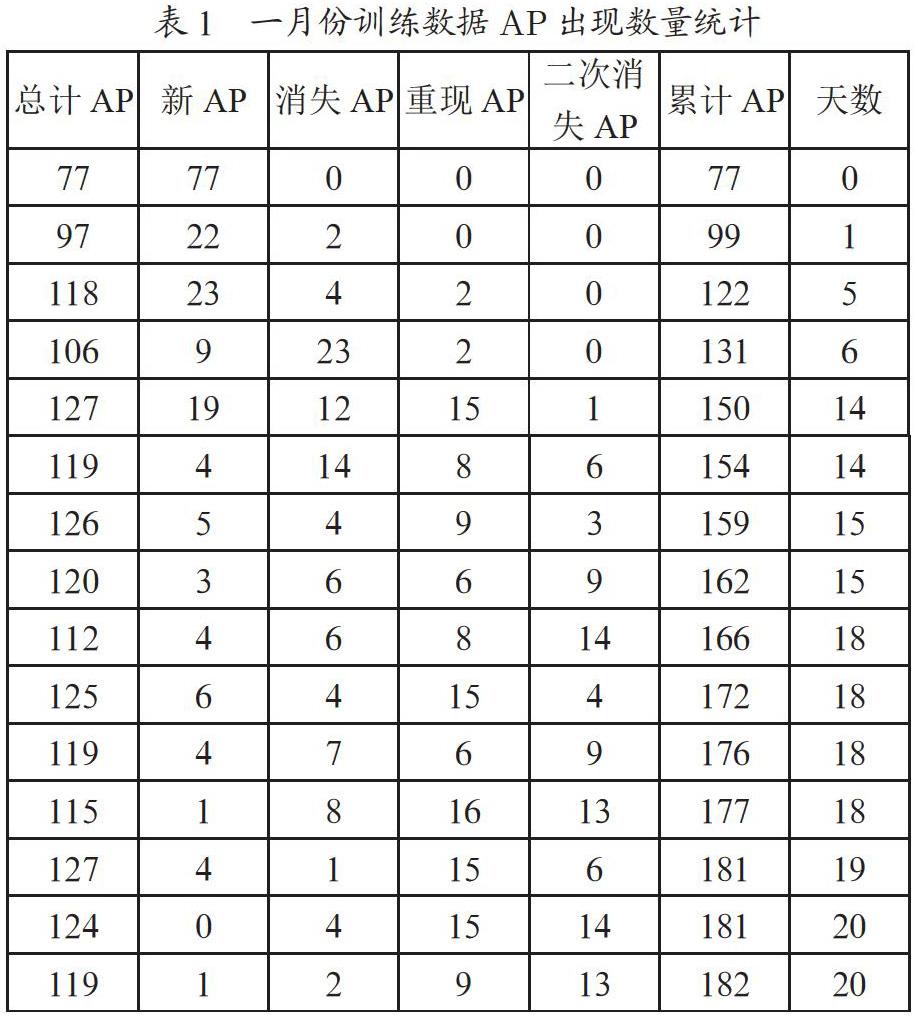
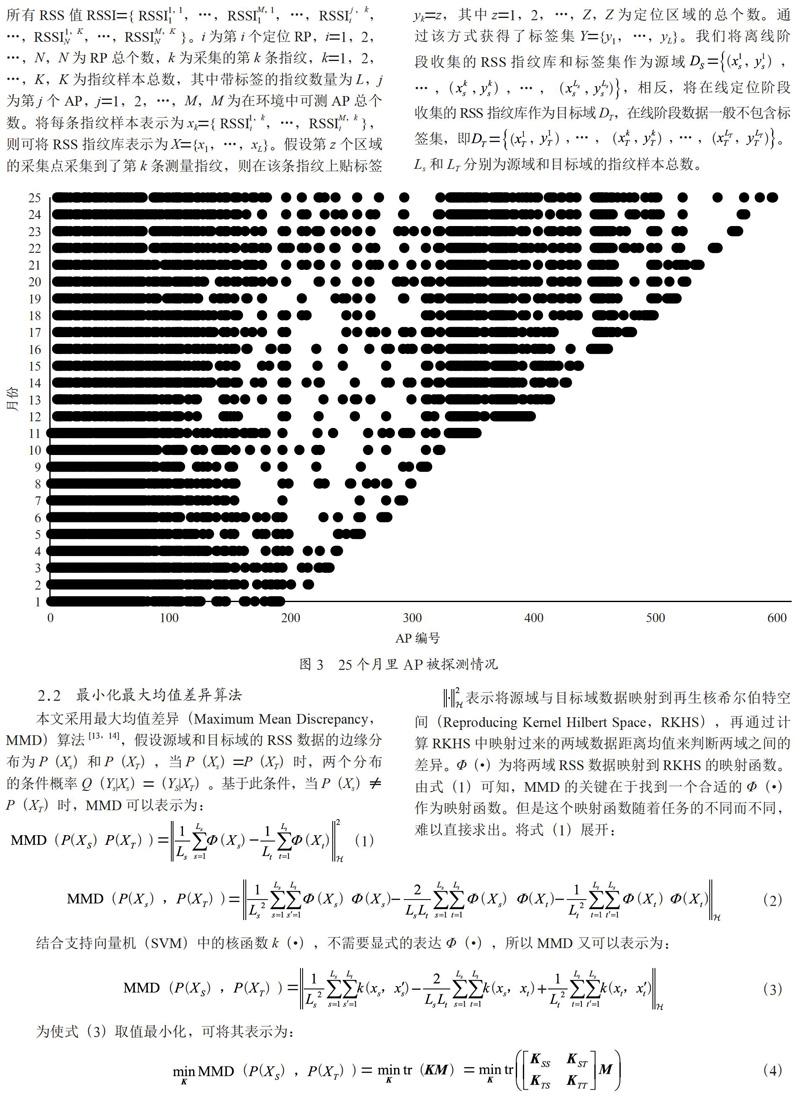
摘 要:传统基于指纹库构建的无线地图没有考虑室内环境中指纹会随着接收信号强度的变化而变化这一因素,所以系统鲁棒性较差。为了解决这一问题,提出了一种基于特征迁移的室内定位算法,采用最小化最大均值差异算法来减小离线与在线兩个阶段所收集数据的分布差异。通过多次应用算法的实验研究,结果表明,在复杂多变的室内环境中定位准确率得到大幅提升,有效地克服了两个阶段指纹特征分布差异带来的影响。
关键词:室内定位;特征迁移;最大均值差异
中图分类号:TN92 文献标识码:A 文章编号:2096-4706(2021)02-0044-05
Abstract:The traditional wireless map constructed based on fingerprint database does not consider that fingerprint in the indoor environment will change with the change of the received signal strength,so the system has poor robustness. In order to solve this problem,an indoor positioning algorithm based on characteristics migration is proposed,using minimization the maximum mean discrepancy algorithm to reduce the distribution difference of the collected data between the offline and online stages. By means of several times of experimental study on application of algorithm,the experimental results show that the positioning accuracy in the complex indoor environments has greatly improved,and it effectively overcomes the influence of the distribution difference on fingerprint characteristics between the two stages.
Keywords:indoor positioning;characteristics migration;maximum mean discrepancy
0 引 言
基于指纹的室内定位一般包含两个阶段:离线阶段和在线阶段[1]。在离线阶段,将定位区域划分为具有已知标签的小区域,各个接收点(Receiving Point,RP)在各个采集区内的固定位置收集接收信号强度(Received Signal Strength,RSS)值以构建指纹数据库。在在线阶段,一旦收集到一条待定位的RSS样本,系统则通过匹配算法从指纹数据库中找到与待定位样本最相似的点进行位置估计。很多科研团队已经陆续将很多不同算法运用到室内定位领域,文献[2,3]采用了K近邻法(K Nearest Neighbor,KNN)和加权K近邻法(Weighted K Nearest Neighbor,WKNN),但是这两种算法只对距离敏感,对所收集数据中其他有用信息的运用较少,所以很难提升室内定位的精度;文献[4]运用了支持向量机(Support Vector Machine,SVM),由于室内定位是多分类的问题,SVM是一个二分类器,所以当数据较多时,训练起来比较耗时;为应对室内接入点(Access Point,AP)的不断增多,文献[5]采用了卷积神经网络(Convolutional Neural Networks,CNN),因为CNN可有效处理高维数据,且对特征有更好的学习能力。……