固体废物腐蚀性测定(玻璃电极法)的不确定度分析
2021-07-17刘玮娜
刘玮娜
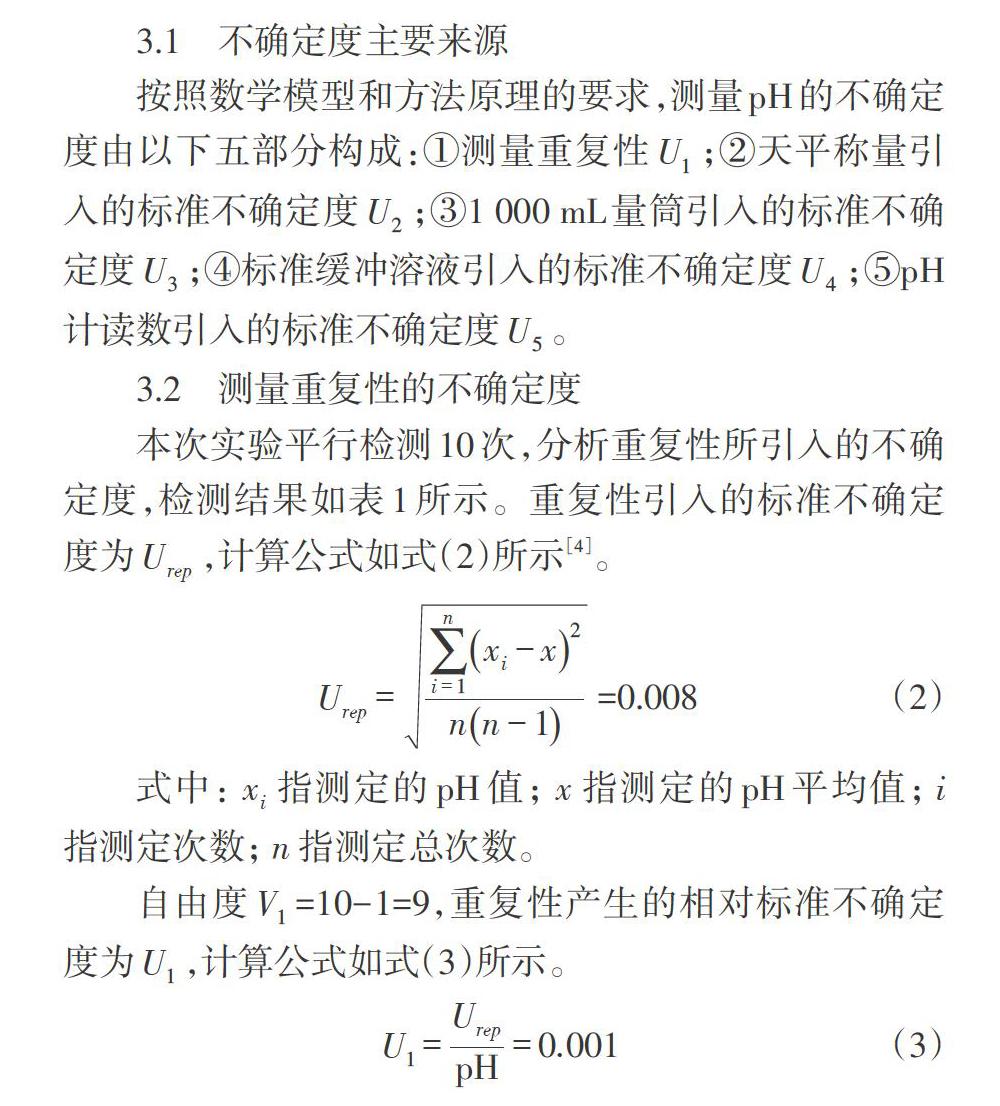
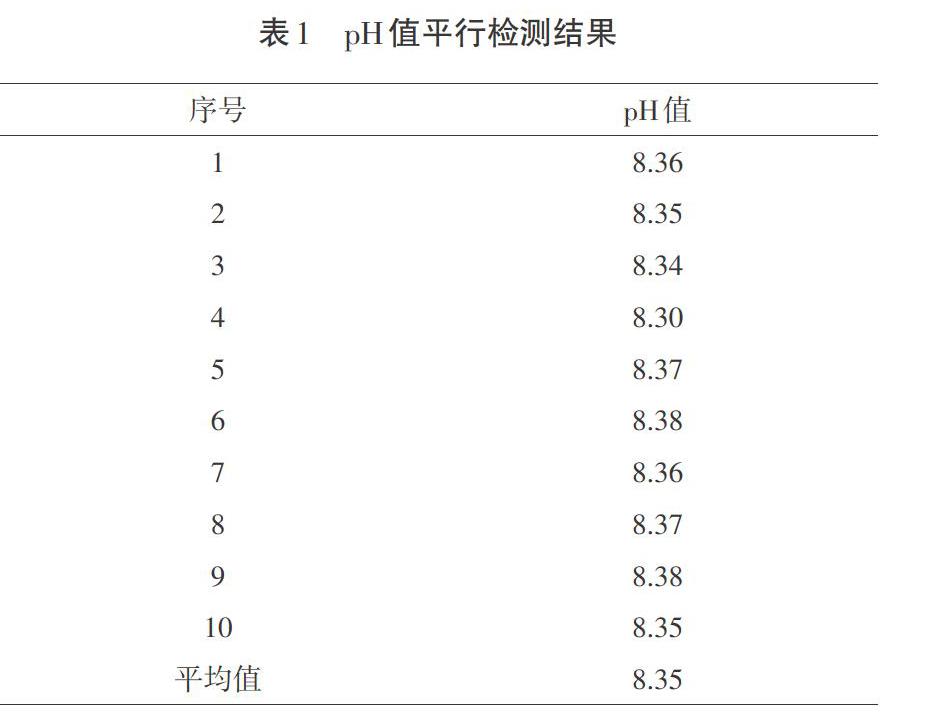
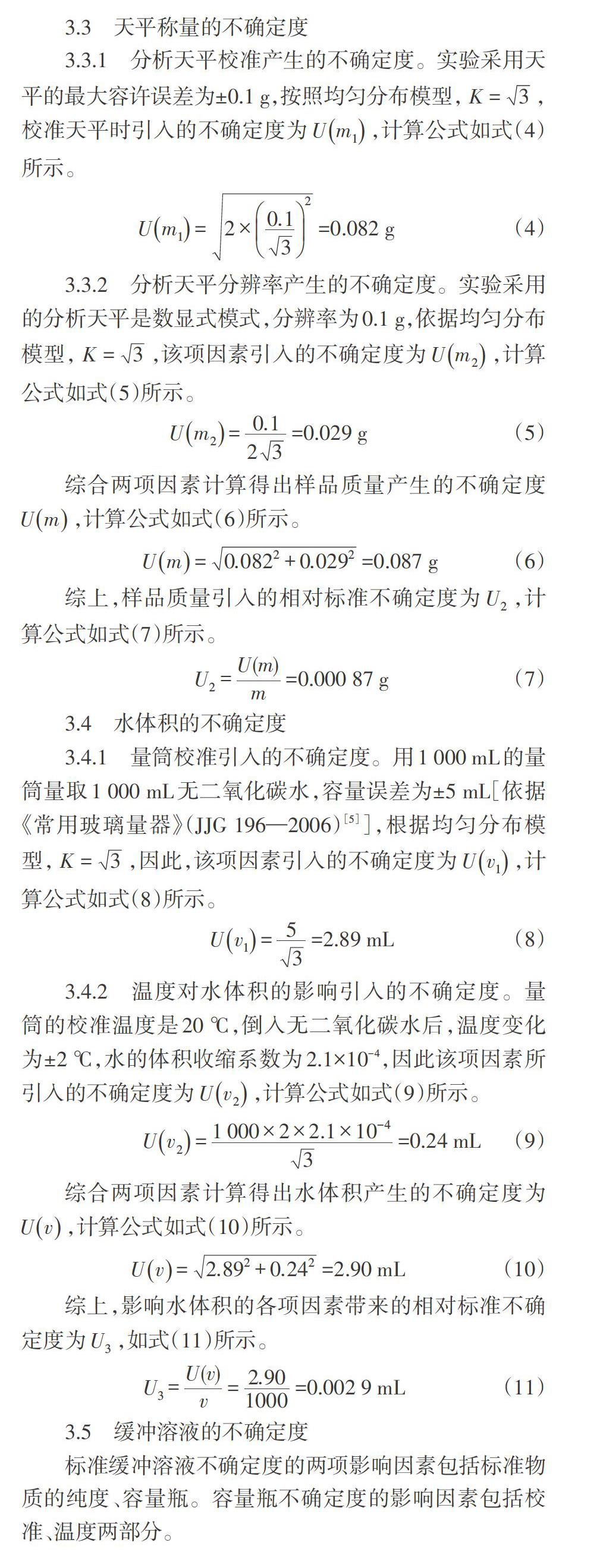
摘 要:本文按照《固体废物 腐蚀性测定 玻璃电极法》(GB/T 15555.12—1995)中的方法测定固体废物的腐蚀性,并从测量重复性、天平称量、水的体积、标准缓冲溶液和pH计所带来的不确定度五方面分析其不确定度。经计算得知,对固体废物腐蚀性测定(pH值测定)的不确定度影响最大的是量筒和测量重复性。所以,在测定时可通过使用高精度的量筒以及增加平行试样的次数来降低标准不确定度。
关键词:固体废物;pH;不确定度
中图分类号:Z27文献标识码:A文章编号:1003-5168(2021)07-0028-03
Evaluation of Uncertainty in Solid Waste Glass Electrode Test(Method
of Corrosively)
LIU Weina
(Henan Zhengzhou Ecological Environment Testing Centre,Zhengzhou Henan 450000)
Abstract: In this paper, the corrosivity of solid waste was determined according to the method in Solid waste-Glass Electrode Test-Method of Corrosively (GB/T 15555.12—1995), and the uncertainty was analyzed from five aspects: measurement repeatability, balance weighing, water volume, standard buffer solution and pH meter. The calculation shows that the most important influence on the uncertainty of solid waste pH determination is the measuring cylinger and the repeatability of measurement. Therefore, the standard uncertainty can be reduced by using a high precision measuring cylinger and increasing the number of parallel sampies.
Keywords: solid waste;pH;uncertainty
測量不确定度含义是指表征赋予被测量值分散性的非负参数[1]。每项检测过程中均会引入测定不确定度,为保证检测结果准确,需要核实数值的可接受性。测定的数据有效性与不确定度存在一定关系,因此,测定数据结论中要引入相关不确定度的数据分析[2]。
本分析报告中的实验按照《固体废物 腐蚀性测定 玻璃电极法》(GB/T 15555.12—1995)标准进行,测试了试样的腐蚀性,即pH值,并分析其不确定度。
1 方法原理及操作流程
1.1 原理
电池结构组成包括两部分:一是作为指示电极的玻璃电极,二是作为参比电极的饱和甘汞电极。在25 ℃条件下,氢离子活度变化10倍,电动势偏移59.16 mV。仪器直接显示pH数值。同时,pH计上有温度补偿装置,可以进行温度校正。仪器校准选用的标准缓冲溶液的pH值应与被测样品的pH值接近[3]。
1.2 操作流程
测定前,要进行仪器校准。选用与样品pH值相差≤2个单位的两个缓冲溶液进行校准。第一步,用第一个缓冲溶液检测后,取出电极,用装有无二氧化碳水的洗瓶冲洗干净,同时,用滤纸吸干水分。……