基于住户差异性的住宅建筑在室行为预测模型
2021-07-01俞准刘竹清李郡周亚苹黄余建张国强
俞准 刘竹清 李郡 周亚苹 黄余建 张国强
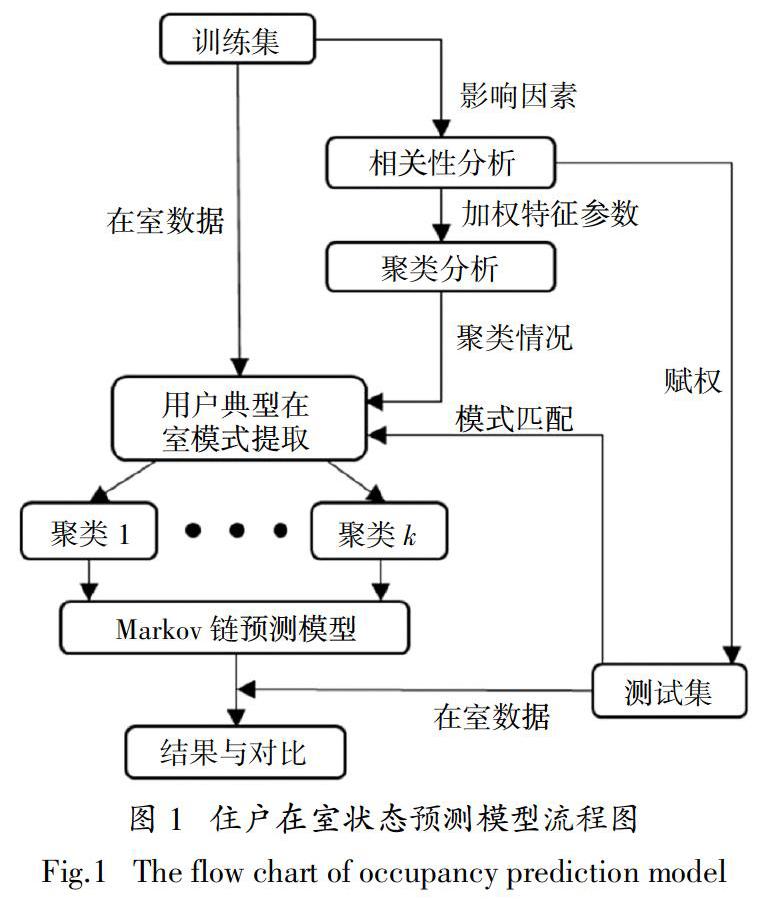
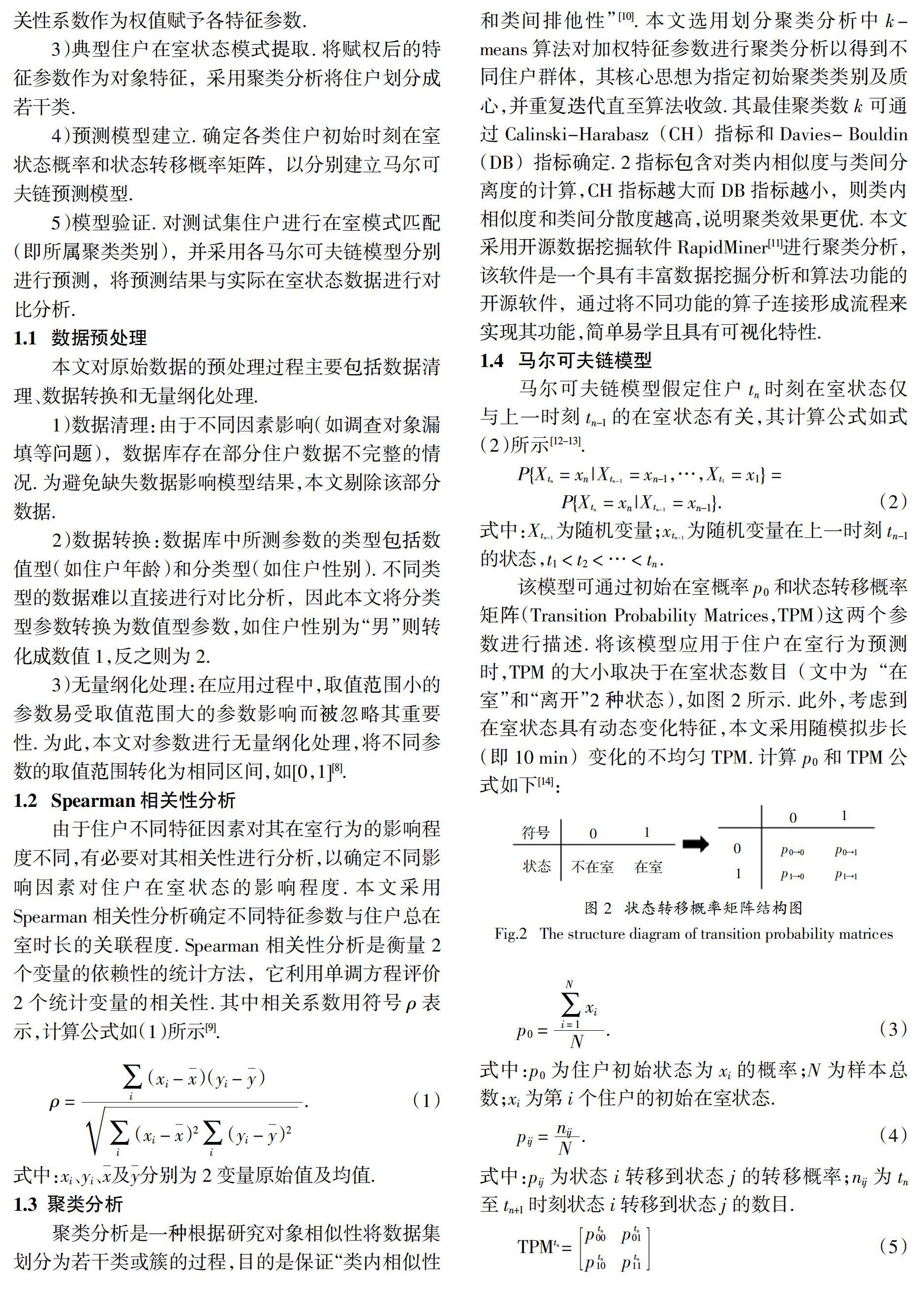
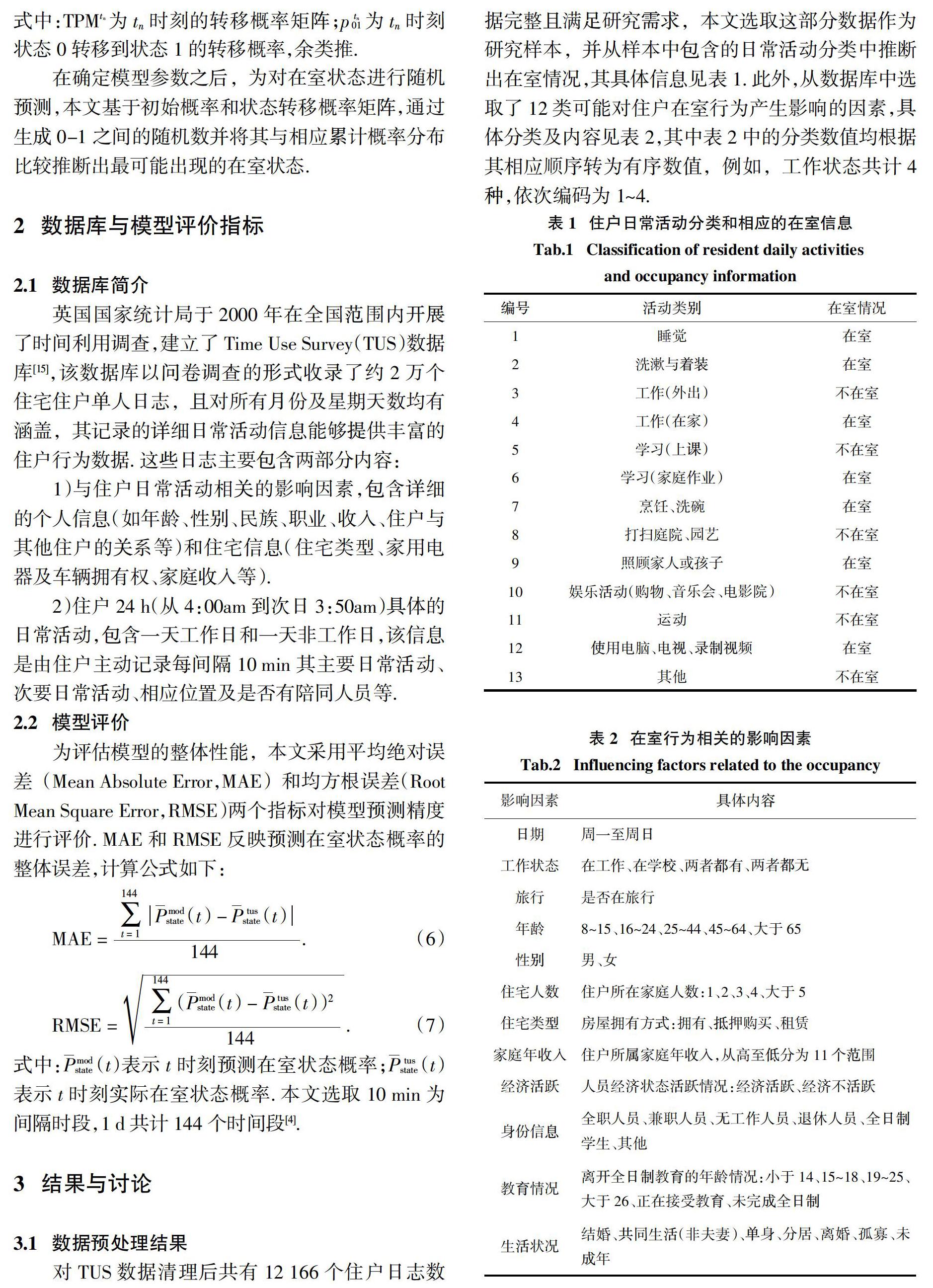
摘 要:现有住宅建筑在室行为预测模型缺乏对住户差异性的合理考虑,导致模型往往存在整体预测精度不高和适用性受限等问题. 针对这一问题,提出一种考虑住户差异性的马尔可夫链在室状态预测模型. 该模型首先通过Spearman相关性分析确定了不同影响因素(即特征参数)与住户总在室时长的相关性,将相关系数作为特征参数权值并结合聚类分析对住户群体进行分类. 在此基础上采用马尔可夫链模型对住户在室状态进行预测. 为评估所建立预测模型的性能,以英国TUS(Time Use Survey)数据库为例,将改进模型与传统马尔可夫链模型进行对比分析. 结果表明,该方法能够综合考虑不同住户特征参数及其对在室行为的影响,对住户进行合理的分类,与传统马尔可夫模型相比,所建预测模型显著提升了整体性能,平均绝对误差和均方根误差分别减小了20.57%和15.35%.
关键词:在室行为;住户差异;相关性分析;聚类分析;马尔可夫链模型
中图分类号:T111.1 文献标志码:A
Abstract:Existing occupancy prediction models for residential buildings often lack the reasonable consideration of resident diversity, which generally results in poor prediction accuracy and limited applicability. To address this issue, this study proposes a Resident-differentiated, Markov Chain Occupancy Prediction Model with Cluster (RMCPMC) analysis to fully consider the resident diversity so as to improve the model predictive performance. First, Spearman correlation analysis is employed to identify the correlation between different influencing factors (i.e. resident characteristics) and total occupancy duration. The identified correlation coefficients are used as the weights for corresponding factors, and cluster analysis is subsequently performed to classify residents into different groups. Finally, RMCPMC models are established for obtained clusters to predict the occupancy pattern. To validate the performance of the proposed model, it is applied to the UK Time Use Survey (TUS) dataset and its performance is compared with the conventional Markov Chain(MC) model. Compared with the conventional MC model, the Mean Absolute Error and the Root Mean Square Error of the prediction accuracy decrease by 20.57% and 15.35%, respectively. The results indicate a significant improvement in model prediction accuracy through reasonably considering resident diversity and their impacts on occupancy patterns.
Key words:occupancy;resident diversity;correlation analysis;cluster analysis;Markov chain model
建筑在室行為是影响建筑能耗的主要因素之一[1]. 就住宅建筑而言,研究表明对其住户的在室行为,尤其是在室状态(即居民是否在室),进行合理定量描述和准确长期预测,是提升建筑能耗预测和模拟精度的有效手段[2]. 现有住宅建筑在室状态预测模型主要包括统计概率模型、数据挖掘模型、马尔可夫链(Markov Chain,MC)模型和Agent-based模型,其中应用最为广泛的是马尔可夫链……
