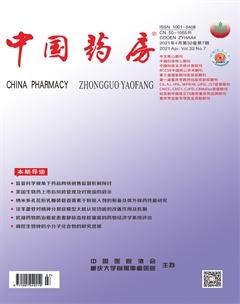
药师借助合理用药软件开展门急诊处方前置审核的实践及效果
2021-05-10谢珊珊刘松万瑾瑾梅蕾蕾刘烨张卫芳
谢珊珊 刘松 万瑾瑾 梅蕾蕾 刘烨 张卫芳


摘 要 目的:探討药师借助合理用药软件开展门急诊处方前置审核在合理用药中的作用。方法:借助合理用药软件收集2020年1-4月开展处方前置审核的门急诊处方,分析对不合理处方的干预效果;收集2019年9-12月的处方作为对照组(仅进行事后点评)、2020年1-4月的处方作为干预组(开展处方前置审核,并进行事后点评),比较干预前后不合理处方情况;进一步选取2019年11-12月被软件系统拦截的处方作为拦截对照组、2020年1-2月被拦截的处方为拦截干预组,比较干预前后处方拦截情况,评价前置审核对医师开方行为的影响。此外,以2020年4月获取的108 992张处方为对象,分别采用传统模式(即全人工审核)与信息化模式(即软件辅助人工审核)进行事后点评,比较两种模式下的处方事后点评效果。结果:2020年1-4月,药师开展前置审核处方共2 393张,其中合理处方1 387张(占57.96%),不合理并进行干预的处方1 006张(占42.04%);药师干预后医师返回修改处方数983张,干预成功率为97.71%。与对照组比较,干预组的门急诊处方总体不合理率、各类型处方不合理率均显著降低(P<0.001);与拦截对照组的拦截处方数(1 402张)比较,拦截干预组的拦截处方数(721张)显著降低(P<0.001)。与传统模式比较,信息化模式下需要人工事后点评的处方数及“假阳性”处方数显著减少,且发现的不合理处方数显著增加(P<0.001)。结论:药师借助合理用药软件开展处方前置审核,可显著提高门急诊处方的合理率;在信息化模式下进行处方事后点评,可在降低药师工作强度的同时提高点评的准确度。
关键词 合理用药软件;前置审核;处方点评;合理用药
中图分类号 R95 文献标志码 A 文章编号 1001-0408(2021)07-0876-05
ABSTRACT OBJECTIVE: To explore the role of pharmacists in developing the outpatient and emergency prescription pre-audit with the help of rational drug use software. METHODS: With the help of rational drug use software, outpatient and emergency prescription pre-aduit was conducted during Jan.-Apr. 2020; the intervention effects of irrational prescriptions were analyzed. The prescriptions from Sept. to Dec. in 2019 were included in the control group (only for post review), and the prescriptions from Jan. to Apr. in 2020 were included in the intervention group (pre-audit and post review); the unreasonable prescriptions were compared before and after the intervention. The prescriptions intercepted by the software system from Nov. to Dec. in 2019 were further selected as the interception control group, and the prescriptions intercepted from Jan. to Feb. in 2020 were selected as the interception intervention group; the interception situation of prescriptions before and after the intervention was compared, and the influence of pre-audit on physicians prescription behavior was evaluated. In addition, 108 992 prescriptions in Apr. 2020 were selected for post review using the traditional model (i.e. complete manual audit) and the information model (i.e. software-assisted manual audit ) respectively; the effects of two models were compared. RESULTS: From Jan. to Apr. in 2020, a total of 2 393 prescriptions were pre-audited by pharmacists, among which 1 387 prescriptions were reasonable (57.96%) and 1 006 prescriptions were unreasonable and intervened (42.04%). After pharmacist intervention, 983 prescriptions were modified by doctors, and the success rate of intervention was 97.71%. Compared with control group, unreasonable rate of outpatient and emergency prescriptions, that of each type of prescriptions were all decreased significantly (P<0.001). Compared with interception control group (1 402 pieces), the number of intercepted prescriptions (721 pieces) was significantly reduced in interception intervention group (P<0.001). Compared with traditional model, the number of prescriptions requiring manual post review and “false positive” prescriptions were decreased significantly under information model, and the number of discovered unreasonable prescriptions were increased significantly (P<0.001). CONCLUSIONS: With the help of rational drug use software, prescription pre-audit by pharmacists can significantly improve reasonable rate of outpatient and emergency prescriptions. The work intensity of pharmacists in post review of prescriptions can be reduced and the accuracy of prescription review can be improved in the information mode.
KEYWORDS Rational drug use software; Pre-audit; Prescription review; Rational drug use
2017年7月12日,國家卫生健康委员会发布《关于加强药事管理转变药学服务模式的通知》,明确转变药学服务模式势在必行[1]。2018年7月10日,国家卫生健康委员会、国家中医药管理局、中央军委后勤保障部联合制定的《医疗机构处方审核规范》指出,所有处方均应当经审核通过后方可进入划价收费和调配环节,未经审核通过的处方不得收费和调配;该规范同时指出,医疗机构应积极推进处方审核信息化,药师可通过信息系统辅助进行处方审核[2]。……