医学护理用的纳米氧化锌抗菌PE胶制备及应用
2021-04-27赵凯
赵凯
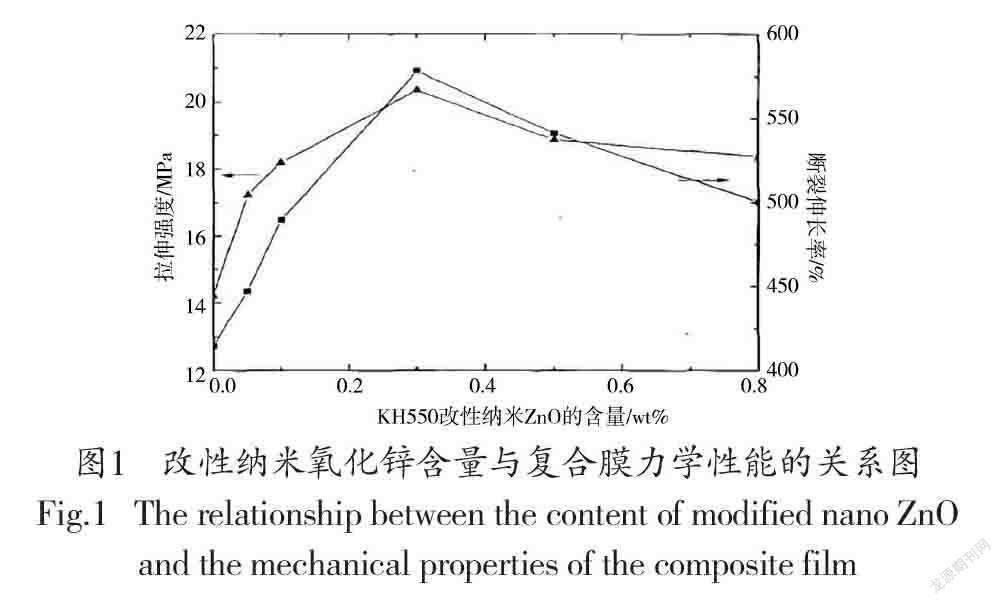
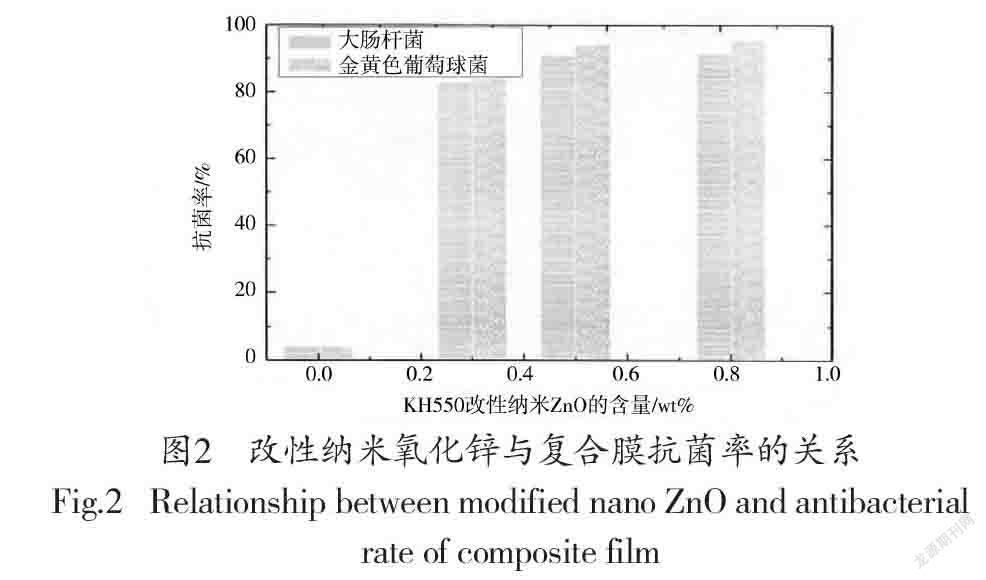
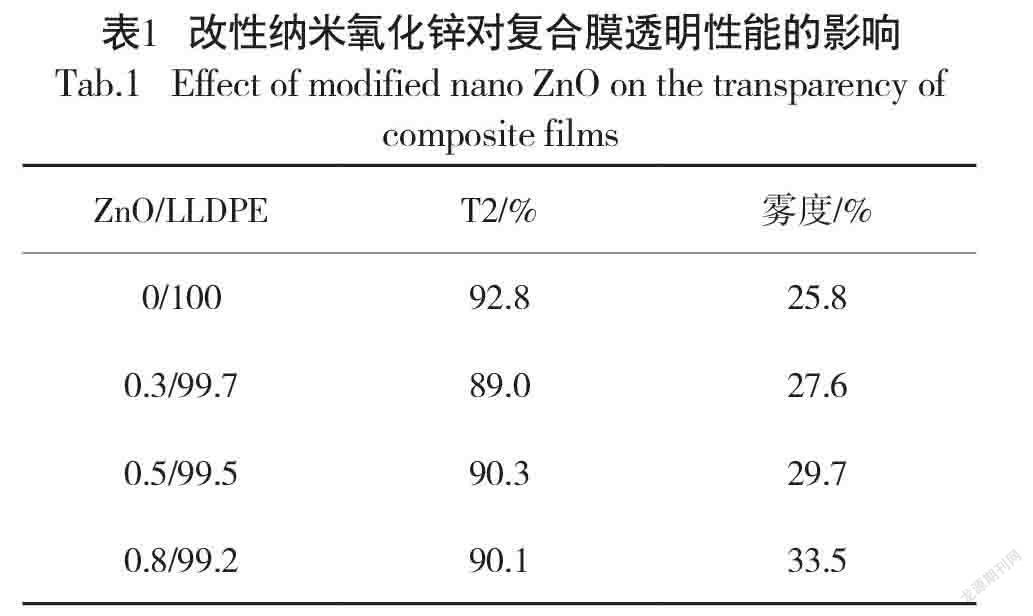
摘 要:针对传统聚乙烯树脂医学用品在潮湿环境下易受微生物感染的问题,用聚乙烯树脂(PE)与改性纳米氧化锌共混制备了抗菌复合膜。通对改性前后纳米氧化锌抗菌复合膜力学、抗菌、透光和湿透性能的测定,得到的具体结论为:改性纳米氧化锌的加入对复合膜力学性能、抗菌性能皆有明显提高,但对透明度和透湿性影响不大。改性纳米氧化锌含量为0.3wt%时,复合膜的拉伸强度和断裂拉伸率最高为20.33MPa和578.12%。当改性纳米氧化锌含量为0.8wt%时,复合膜对大肠杆菌和金黄色葡萄球菌的抗菌率最高可达91.58%和95.79%。当改性纳米氧化锌含量为0.5wt%时,最小透湿值为9.37g/m2·24h。
关键词:聚乙烯树脂;纳米氧化锌;抗菌;PE胶制备
中图分类号:TQ427.2+6 文献标识码:A 文章编号:1001-5922(2021)07-0067-04
Preparation and Application of Nano-zinc Oxide Antibacterial PE Adhesive for Medical Nursing
Zhao Kai
(Harrison International Peace Hospital, HengShui 053000, China)
Abstract:In order to solve the problem that traditional polyethylene resin medical products are susceptible to microbial infection in humid environment, the antibacterial composite film was prepared by blending polyethylene resin (PE) with modified nano ZnO. Through the determination of mechanical properties, antibacterial properties, light transmittance and moisture permeability of nano ZnO antibacterial composite membrane before and after modification, the specific conclusion is that the addition of modified nano ZnO can significantly improve the mechanical properties and antibacterial properties of the composite membrane, but has little effect on the transparency and moisture permeability. When the content of modified nano ZnO is 0.3wt%, the tensile strength and breaking tensile ratio of the composite film are 20.33MPa and 578.12%, respectively. When the content of modified nano ZnO was 0.8wt%, the antibacterial rates of the composite film against Escherichia coli and Staphylococcus aureus were 91.58% and 95.79%, respectively. When the content of modified nano ZnO is 0.5wt%, the minimum moisture permeability is 9.37g/m2·24h.
Key words:polyethylene resin; nano zinc oxide; antibacterial; preparation of PE adhesive
隨着我国医学技术的蓬勃发展,大家对医学用品安全性能的关注也随之提高。聚乙烯树脂(PE)作为制造静脉输液相关产品的主要材料,具有降低输液不良反应几率等优点。但是,聚乙烯树脂因为其材料的特殊性,存在潮湿环境下易受微生物感染的问题,因此对于聚乙烯树脂(PE)的抗菌改性进行研究是十分必要的。但目前国内对聚乙烯树脂改性还停留在初级阶段,只局限于聚乙烯同类用品改性,如:马荣秀(2020)尝试用海藻酸钠对聚乙烯醇进行改性,证实经过改性的聚乙烯醇具有良好的力学性能和生物相容性[1];杨静(2020)则对超高分子量聚乙烯膜的物理改性、化学改性、光接枝改性以及表面活性剂改性方法作出研究,并分析了经过改性后的聚乙烯树脂在医学方面的应用[2]。……
