ACAT1在肝细胞癌中的表达与预后评估价值
2021-03-18周慧李文超黄少卓萧展毅哈睿南熊志勇刘波胡昆鹏
周慧?李文超?黄少卓?萧展毅?哈睿南?熊志勇?刘波?胡昆鹏
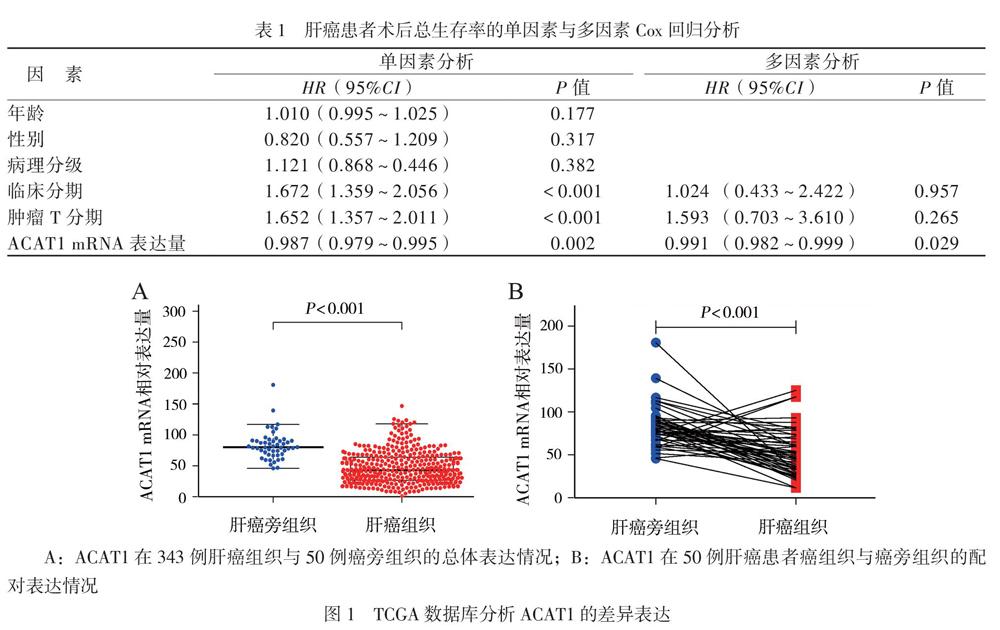
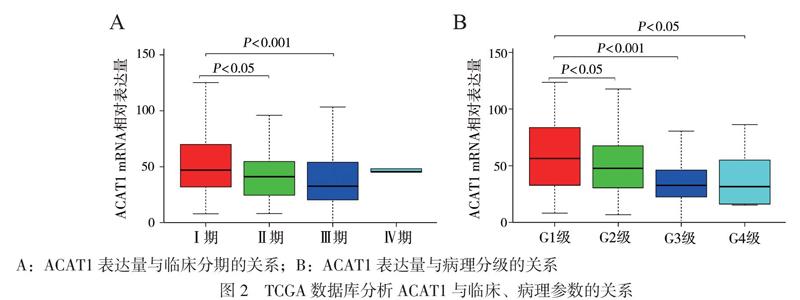
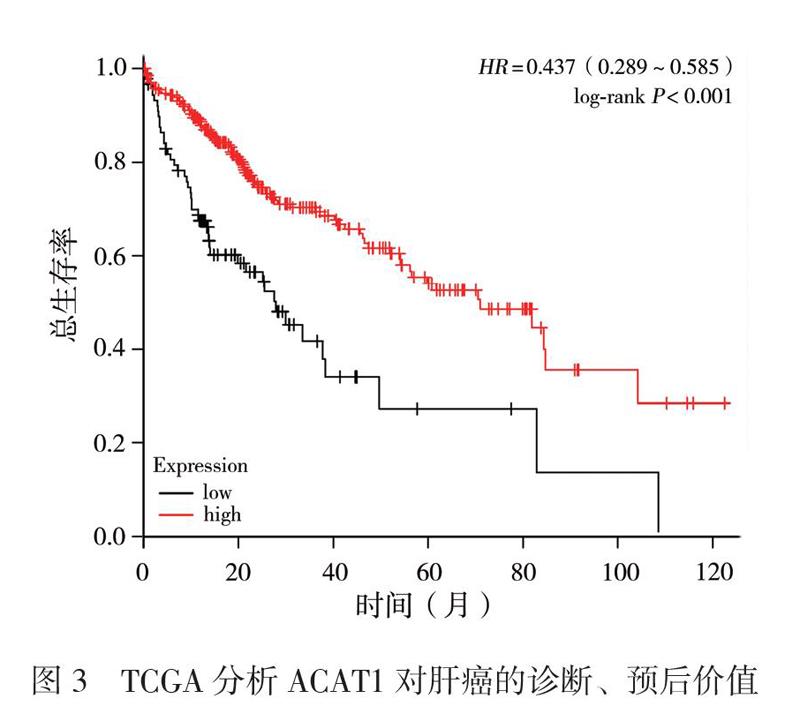
【摘要】目的 分析乙酰輔酶A酰基转移酶1(ACAT1)在肝癌中的表达及其临床意义。方法 从癌症基因组图谱(TCGA)数据库中下载371例肝癌患者癌组织和50例癌旁组织基因表达数据及临床信息,使用t检验分析ACAT1在肝癌组织与癌旁组织的表达情况,利用方差分析检验ACAT1与患者肿瘤分期[2017年美国癌症联合委员会(AJCC)分期标准]、病理分级间的关系;根据ACAT1表达量中位值将患者分为ACAT1高、低表达2组,采用Kaplan-Meier法分析ACAT1对肝癌的预后价值;Cox回归分析探讨ACAT1是否为判断肝癌预后的独立危险因素;采用实时定量PCR法验证76例肝癌患者癌组织和癌旁组织ACAT1在转录水平的表达差异,蛋白免疫印迹法验证4例肝癌患者癌组织和癌旁组织ACAT1蛋白水平的表达差异。结果 TCGA数据库分析显示在371例肝癌患者的癌组织中,ACAT1的mRNA表达水平降低(P < 0.001),并随着肿瘤临床分期(StageⅠ ~ Ⅲ期)及病理分级(G1 ~ G4级)的升高而降低(P均< 0.001),ACAT1低表达组肝癌患者的总生存率低于高表达组(P < 0.001),且ACAT1表达可成为判断肝癌预后的独立危险因子(P = 0.029)。经PCR法和蛋白免疫印迹法验证,无论是在mRNA转录水平还是蛋白表达水平上,肝癌组织ACAT1的表达量都低于癌旁组织。结论 ACAT1在肝细胞癌中表达下降,可作为肝癌临床诊断及预后评估的分子标志物。
【关键词】乙酰辅酶A酰基转移酶1;肝癌;诊断;预后
The expression pattern and prognostic value of ACAT1 in hepatocellular carcinoma Zhou Hui, Li Wenchao, Huang Shaozhuo, Xiao Zhanyi, Ha Ruinan, Xiong Zhiyong, Liu Bo, Hu Kunpeng. Department of General Surgery, the Third Affiliated Hospital of Sun Yat-sen University, Guangzhou 510630, China
Corresponding author, Hu Kunpeng, E-mail: hkpdhy918@ 126. com
【Abstract】Objective To evaluate the expression level of acetyl-Coenzyme A acetyltransferase 1 (ACAT1) and its clinical significance in hepatocellular carcinoma (HCC). Methods RNAseq and clinical information of 371 HCC and 50 paracancerous samples were obtained from The Cancer Genome Atlas (TCGA) database. The expression pattern of ACAT1 in the HCC and paracancerous samples was statistically compared by t-test. The relationship among ACAT1, tumor staging (AJCC staging criteria) and pathological grading was analyzed by using ANOVA. All patients were classified into the low-and high-ACAT1 expression groups according to the median value of ACAT1 mRNA expression. The prognostic value of ACAT1 for HCC was assessed by Kaplan-Meier method. Whether ACAT1 could be an independent prognostic factor of HCC patients was evaluated by Coxs regression analysis. The expression profile of ACAT1 mRNA between 76 paired HCC and paracancerous tissues was analyzed by real-time quantitative PCR (qRT-PCR). The expression pattern of ACAT1 protein between 4 paired HCC and paracancerous tissues was analyzed by Western blot. Results TCGA database revealed that the expression levels of ACAT1 were significantly down-regulated in 371 HCC tissues (all P < 0.001), and remarkably decreased along with the higher tumor clinical staging (stage Ⅰ-stage Ⅲ) and pathological grading (G1-G4) (all P < 0.001). The overall survival of HCC patients with low ACAT1 expression was significantly lower compared with that of those with high ACAT1 expression (P < 0.001). The expression of ACAT1 could serve as an independent risk factor for predicting the prognosis of HCC patients (P = 0.029). qRT-PCR and Western blot demonstrated that the expression of ACAT1 in the HCC samples was significantly lower than that in the paracancerous samples at the mRNA and protein levels. Conclusion The expression level of ACAT1 is down-regulated in HCC tissues, which can be a molecular biomarker for clinical diagnosis and prognosis assessment for HCC.
【Key words】Acetyl-coenzyme A acetyltransferase 1;Hepatocellular carcinoma;Diagnosis;Prognosis
肝细胞癌是最常见的原发性肝癌,现已成为全球癌症相关死亡的主要原因之一[1]。肝细胞癌的主要致病因素为慢性乙型肝炎和黄曲霉毒素B1中毒,中国属于肝癌高发地区,随着慢性肝脏疾病的患病率逐年上升,肝细胞癌的发病率也将不断增加,尽管肝细胞癌的预防、检测、诊断和治疗手段取得了很大进步,但由于肝癌复杂的病理机制以及易侵袭、转移的特性,使得患者的预后仍不尽人意[2]。因此,寻找新的分子生物标志物,对肝癌具有重要的临床意义。
乙酰辅酶A酰基转移酶(ACAT),又称乙酰乙酰辅酶A硫解酶、β-酮硫解酶,在哺乳动物中存在2种亚型,分别为ACAT1和ACAT2,ACAT1位于线粒体上,ACAT2位于細胞质里[3]。……