不同林分下多花黄精的生长指标与土壤容重的相关性分析
2021-02-26刘勇
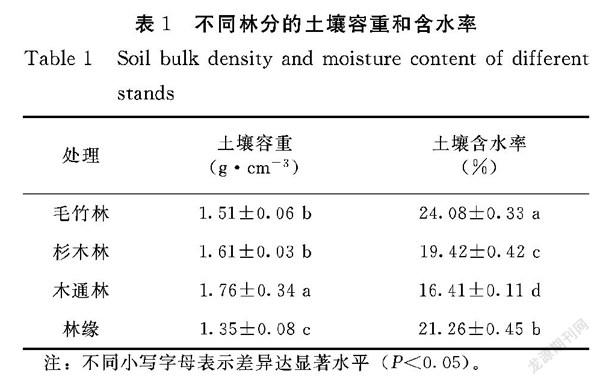
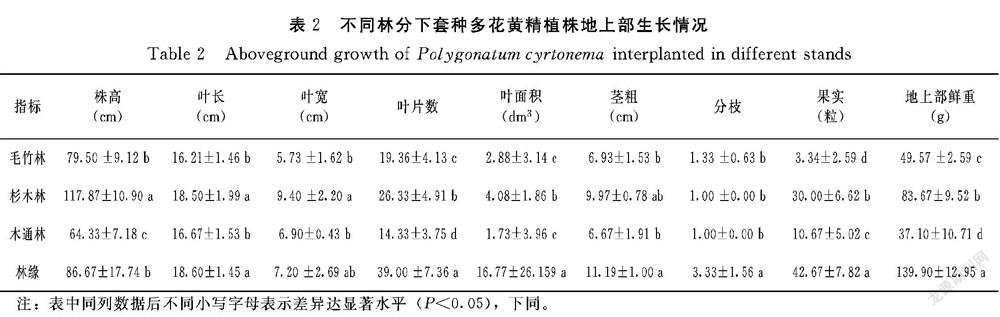


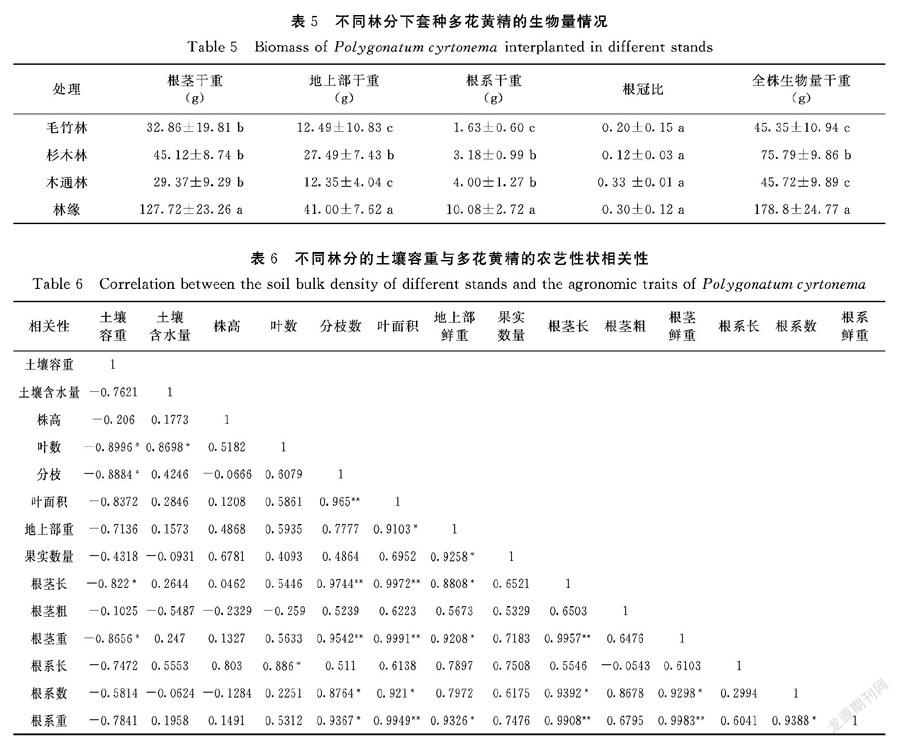
摘 要:多花黄精人工栽培过程中普遍存在对林分和土壤选擇不规范等问题,针对这些问题对不同林分套种多花黄精的生长特性及与土壤容重的相关性进行分析。结果表明:不同林分套种对多花黄精生长及土壤容重都有较大的影响,土壤容重与多花黄精地上部和地下部各生长指标均呈负相关,林缘种植的多花黄精产量最高,为253.77 g·株-1,木通林下地块土壤容重最大,为1.76 g·cm-3,且套种多花黄精产量最低,仅58.37 g·株-1。林缘为种植多花黄精优选的地块,多花黄精套种应加强土壤有机质和林分郁闭度的调控。
关键词:林分;土壤容重;多花黄精;农艺性状
中图分类号:S 567.239 文献标志码:A 文章编号:0253-2301(2021)12-0072-06
DOI: 10.13651/j.cnki.fjnykj.2021.12.012
Correlation Analysis Between the Growth Indexes of Polygonatum Cyrtonema andSoil Bulk Density Under Different Stands
LIU Yong
(Guangze County Nursery, Nanping, Fujian, 354100, China)
Abstract: During the process of artificial cultivation of Polygonatum cyrtonema, there were widespread problems such as non-standard selection of stand and soil. In view of these problems, the growth characteristics of Polygonatum cyrtonema interplanted in different stands and its correlation with soil bulk density were analyzed. The results showed that: Interplanting in different stands had great influence on the growth of Polygonatum cyrtonema and the soil bulk density. The soil bulk density was negatively correlated with the growth indexes of the aboveground and underground parts of Polygonatum cyrtonema. The yield of Polygonatum cyrtonema planted at the edge of the forest was the highest (253.77 g·zhu-1), and the soil bulk density was the highest (1.76 g·cm-3) in the understory plot of akebia stem, while the yield of Polygonatum cyrtonema interplanted was the lowest (58.37 g·zhu-1). The edge of the forest was the optimal plot for planting Polygonatum cyrtonema. And the interplanting of Polygonatum cyrtonema should strengthen the regulation of soil organic matter and stand canopy density.
Key words: Stand; Soil bulk density; Polygonatum cyrtonema; Agronomic traits
多花黄精Polygonatum cyrtonema Hua.又称姜形黄精,是《中国药典》收载3种黄精基源之一[1],为百合科黄精属药食两用植物,主要药用部位为根茎,分布在我国福建、江西、浙江、湖北、湖南和贵州等地。早在宋代时福建省就有生产多花黄精的历史[2]。近年来,多花黄精也被列为福建省“福九味”之一,多个地区多花黄精人工种植面积超过万亩。多花黄精的研究主要集中在常规栽培技术、病虫害防控和有效成分等方面,如郭妮[3]研究了肥料配施、种植密度和透光度等栽培条件对多花黄精产量和品质的影响;田启建等[4]研究了黄精病害种类及发生情况;周新华等[5]研究了林下生境及生长年限对多花黄精生长和药用活性成分含量的影响。但是,多花黄精人工种植技术还存在种植前2年存活率较高,而后期存活率和生长量不理想,规范化种植技术水平较低等“卡脖子”问题。……