血清淀粉样蛋白A水平与急性脑干梗死预后的相关性研究
2021-01-28魏婉桑红菲张灏蒋敏海
魏婉 桑红菲 张灏 蒋敏海

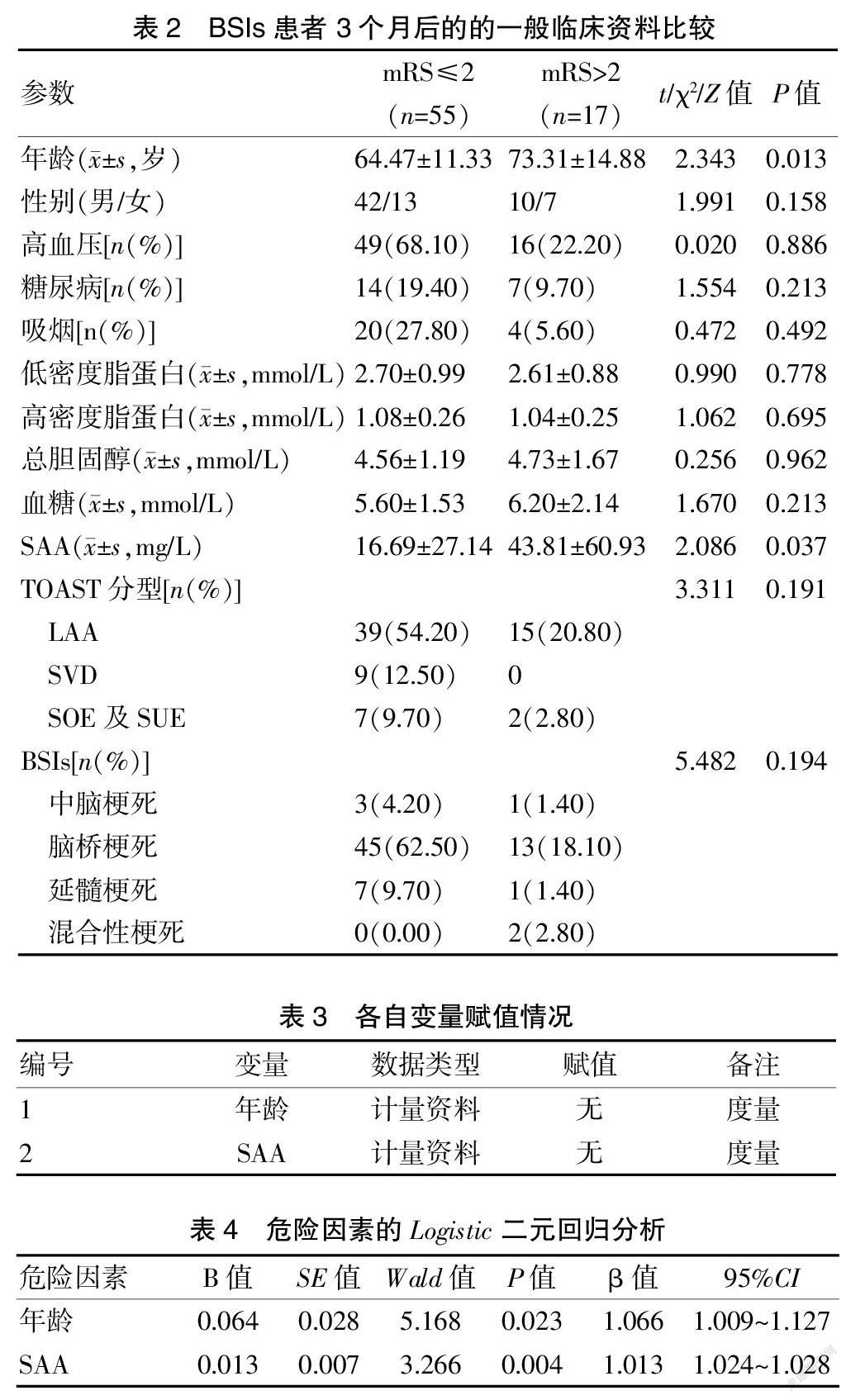
[摘要] 目的 探讨血清淀粉样蛋白A(SAA)水平与急性脑干梗死预后的相关性。 方法 选取2019年1月至2020年3月我院治疗的急性脑干梗死患者72例,测定其血清SAA水平。采用美国国立卫生研究院卒中量表(NIHSS)评分将入院时的患者分为轻度组和重度组;采用改良修订量表(mRS)评分将脑干梗死患者3个月预后分为预后良好与不良组,采用Logistic二元回归分析脑干梗死的独立危险因素。 结果 NIHSS>5分的患者组SAA水平显著高于NIHSS≤5的患者组,差异有统计学意义(P<0.05);在mRS>2的患者组的年龄,SAA水平显著高于mRS≤2组,差异有统计学意义(P<0.05)。 结论 年龄和SAA水平是急性脑干梗死预后的独立预后因素。SAA水平与脑干梗死的严重程度和预后密切相关,SAA水平是急性脑干梗死预后的独立危险因素。
[关键词] 淀粉样蛋白A;急性脑干梗死;MRS评分;预后
[中图分类号] R743.3 [文獻标识码] B [文章编号] 1673-9701(2021)33-0054-04
[Abstract] Objective To explore the correlation between serum amyloid A(SAA) level and prognosis of patients with acute brainstem infarction (ABI). Methods Seventy-two patients with ABI treated in our hospital from January 2019 to March 2020 were selected and their serum SAA levels were measured. The patients were divided into the mild group and the severe group based on National Institute Health Stroke Scale (NIHSS) score on the admission. The patients with brainstem infarction were divided into the good prognosis group and the bad prognosis group by modified revised scale (mRS) based on the 3-month prognosis, and the independent risk factors of brainstem infarction were analyzed by Logistic binary regression. Results The SAA level in patients with NIHSS>5 was significantly higher than that in patients with NIHSS≤5, with statistically significant difference(P<0.05). At the age of patients with mRS>2, SAA level was significantly higher than that of patients with mRS≤2, with statistically significant difference(P<0.05). Conclusion Age and SAA level are independent prognostic factors of ABI. SAA level is closely related to the severity and prognosis of brainstem infarction, and SAA level is an independent risk factor for the prognosis of ABI.
[Key words] Serum amyloid A; Acute brainstem infarction; MRS score; Prognosis
卒中是导致全世界神经系统发病率和死亡率升高的重要原因,其中卒中分为脑梗死和脑出血,前者占所有卒中的80%,而缺血性脑干梗死(Brainstem infarctions, BSIs)构成所有缺血性脑卒中的10%,包括中脑梗死、脑桥梗死和延髓梗死,BSIs即使梗死面积非常小,也可能导致严重的神经功能缺损[1]。BSIs存在复杂多样的临床表现[2],有些BSIs会急剧进展加重并且病情危重,目前尚无有效可靠的预测因素。因此评估BSIs的预后和复发风险至关重要。血清淀粉样蛋白A(Serum amyloid A, SAA)是急性炎症状态的一种敏感标志物[3-5],类似高敏C-反应蛋白,SAA与动脉粥样硬化有关[6-7]。急性脑梗死引发炎症反应[8],进而导致SAA水平升高。本研究中分析了BSIs患者血清SAA水平与病情严重程度及预后的相关性。现报道如下。
1 资料与方法
1.1 一般资料
选择我院神经内科2019年1月至2020年3月收治的急性脑干梗死患者72例作为研究对象,所有研究对象均经过头颅CT或MRI检查证实为脑干梗死;其中男52例,女20例,平均年龄(66.58±12.61)岁。纳入……