火针针刺激痛点结合康复训练治疗肩袖损伤临床疗效
2021-01-25余静楚佳梅王延武陈顺喜魏袁晔
余静 楚佳梅 王延武 陈顺喜 魏袁晔
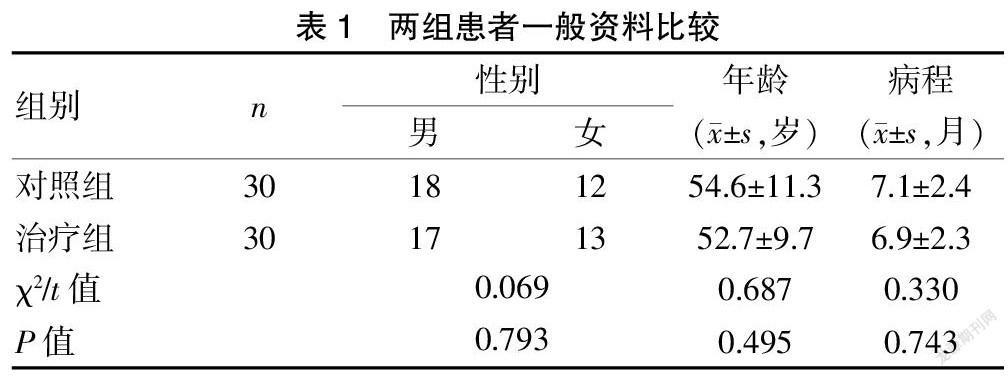
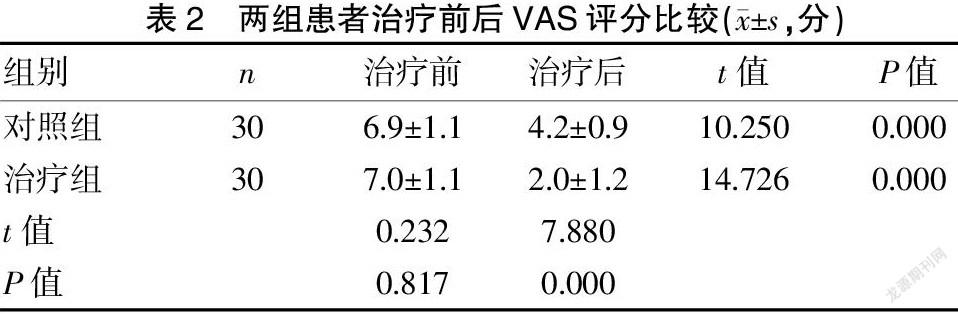
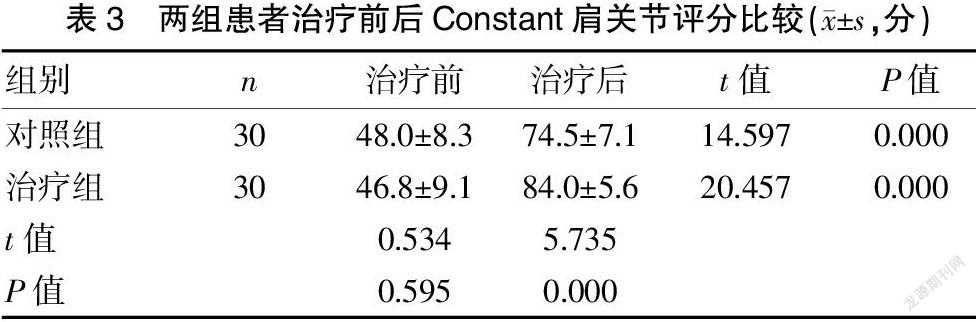
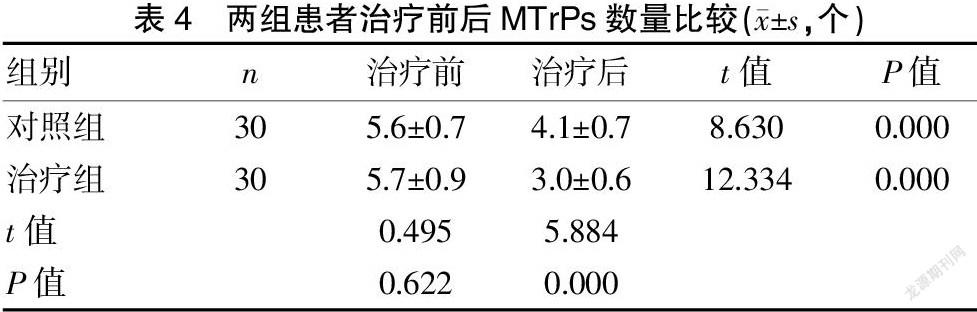
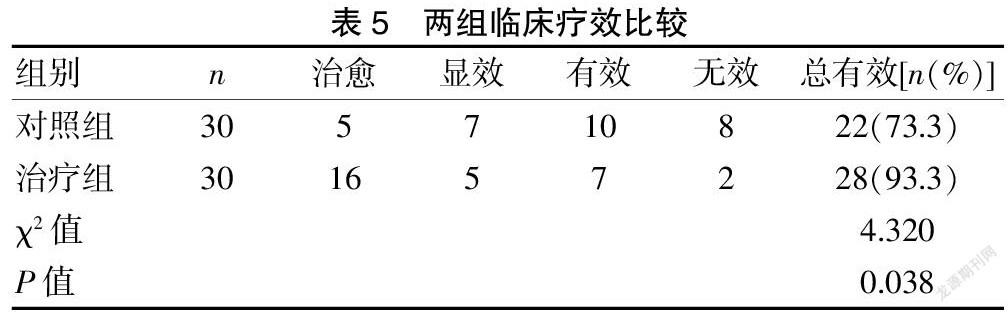
[摘要] 目的 探討火针针刺激痛点结合康复训练治疗肩袖损伤临床疗效。 方法 本研究将2018年12月至2020年6月杭州市中医院肩袖损伤患者60例随机分为治疗组和对照组,每组各30例。对照组仅采用康复训练治疗;治疗组采用火针针刺激痛点配合康复训练治疗。通过观察治疗前及治疗6周后肩关节疼痛视觉模拟量表评分(VAS)、Constant肩关节功能评分、肩部激痛点(MTrPs)数量的变化来比较两组临床疗效。 结果 治疗后对照组和治疗组患者VAS评分较治疗前均下降,差异有统计学意义(t=10.250,P<0.05;t=14.726,P<0.05),治疗组治疗后 VAS 评分较对照组改善更明显,差异有统计学意义(t=7.880,P<0.05);Constant肩关节功能评分均较治疗前提高,差异有统计学意义(t=14.597,P<0.05;t=20.457,P<0.05),治疗组治疗后Constant肩关节功能评分较对照组改善更明显,差异有统计学意义(t=5.735,P<0.05);两组MTrPs数量均较治疗前下降,差异有统计学意义(t=8.630,P<0.05;t=12.334,P<0.05),治疗组治疗后MTrPs数量较对照组少,差异有统计学意义(t=5.884,P<0.05);治疗组的总有效率高于对照组,差异有统计学意义(P<0.05)。 结论 火针针刺激痛点结合康复训练治疗肩袖损伤优于单纯康复训练治疗。
[关键词] 肩袖损伤;火针;激痛点;Mulligan动态关节松动术;MET肌肉能量技术
[中图分类号] R244.1 [文献标识码] B [文章编号] 1673-9701(2021)32-0001-05
[Abstract] Objective To explore the clinical efficacy of fire needle stimulation of myofascial trigger point combined with rehabilitation training in treating shoulder cuff injury. Methods From December 2018 to June 2020, a total of 60 patients with shoulder cuff injury in Hangzhou Hospital of Traditional Chinese Medicine were randomly divided into treatment group(n=30) and control group (n=30). The control group only used rehabilitation training treatment. The treatment group used fire needle stimulation of myofascial trigger point combined with rehabilitation training treatment. The clinical efficacy of the two groups was compared by observing the changes in the visual analog scale(VAS) assessment of shoulder pain, Constant shoulder function score, and the number of shoulder trigger points(MTrPs) after six weeks of treatment. Results After treatment, the VAS scores of the control group and the treatment group decreased compared with those before treatment,the difference was statistically significant(t=10.250, P<0.05; t=14.726, P<0.05). The VAS score of the treatment group improved more significantly after treatment than that of the control group,the difference was statistically significant (t=7.880, P<0.05).The Constant shoulder function scores increased compared with those before treatment, and the differences were statistically significant (t=14.597, P<0.05; t=20.457, P<0.05).The Constant shoulder function score of the treatment group improved more significantly after treatment than that of the control group,the difference was statistically significant(t=5.735, P<0.05).The number of MTrPs decreased compared with those before treatment,the difference was statistically significant(t=8.630, P<0.05; t=12.334, P<0.05), and the number of MTrPs in both groups of the treatment group was less than that of the control group after treatment,the difference was statistically significant(t=5.884, P<0.05).The total effective rate of treatment group was higher than that of control group, the difference was statistically significant(P<0.05). Conclusion Fire needle stimulation of myofascial trigger point combined with rehabilitation training is superior to rehabilitation training alone in treating shoulder cuff injury.
[Key words] Shoulder cuff injury; Fire needle; Myofascial trigger point; Mulligan dynamic joint mobilization; MET muscle energy technique
肩袖(Rotator cuff)由冈上肌、冈下肌、肩胛下肌和小圆肌组成,这四个肩袖肌的肌肉和肌腱相互环绕,形成袖状结构,附着在肩关节上[1]。肩袖肌群有助于盂肱关节的运动,它的主要作用是维持肩关节的功能。肩袖损伤是指由于慢性劳损、创伤等原因引起肩关节疼痛、肌肉无力和功能障碍的疾病。……
