卡培他滨单药或联合方案治疗转移性乳腺癌临床疗效观察
2021-01-05陈帅司婧邢丹
陈帅 司婧 邢丹
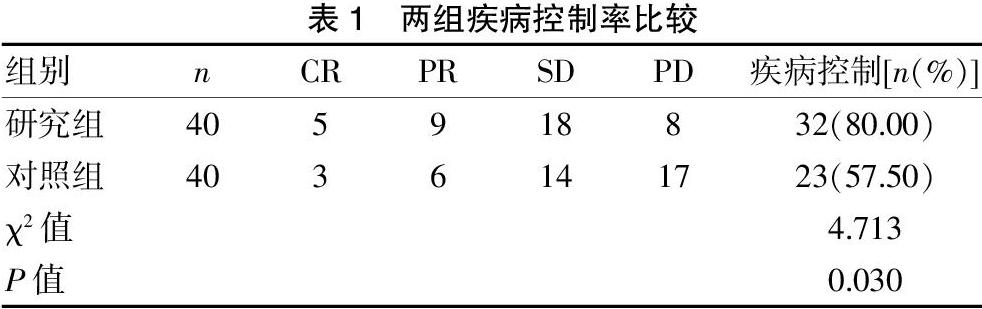
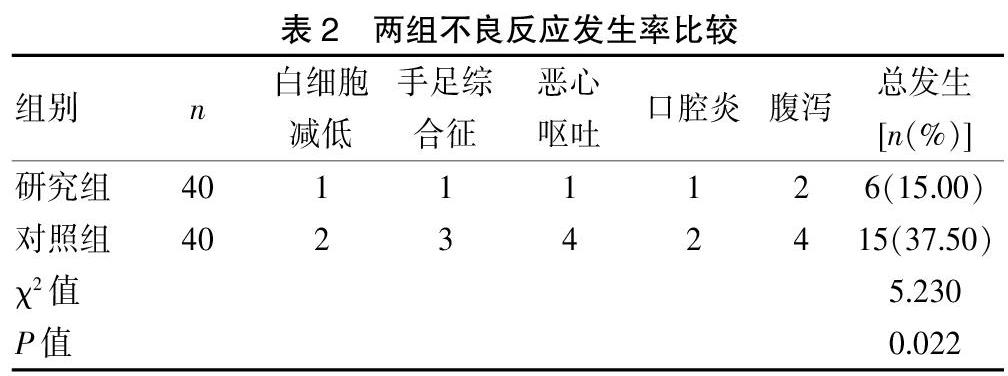

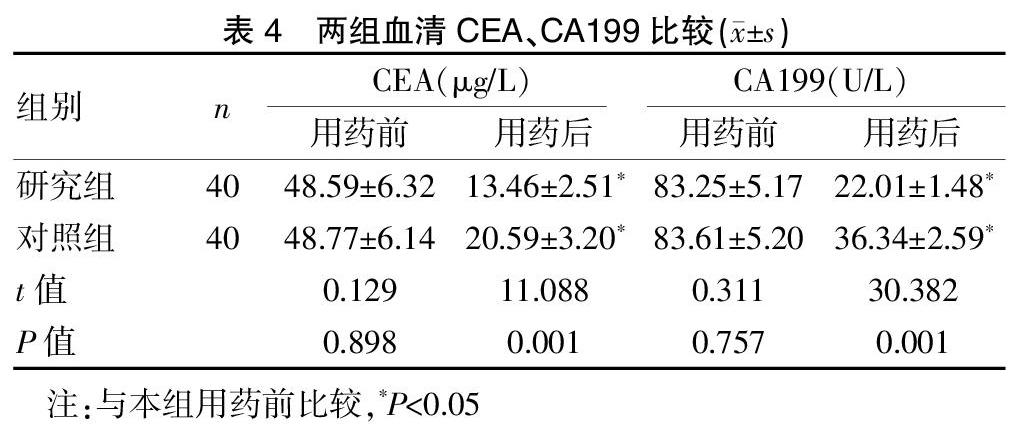
[摘要] 目的 研究卡培他濱单药或联合方案运用在转移性乳腺癌中的价值。 方法 选择我院2015年10月至2020年10月纳入的80例转移性乳腺癌患者,依据随机分层法分成两组各40例,研究组给予联合方案,对照组给予卡培他滨单药,对两组疾病控制率进行比较,记录两组不良反应发生率,用药前后进行生存质量(SF-36)评分调查,并分别测定两组CEA、CA199指标,比较两组用药结果。 结果 研究组疾病控制率为80.00%,高于对照组的57.50%,差异有统计学意义(P<0.05)。研究组的不良反应总发生率低于对照组,差异有统计学意义(P<0.05)。用药前两组的SF-36评分比较,差异无统计学意义(P>0.05),用药后研究组各项评分均高于对照组,差异有统计学意义(P<0.05)。用药前两组的CEA、CA199比较,差异无统计学意义(P>0.05),用药后研究组低于对照组,差异有统计学意义(P<0.05)。 结论 卡培他滨联合方案运用于转移性乳腺癌中效果突出,能够快速控制病情,降低不良反应发生率,安全性高,改善CEA、CA199指标水平,提升患者生存质量,为预后提供保障。
[关键词] 转移性乳腺癌;卡培他滨;联合方案;吉西他滨
[中图分类号] R737.9 [文献标识码] B [文章编号] 1673-9701(2021)31-0111-04
[Abstract] Objective To study the value of capecitabine single agent or combination regimen in the treatment of metastatic breast cancer. Methods A total of eighty patients with metastatic breast cancer treated in our hospital from October 2015 to October 2020 were selected and divided into two groups using random stratification method, with 40 patients in each group. The study group were given the combination regimen, and the control group were given capecitabine single agent. The disease control rate, incidence of adverse events, quality of life(SF-36) score, and levels of CEA and CA199 indicators were recorded, to compare the outcome between the two groups. Results The disease control rate of the study group was 80.00%, which was higher than that of the control group as 57.50%, with statistically significant difference (P<0.05). The total incidence of adverse events in the study group was lower than that in the control group, with statistically significant difference(P<0.05). There was no statistically significant difference in the SF-36 score between the two groups before medication(P>0.05). After medication, the SF-36 score of the study group was higher than that of the control group, with statistically significant difference (P<0.05). There were no significant differences in the levels of CEA and CA199 between the two groups before treatment (P>0.05). After treatment, the levels of CEA and CA199 in the study group were lower than those in the control group, with statistically significant differences(P<0.05). Conclusion Capecitabine combination regimen is effective in the treatment of metastatic breast cancer. It can quickly control the disease, reduce the incidence of adverse events, show high safety, increase the levels of CEA and CA199 indicators, improve the quality of life of patients, and provide a guarantee for the prognosis.
[Key words] Metastatic breast cancer; Capecitabine; Combination regimen; Gemcitabine
近几年,随着社会经济发展,人们生活及工作的压力不断提升,导致我国乳腺癌的患病率日渐升高,其作为女性中最为常见的恶性肿瘤,且患者早期症状无典型性,确诊时出现远处转移者约占15%,给患者带来严重后果[1]。相关数据中显示[2],乳腺癌的患病率在全球范围内占据女性恶性肿瘤的第一位,而病死率占据第6位。……