探讨人性化管理在儿科护理管理中的应用效果
2020-11-28王宏巍
王宏巍

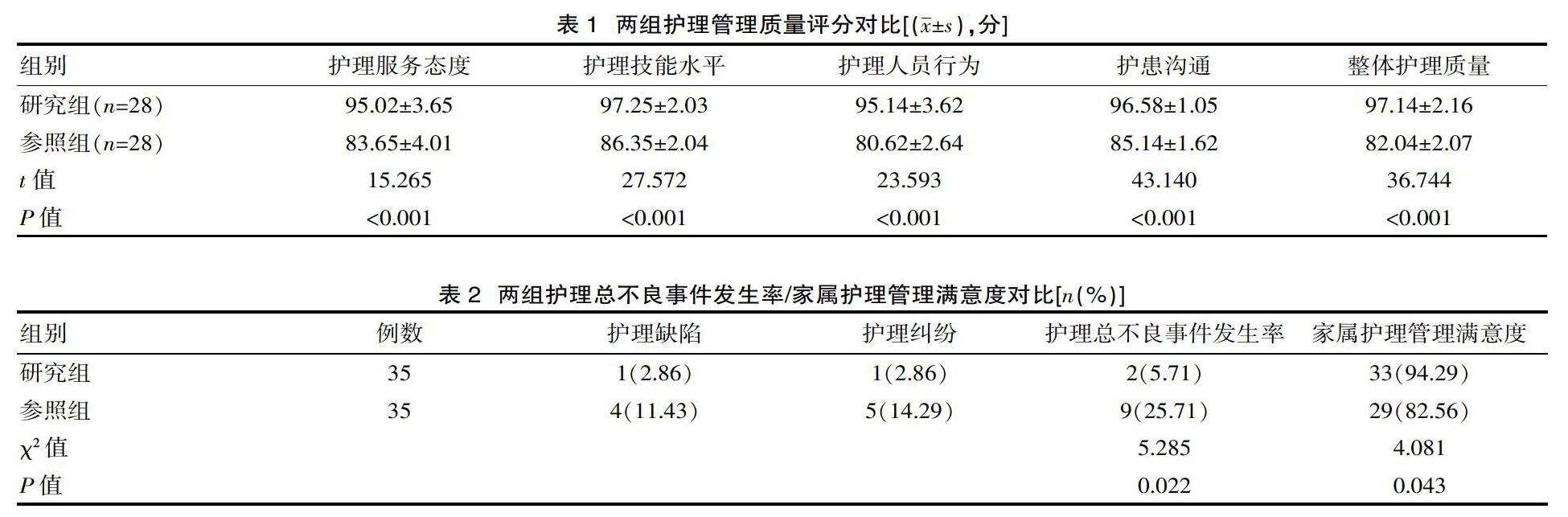
[摘要] 目的 分析及探讨人性化管理在儿科护理管理中的实施效果。方法 2018年1月—2019年1月期间选取该院儿科护理人员作为调查对象,根据管理模式的不同分为参照组、研究组,每组28名,统计两组护理人员护理质量各个指标评分及护理总不良事件发生率情况,并予以总结。结果 研究组护理服务态度评分、护理技能水平評分、护理人员行为评分、护患沟通评分、整体护理质量评分均较参照组略胜一筹(t=15.265、27.572、23.593、43.140、36.744,P<0.05);研究组护理总不良事件发生率、家属护理管理满意度分别为5.71%(2/35),94.29%(33/35),显著优于参照组护理总不良事件发生率25.71%(9/35)、家属护理管理满意度的82.56%(29/35)(χ2=5.285、4.081,P<0.05)。结论 人性化管理模式能够有效提高儿科护理管理质量,减少不必要的护理不良事件。
[关键词] 人性化管理;儿科;护理质量;护理不良事件
[中图分类号] R47 [文献标识码] A [文章编号] 1672-5654(2020)08(b)-0127-03
[Abstract] Objective To analyze and discuss the effect of humanized management on pediatric nursing management. Methods From January 2018 to January 2019, the pediatric nurses in our hospital were selected as the survey subjects, and they were assigned to the reference group and the research group according to the different management modes, with 28 cases in each group, and statistics of the two groups of nursing staff's nursing quality indicators and the incidence of total adverse events in nursing care were summarized. Results The study group's nursing service attitude score, nursing skill level score, nursing staff behavior score, nurse-patient communication comments, and overall nursing quality score were slightly better than the reference group (t=15.265, 27.572, 23.593, 43.140, 36.744, P<0.05); the total adverse event rate of nursing care in the study group and the satisfaction of family care management were 5.71%(2/35) and 94.29%(33/35) respectively, which were significantly better than the total adverse event rate of nursing care in the reference group 25.71%(9/35), 82.56%(29/35) of family care management satisfaction(χ2=5.285, 4.081, P<0.05). Conclusion The humanized management model can effectively improve the quality of pediatric nursing management and reduce unnecessary adverse nursing events.
[Key words] Humanized management; Pediatrics; Quality of care; Adverse nursing events
儿科因科室存在特殊性,患儿年龄较小,语言表达能力不强,加上对治疗环境产生紧张、恐惧感,在一定程度上增加了护理的工作量及护理难度系数,进而出现护理不当引发一系列医疗纠纷事件。不仅不利于患儿病情康复效果,同时也对医院的名誉带来一定影响。因此,基于有效的积极治疗外,应加强医院儿科护理管理服务质量,细化护理环节,规范护理服务流程,尽全力为患儿提供一种人性化、系统化、个体化为一体的护理管理模式,对于儿科护理工作顺利开展而言,至关重要。经相关临床研究证实,实施一种带有针对性强、可信性高的人性化管理方案能够有效提升儿科整体管理质量及患儿配合依从性,且被临床广泛使用[1]。该文于2018年1月—2019年1月期间主要探讨对该院儿科护理人员46名分别给予常规护理管理模式、人性化管理模式后的不同效果,该报道如下。……