SiC/SiC陶瓷基复合材料SLS/PIP制备工艺及弯曲性能
2020-08-26曾涛周义凯张坤余四文
曾涛 周义凯 张坤 余四文
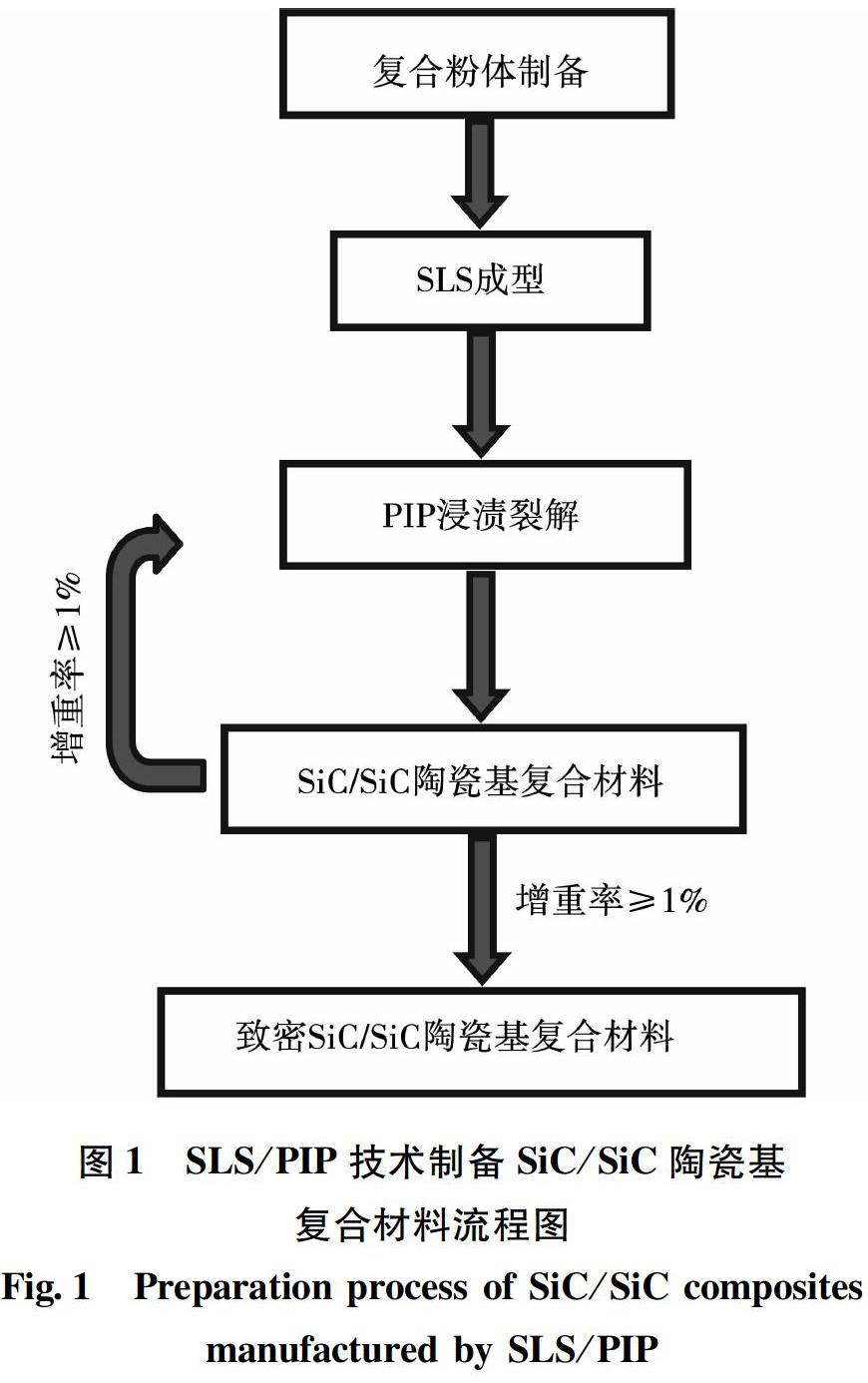
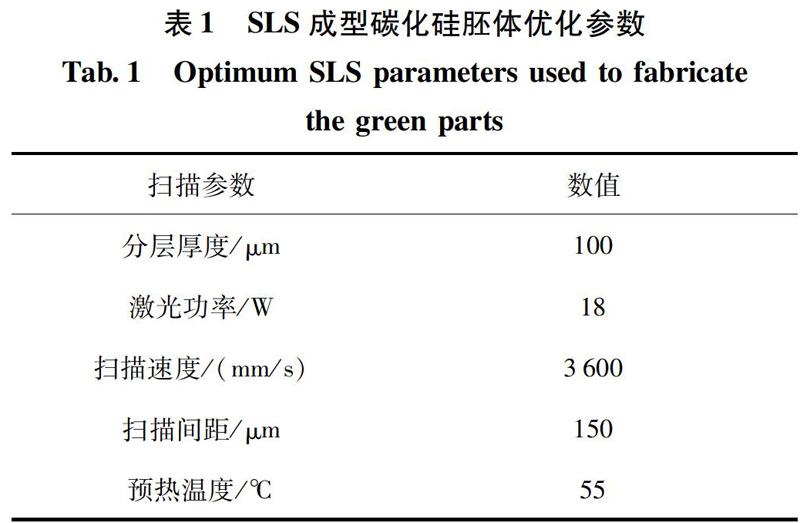
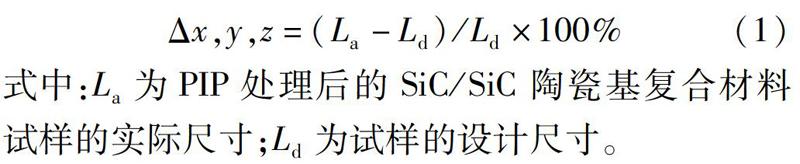
摘 要:針对选择性激光烧结技术(SLS)成型陶瓷材料致密性低、力学性能差的问题,采用选择性激光烧结技术(SLS)与聚合物浸渍裂解技术(PIP)相结合的方法,以碳化硅、环氧树脂和聚碳硅烷为原料,制备SiC/SiC陶瓷基复合材料。研究选择性激光烧结工艺参数、试件尺寸精度、微观结构及弯曲性能。结果表明:通过SLS/PIP技术可有效降低碳化硅陶瓷试件的孔隙率,试件密度为2.45 g/cm3,弯曲强度达到138.28 MPa。该方法可以实现传统方法无法解决的表面及内部复杂结构碳化硅陶瓷基复合材料的制备问题。
关键词:增材制造;陶瓷基复合材料;选择性激光烧结;先驱体浸渍裂解
DOI:10.15938/j.jhust.2020.03.025
中图分类号: TB332
文献标志码: A
文章编号: 1007-2683(2020)03-0163-06
Abstract:In order to improve the density and mechanical property of ceramics fabricated by selective laser sintering (SLS) process, a new method that combined SLS with precursor impregnation and pyrolysis (PIP) process was presented to fabricated silicon carbide particulate/silicon carbide matrix (SiC/SiC) ceramic composites. Starting with SiC powders of 17~70 μm sizes, the preform was produced by printing epoxy binder. To gain the dense composites, the SiC preforms were infiltrated with polycarbosilane liquid and pyrolyzed at 1200℃ under nitrogen atmosphere for 8 repeated cycles. The porosity of the specimen greatly decreased and the density reached to 2.45 g/cm3 after PIP process. Analysis of results and discussions of optimum printing parameters, dimension accuracy, microstructure and bending strength for SiC/SiC composites are also presented. The mechanical property of the SiC/SiC composite fabricated by SLS/PIP process has been improved and its bending strength attained 138.28 MPa. In addition, the net-shape silicon carbide components with complex surface and inner structure were fabricated.
Keywords:ceramic composite; additive manufacturing; selective laser sintering; precursor impregnation and pyrolysis
0 引 言
碳化硅陶瓷在高温环境下具有高强度、高硬度、耐磨损、耐腐蚀等优异性能,目前在航空航天、核能、汽车、石油化工、微电子等多个领域得以广泛应用 [1,2],但其高强度、高硬度也给材料加工带来较大困难,尤其是带有复杂表面及内部结构的零部件,加工周期长,成本昂贵,已成为瓶颈问题[3,4]。
增材制造技术是一种新型成型方式,与传统的减材制造方式不同,它可以直接将电脑绘制的模型通过逐层增加的方式成型三维立体结构[5]。选择性激光烧结技术(SLS)是3D打印增材制造技术的一种,最初由Texas大学Austin分校的Declcard于1986年提出,随后被DTM公司商业化[6,7]。激光有选择性地照射在工作缸中的粉末上,熔融的树脂作为粘结剂将周围粉末粘结在一起,随后工作缸下降,两端的供料缸上升,铺粉辊推动供料缸中粉末将工作缸烧结的部分覆盖,完成一层烧结,如此往复,直至试件烧结完成,除去未烧结的粉末,得到三维实体零件,该技术已应用于树脂、金属、陶瓷及复合材料制造领域。……