运动员核心价值观与运动中亲反社会行为关系:成就取向的中介作用
2020-07-13张东军
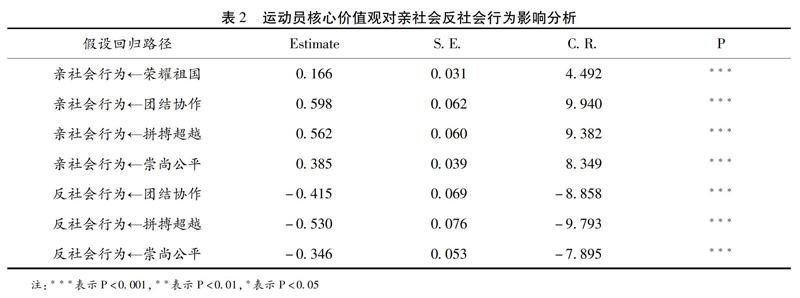
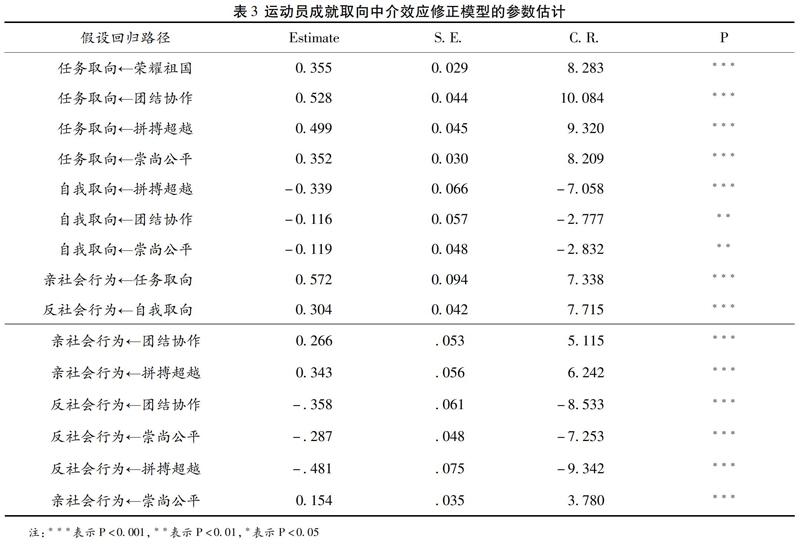
摘 要:目的:检验成就取向对运动员核心价值观与运动中亲反社会行为的中介效应。方法:采用《运动员核心价值观问卷》《运动中任务定向和自我定向问卷 》和《运动中亲社会行为与反社会行为量表》对815名运动员进行调查。结果:(1)运动员核心价值观对运动中亲社会行为具有显著的正向预测作用,对反社会行为具有显著的负向预测作用;(2)任务取向对运动中的亲社会行为具有显著正向预测作用,自我取向对反社会行为具有显著的负向预测作用;(3)任务取向在运动员核心价值观对运动中亲社会行为的影响中发挥部分中介作用,自我取向在运动员核心价值观对运动反社会行为的影响中发挥部分中介作用。结论:运动员核心价值观对运动员在运动中的亲反社会行为具有重要影响,成就取向表现出显著的中介作用。
关键词:运动员核心价值观;亲社会行为;反社会行为;成就目标取向
中图分类号:G804
文献标识码:A
文章编号:1008-2808(2020)03-0001-08
Abstract:Objective: To verify the mediating effect of the achievement goal orientation on the relationship between athletes core values and prosocial and antisocial behaviors in competition. Methods: 815 athletes were selected and investigated using athletes core values questionnaire, questionnaire of task orientation and ego orientation in sports and the scale of prosocial and antisocial behavior in competition. Results: (1) the core values of athletes were positively related to prosocial behavior, the core values of athletes were negatively related to antisocial behavior; (2) task orientation has significant positive influence on the prosocial behavior, self orientation has significant positive influence on the antisocial behavior; (3) task orientation played a role of a partial mediating variable between the core values of athletes and prosocial behavior, self orientation played a role of a partial mediating variable between the core values of athletes and antisocial behavior. Conclusion: The core values of athletes have important influence on the athletes prosocial and antisocial behavior in competition. The achievement goal orientation has a significant mediating effect on the relationship between athletes core values and prosocial and antisocial behaviors in competition.
Key words:Athletes core values; Prosocial behavior; Antisocial behavior; Achievement goal orientation
運动员核心价值观是指运动员基于运动队的需要和利益所形成的对运动员价值的根本看法,是运动员在对训练和比赛中各种事物和现象进行认知和评价时所持的基本观点[1]。运动中亲社会行为是指运动员在运动中表现出的帮助他人或对他人有利的行为,运动中反社会行为指的是运动员在运动中表现出的对他人不利或损害他人利益的行为[2]。自20世纪30年代开始,研究者关注价值观影响下人们在工作和生活中可能采取的行为及其结果,如Staub等人研究发现,道德价值取向特征明显的个体在生活中更有可能做出亲社会举动[3]。……