不同苦瓜营养成分与皂苷含量的差异分析
2020-07-08江定李光光朱文斌原远郑岩松
江定 李光光 朱文斌 原远 郑岩松

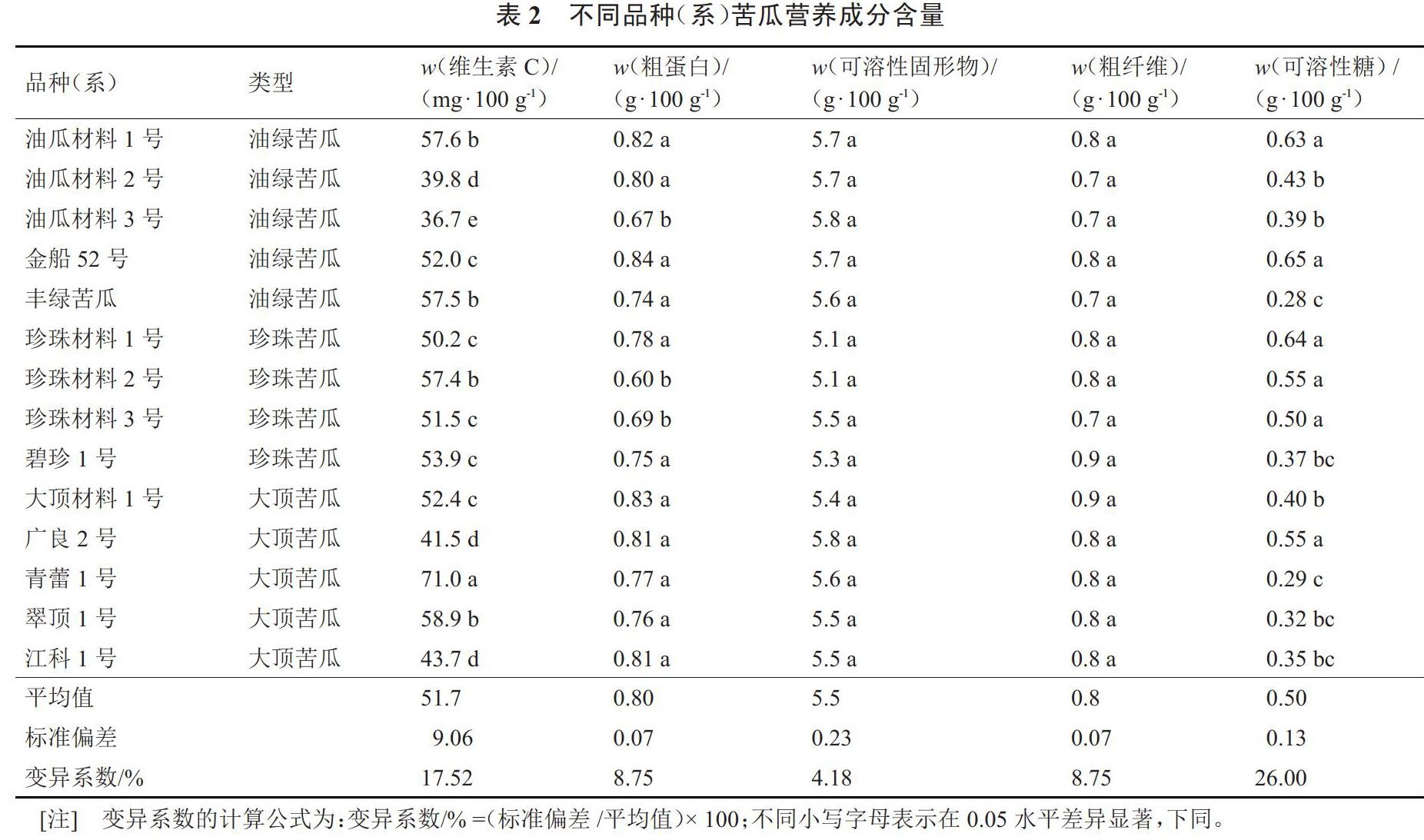
摘 要: 為了分析油绿苦瓜、珍珠苦瓜和大顶苦瓜这3种不同苦瓜的营养成分与皂苷含量的差异,笔者以5个油绿苦瓜品种(系)、4个珍珠苦瓜品种(系)和5个大顶苦瓜品种(系)为材料,测定其维生素C、可溶性糖、粗蛋白、粗纤维和可溶性固形物含量、总皂苷和皂苷单体的含量,探讨不同苦瓜营养成分与皂苷含量的差异及相关性。结果表明,不同苦瓜果肉中的可溶性固形物、粗纤维含量变幅分别为(5.1~5.8)、(0.7~0.9) g·100 g-1,两者差异均不显著,其变异系数分别为4.18%、8.75%;不同苦瓜果肉中的维生素C、可溶性糖含量变幅分别为(36.7~71.0)mg·100 g-1、(0.28~0.65) g·100 g-1,两者均存在显著差异,其变异系数分别为17.52%和26.00%;‘油瓜材料3号‘珍珠材料2号和‘珍珠材料3号的粗蛋白含量显著低于其他苦瓜品种(系),其他品种(系)间均无显著差异,其变异系数为8.75%。不同苦瓜果肉皂苷的总含量变幅为(12.39~17.65) mg·g-1 ,变异系数为11.35%。不同品种(系)中都含有苦瓜皂苷L和苦瓜皂苷K,其他皂苷单体在一些品种(系)中未被检测出,说明该皂苷单体在这些品种(系)中含量很低或不存在;苦瓜皂苷元I和苦瓜皂苷II在超过一半的品种(系)中未被检测出。皂苷单体总含量变幅为(68.61~260.79) μg·g-1,基本属于弱相关或者不相关。以上研究结果可以为选育皂苷含量适中且鲜食品质优良的苦瓜新品种(系)或皂苷含量高的医用原料栽培苦瓜新品种(系)提供理论依据和科学指导。
关键词:苦瓜;营养成分;皂苷
中图分类号:S642.5 文献标志码:A 文章编号:1673-2871(2020)06-034-07
Abstract: In order to analyze the differences in nutrient contents and saponin contents of three different bitter gourd types(oil-green bitter gourd, pearl bitter gourd and big-top bitter gourd), five oil green bitter gourd varieties (lines), four pearl bitter gourd varieties (lines)and five big-top bitter gourd varieties (lines) were used as materials in this research. The contents of vitamin C, soluble sugar, crude protein, crude fiber, soluble solids, total saponins and saponin monomers were measured.. The results showed that the soluble solids contents of different bitter gourds varied from 5.1 g·100 g-1 to 5.8 g·100 g-1 and the crude fiber contents changed from 0.7 g·100 g-1 to 0.9 g·100 g-1, both of them were found no significant difference among all the materials, and the coefficients of variation were 4.18% and 8.75%, respectively. While the vitamin C contents ranged from 36.7 mg·100 g-1 to 71.0 mg·100 g-1 and soluble sugar content ranged from 0.28 g·100 g-1 to 0.65 g·100 g-1, which were observed significant differences, with coefficients of variation of 17.52% and 26.00%, respectively. The crude protein contents of each variety were significantly higher than those of ‘Oil-green material No. 3, ‘Pearl material No. 2 and ‘Pearl material No. 3, and there was no significant difference among other varieties, with a coefficient of variation of 8.75%. The variation of saponin contents in bitter gourd pulp of different varieties (lines) were from 12.39 mg·g-1 to 17.65 mg·g-1, and the coefficient of variation was 11.35%. Bitter gourd momordicoside L and momordicoside K were detected in all varieties (lines), and the remaining saponin monomers were not detected in some varieties (lines), indicating that these saponin monomers were very low in these varieties (lines), or they might not contain these saponin monomers, and momordicines I and momordicines II were not found in more than half of the varieties (lines). The total contents of saponin monomers varied from 68.61 μg·g-1 to 260.79 μg·g-1 and the total contents of bitter saponins changed from 19.86 μg·g-1 to 110.45 μg·g-1. In general, the correlation between nutritional content and saponin content was low. These results provide a theoretical basis and scientific guidance for the breeding of new varieties (lines) with moderate saponin content and high-saponin content medical raw materials.
Key words: Bitter gourd; Nutritional ingredients; Saponins
苦瓜(Momordica charantia L.)又名凉瓜,为葫芦科苦瓜属攀缘草本植物,是华南特色作物,是兼有鲜食和药用功能的蔬菜作物[1]。……