斜坡抗震稳定性分析中拟静力法的应用研究
2020-07-07唐世雄邓广辉刘衡秋
唐世雄 邓广辉 刘衡秋
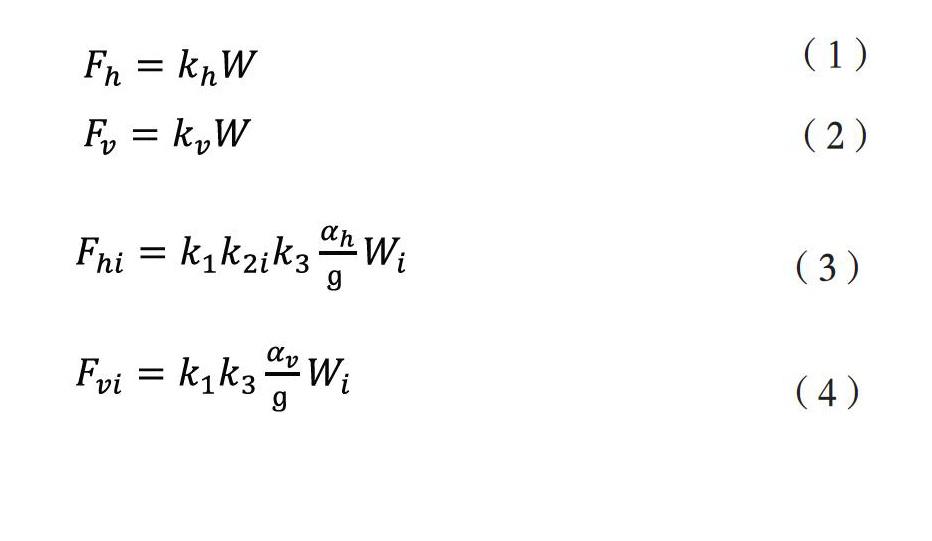
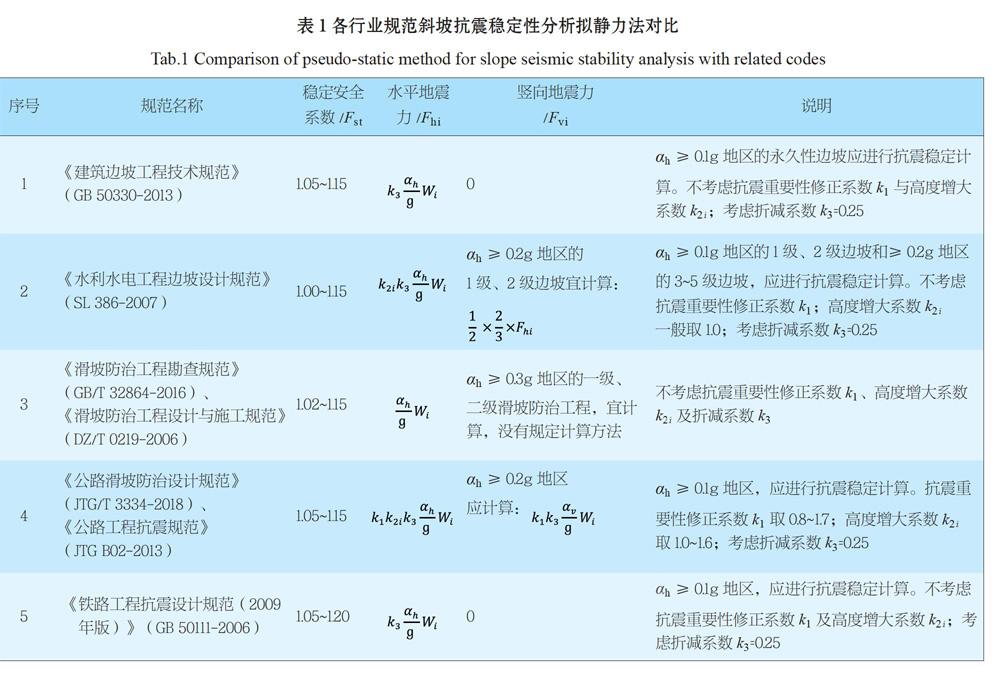
摘 要:对各行业规范中拟静力法的计算规定进行了比较,讨论了竖向地震力对稳定系数的影响、地震加速度高度增大系数、地震作用效应折减系数等问题。研究表明,竖向地震力的破坏作用在拟静力法计算结果中无法体现,在极震山区从事斜坡抗震稳定性分析时,宜同时使用动力学分析法进行综合分析评价;采取适当提高斜坡稳定安全系数的办法考虑地震加速度沿高度的放大效应,提高幅度以0.02~0.05为宜;地震作用折减系数0.25的取值是合适可信的,在地震高设防烈度地区(αh≥0.2g)采用DZ/T 0219-2006规范进行滑坡稳定性分析值得商榷。
关键词:行业规范;拟静力法;抗震稳定性分析;竖向地震力;放大效应;折减系数
Abstract: The calculation rules of pseudo-static method in different codes were compared. Then some questions such as the influence of vertical seismic force on the factor of safety, the amplification effect of topography on seismic acceleration and the reduction factor of seismic effect were discussed. The study shows that (1) in view of the failure effect of vertical seismic force cannot be reflected in the calculation results of pseudo-static method, it is advisable to use dynamic analysis method for comprehensive analysis and evaluation when conducting seismic stability analysis in extremely earthquake mountainous area; (2) the amplification effect of acceleration along height can be considered by increasing the factor of safety and 0.02~0.05 is the appropriate increase range; (3) the value of seismic reduction coefficient 0.25 is suitable and credible. It is debatable to use DZ/T 0219-2006 code for landslide stability analysis in the area of high seismic fortification intensity(αh≥0.2g).
Key words: Codes; Pseudo-static method; Seismic stability analysis; Vertical seismic force; Amplification effect; Reduction coefficient
0 引言
地震触发的山区斜坡失稳破坏往往具有分布范围广、数量多、规模大、危害大等特点,不仅直接摧毁场镇,还掩埋破坏交通生命线,造成巨大的人员伤亡与财产损失。汶川“5·12”Ms8.0地震引发了约3~5万处滑坡、崩塌、碎屑流,造成约2万人死亡(黄润秋,2009)。我国建筑、公路、铁路、水利、水电等行业规范规定,在地震动峰值加速度≥0.1g地区进行斜坡稳定性评价时应计入地震作用力。
目前常用的斜坡抗震稳定性分析方法有拟静力法和动力時程法。拟静力法能直接计算出坡体的稳定系数并用于斜坡的抗震设计。但在地震作用过程中,坡体的稳定系数是随地震时程波动变化的,不是一个恒定值,在某一瞬间坡体稳定系数降至1.0以下时,并不表示斜坡就会发生整体失稳破坏,而只会产生一定的永久位移,这是拟静力法所不能解决的,需要用到动力时程法进行斜坡的地震动力响应分析。……