波生坦治疗新生儿缺氧性肺动脉高压的临床观察
2020-06-09陈波白波李广洪黄学良罗惠玲黄惠仪
陈波 白波 李广洪 黄学良 罗惠玲 黄惠仪

中圖分类号 R969;R722.1 文献标志码 A 文章编号 1001-0408(2020)10-1247-06
DOI 10.6039/j.issn.1001-0408.2020.10.17
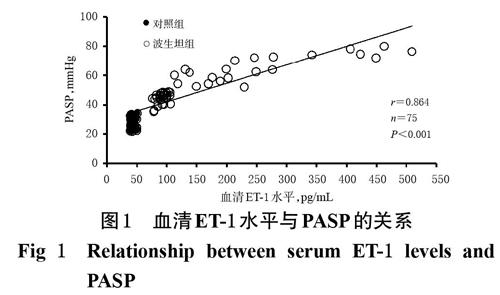
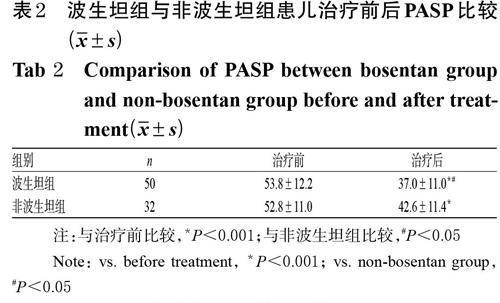
摘 要 目的:观察波生坦治疗新生儿缺氧性肺动脉高压(HPH)的有效性和安全性。方法:选择2014年1月-2019年3月于我院新生儿科住院治疗的82例HPH新生儿为研究对象,按是否加用波生坦治疗分为波生坦组(50例)和非波生坦组(32例);另选取25例血清标本留取时间、出生胎龄、日龄等一般资料与波生坦组匹配的非HPH新生儿为对照组。所有HPH新生儿均给予持续静脉滴注盐酸多巴胺注射液5 mg/(kg·min),直到肺动脉收缩压(PASP)正常;在此基础上,波生坦组患儿加用波生坦片1 mg/kg(用适量注射用水溶解后喂服),q12 h,连用72 h。分析HPH患儿血清内皮素1(ET-1)水平与PASP的关系,并比较治疗前后波生坦组和非波生坦组HPH患儿的PASP和疗效以及3组患儿的动脉血气指标变化及不良反应发生情况。结果:治疗前,波生坦组患儿血清ET-1水平为(164.3±115.3)pg/mL,显著高于对照组的(41.9±3.7)pg/mL,且与PASP呈正相关(r=0.864,P<0.001)。波生坦组患儿的治疗总有效率为90.00%,显著高于非波生坦组的71.88%(P<0.05)。治疗72 h后,两组患儿的PASP均较治疗前显著下降(P<0.001),且波生坦组显著低于非波生坦组(P<0.05);3组患儿的动脉血氧分压、动脉血氧饱和度、动脉血二氧化碳分压和氧合指数均较治疗前显著改善(P<0.05),且波生坦组的动脉血氧分压、动脉血氧饱和度和氧合指数均显著高于非波生坦组(P<0.05)。在波生坦治疗期间及停药1周内,均未发现有患儿血清乳酸脱氢酶、天冬氨酸转氨酶、丙氨酸转氨酶及血清肌酐水平有明显变化。3组患儿喂养不耐受、贫血、白细胞及血小板减少的发生率比较,差异均无统计学意义(P>0.05)。结论:波生坦可改善HPH患儿的氧合状态,降低PASP,且短期用药是安全的。
关键词 缺氧性肺动脉高压;内皮素1;波生坦;新生儿;疗效;安全性
Clinical Observation of Bosentan in the Treatment of Hypoxic Pulmonary Hypertension in Neonates
CHEN Bo1,BAI Bo2,LI Guanghong2,HUANG Xueliang2,LUO Huiling2,HUANG Huiyi2(1. Dept. of Nosocomial Infection Management, Huadu Hospital Affiliated to Southern Medical University, Guangzhou 510800, China;2. Dept. of Neonatology, Huadu Hospital Affiliated to Southern Medical University, Guangzhou 510800, China)
ABSTRACT OBJECTIVE: To observe the effectiveness and safety of bosentan in the treatment of hypoxic pulmonary hypertension (HPH) in neonates. METHODS: From Jan. 2014 to Mar. 2019, a total of 82 HPH neonates hospitalized in the department of neonatology of our hospital were selected as research subjects. According to whether or not receiving bosentan therapy, 50 cases were included into bosentan group and 32 cases into non-bosentan group. Meanwhile, another 25 non-HPH neonates with serum sample retention time and general information such as gestational age at birth and day age matching the HPH group were selected as the control group. All neonates with HPH were given continuous intravenous infusion of Dopamine hydrochloride injection 5 mg/(kg·min) until PASP was normal. On this basis, neonates in the bosentan group were additionally given Bosentan tablets 1 mg/kg (fed after dissolving with appropriate amount of water for injection) for q12 h, 72 h. The relationship between serum ET-1 levels of neonates with HPH and PASP was analyzed, as well as PASP before and after treatment and therapeutic efficacy between bosentan and non-bosentan groups, the changes of arterial blood gas indexes and ADR in 3 groups were compared. RESULTS: Before treatment, the serum ET-1 levels of bosentan group was (164.3±115.3) pg/mL, which was significantly higher than (41.9±3.7)pg/mL of control group and positively correlated with PASP level (r=0.864,P<0.001). Total response rate of bosentan group was 90.00%, which was significantly higher than 71.88% of non-bosentan group (P<0.05). After 72 h of treatment, PASP of 2 groups was decreased significantly, compared with before treatment (P<0.001), and the bosentan group was significantly lower than the non-bosentan group (P<0.05). The PaO2,SaO2, PaCO2 and OI in 3 groups was significantly improved compared with that before treatment (P<0.001), and the PaO2,SaO2 and OI in the bosentan group was significantly higher than that in the non-bosentan group (P<0.05). During the treatment period of bosentan and within one week after drug withdrawal, there was no significant change in serum LDH, AST, ALT and Scr levels in neonates. There was no statistically significant difference in the incidence of feeding intolerance, anemia, reduced WBC and reduced PLT in 3 groups (P>0.05). CONCLUSIONS: Bosentan can improve the oxygenation status of neonates with HPH, reduce PASP, and short-term medication is safe.
KEYWORDS Hypoxic pulmonary hypertension; ET-1; Bosentan; Neonate; Efficacy; Safety
新生儿缺氧性肺动脉高压(Hypoxic pulmonary hypertension,HPH)是指新生儿出生前后因缺氧、酸中毒等引起肺动脉收缩、痉挛或肌层增生,使肺循环阻力、肺动脉压力升高而引起的呼吸、循环系统等严重功能障碍。HPH若未予以及时干预和处理,可进一步发展为新生儿持续肺动脉高压(Persistent pulmonary hypertension of newborn,PPHN),而后者导致患儿死亡的概率高达10%~20%[1]。HPH的发生机制较为复杂,体内很多血管活性物质及体液因子在缺氧发生后都有可能介入到肺血管舒缩调节过程中。……