干姜及其炮制品色差值与活性成分含量的相关性研究
2020-06-09林华坚张梓豪孟江王淑美
林华坚 张梓豪 孟江 王淑美
中圖分类号 R283 文献标志码 A 文章编号 1001-0408(2020)10-1197-06
DOI 10.6039/j.issn.1001-0408.2020.10.08
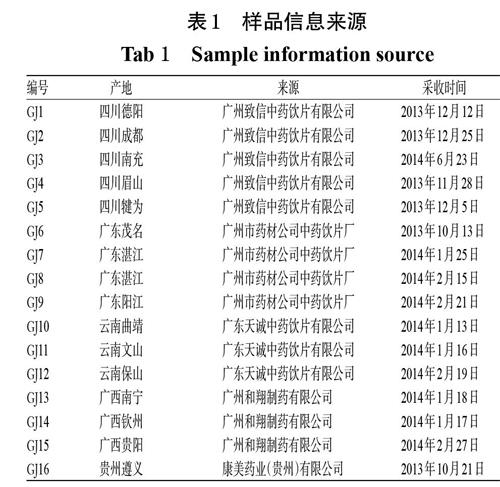
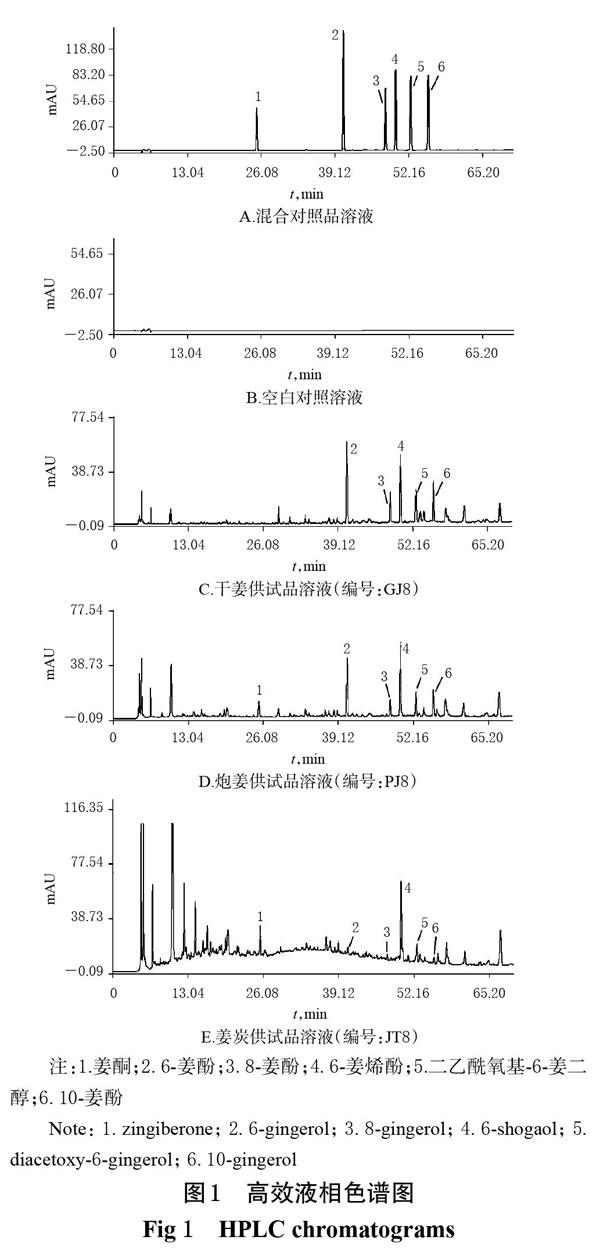
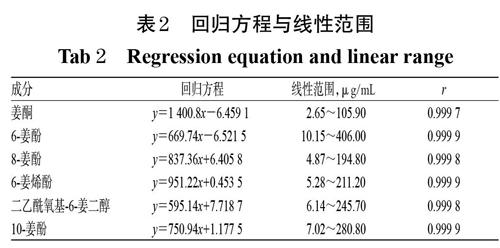
摘 要 目的:评价干姜及其炮制品色差值与活性成分含量的相关性。方法:采用高效液相色谱法测定6种活性成分的含量,采用色彩色差计测定干姜及其炮制品的色差值[明度(L*)、红绿色轴分量(a*)、黄蓝色轴分量(b*)]。采用SPSS 24.0软件对色差值与活性成分含量进行相关性分析。结果:姜酮、6-姜酚、8-姜酚、6-姜烯酚、二乙酰氧基-6-姜二醇和10-姜酚检测质量浓度的线性范围分别为2.65~105.90、10.15~406.00、4.87~194.80、5.28~211.20、6.14~245.70、7.02~280.80 μg/mL(r均大于0.999);定量限分别为7.46、13.68、14.37、16.62、17.03、17.99 ng,检测限分别为2.24、4.11、4.31、4.99、5.11、5.40 ng;精密度、稳定性、重复性试验的RSD均小于3%;平均加样回收率分别为101.34%、102.14%、101.22%,103.12%、103.74%、103.54%,103.06%、98.55%、99.43%,99.36%、103.51%、101.21%,100.85%、99.42%、99.60%,100.39%、97.69%、103.84%(RSD均小于3%,n=3);含量分别为0~0.66、0.06~7.57、0.03~1.45、0.29~3.47、0.15~2.85、0.04~2.83 mg/g。色差值L*、b*与干姜不同炮制程度呈极显著负相关(P<0.01),a*与炮制程度呈正相关(P<0.05);干姜炮制前后L*、b*与姜酮含量呈极显著负相关,与其余5种成分呈极显著正相关(P<0.01);a*与姜酮呈极显著正相关(P<0.01),与其余5种成分无相关性(P>0.05);干姜及其炮制品与姜酮含量呈极显著正相关,与其余5种成分含量呈极显著负相关(P<0.01)。结论:干姜及其炮制品的色差值与其活性成分含量相关,即随炮制程度的加重,其a*增加,L*、b*降低;姜酮含量升高,6-姜酚、8-姜酚、6-姜烯酚、二乙酰氧基-6-姜二醇、10-姜酚含量降低。
关键词 干姜;炮制品;高效液相色谱法;色彩色差计;活性成分;含量;色差值;相关性分析
Correlation Study of Color Difference Values and Active Constituent Contents in Crude and Processed Zingiber officinale
LIN Huajian,ZHANG Zihao,MENG Jiang,WANG Shumei(School of Traditional Chinese Medicine, Guangdong Pharmaceutical University/Key Laboratory of Digital Quality Evaluation of Chinese Materia Medica, State Administration of Traditional Chinese Medicine/Engineering Technology Research Center for Chinese Materia Medica Quality of Guangdong Universities, Guangzhou 510006, China)
ABSTRACT OBJECTIVE: To evaluate the correlation between color difference values and active constituent contents of crude and processed Zingiber officinale. METHODS: HPLC method was adopted to determint the content of 6 active constituents. The color difference values of crude and processed Z. officinale [lightness (L*), red-green axis component (a*), yellow-blue axis component (b*)] were determined by chromatic aberration meter. SPSS 24.0 software was adopted for the correlation analysis between color difference values and active constituent contents. RESULTS: The linear range of zingiberone, 6-gingerol, 8-gingerol, 6-shogaol, diacetoxy-6-gingerol and 10-gingerol were 2.65-105.90, 10.15-406.00, 4.87-194.80, 5.28-211.20, 6.14-245.70, 7.02-280.80 μg/mL (r>0.999). The limits of quantification were 7.46,13.68,14.37,16.62,17.03,17.99 ng, and the limits of detection were 2.24,4.11,4.31,4.99,5.11,5.40 ng, respectively. RSDs of precision, stability, and repeatability tests were all lower than 3%. The average recovery rates were 101.34%, 102.14%, 101.22%; 103.12%, 103.74%, 103.54%; 103.06%, 98.55%, 99.43%; 99.36%, 103.51%, 101.21%; 100.85%, 99.42%, 99.60%; 100.39%, 97.69%, 103.84% (RSD were all lower than 3%,n=3), respectively. The contents of them were 0-0.66, 0.06-7.57, 0.03-1.45, 0.29-3.47, 0.15-2.85, 0.04-2.83 mg/g, respectively. L* and b* values were negative correlated with the processing degree of Z. officinale significantly (P<0.01), a* showed a significantly positive correlation with the processing degree (P<0.05). L*and b* values showed a significantly negative correlation with the content of zingiberone before and after processing, but positively correlated with the other five components (P<0.01). a* showed a significantly positive correlation with the content of zingiberone, but had no correlation with other five components (P>0.05). The crude and processed Z. officinale were positive correlated with the content of zingiberone, negatively correlated with other five components (P<0.01). CONCLUSIONS: There is a certain correlation between the color difference values of crude and processed Z. officinale and the contents of their active constituents. With the deepening of the processing, a* values is increased, L* values and b* values is decreased; the content of zingiberone increases, the contents of 6-gingerol, 8-gingerol, 6-shogaol, diacetoxy-6-gingerol, 10-gingerol reduce.
KEYWORDS Crude Zingiber officinale; Processed product; HPLC; Chromatric aberration meter; Active constituent; Content; Color difference values; Correlation analysis
干姜为姜科植物姜(Zingiber officinale Rosc.)的干燥根茎,是一种药食同源的常见中药。该药性辛、热,具有温中散寒、回阳通脉、温肺化饮的功效[1]。干姜在临床上使用的炮制品种包括炮姜和姜炭,其中炮姜辛燥之性较干姜弱,但温经作用缓和持久,用于温经止痛[2];姜炭辛味消失,温经作用弱于炮姜,长于止血[2]。干姜及其炮制品主要含有姜辣素类活性成分,包括6-姜酚、8-姜酚、10-姜酚、6-姜烯酚、姜酮、二乙酰氧基-6-姜二醇等化合物[3-5],具有抗氧化、解热抗炎、改善心血管系统等作用[6]。目前,干姜及其炮制品的质量控制主要包括6-姜酚的含量测定和传统的性状、颜色鉴别[1]。2……