早产儿与足月儿发生新生儿持续性肺动脉高压的特点分析
2020-06-08阮敏仪李敏许杨勇苏锦珍邓皓辉
阮敏仪 李敏许 杨勇 苏锦珍 邓皓辉
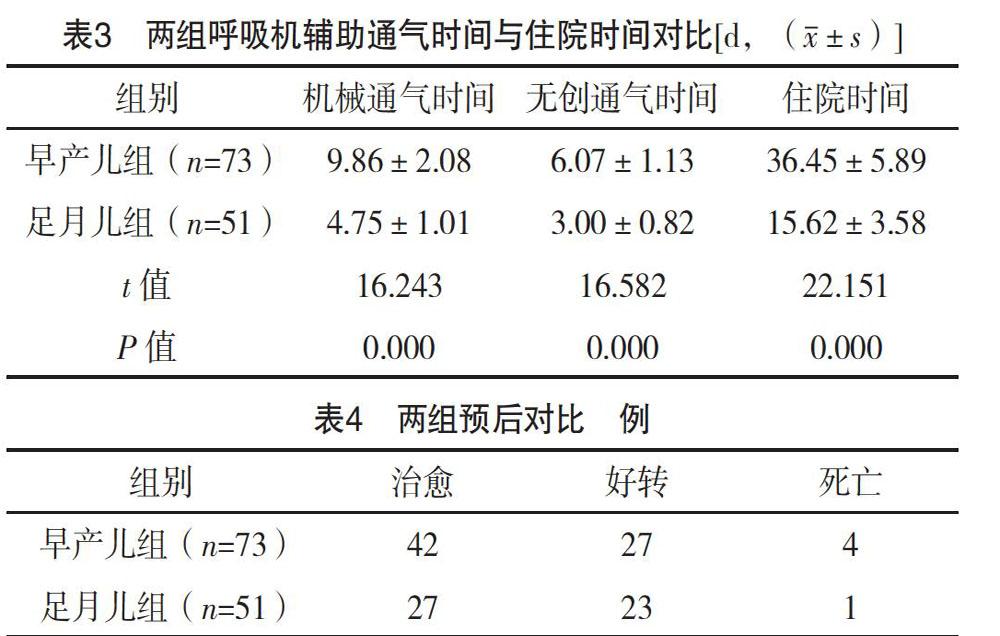
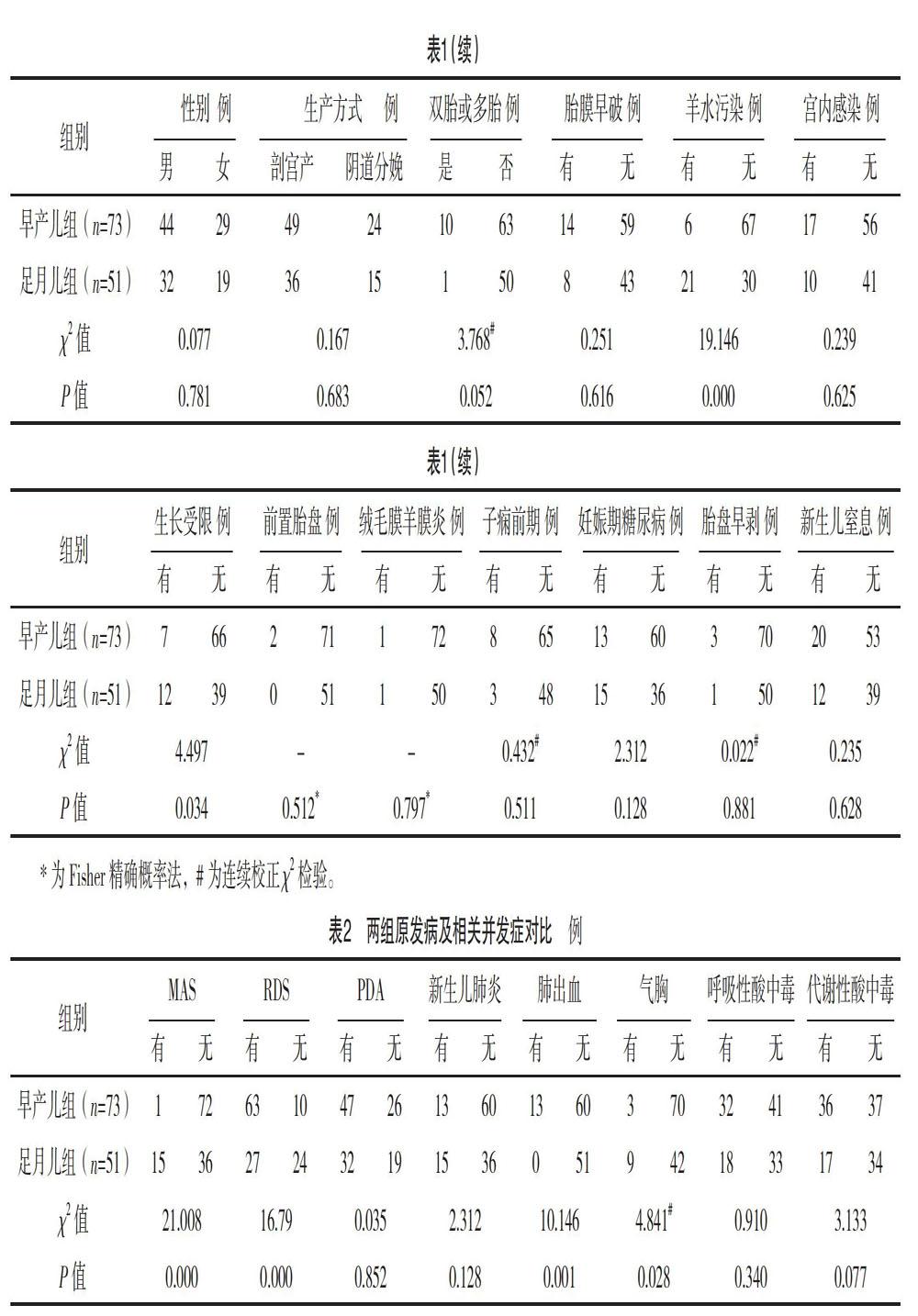
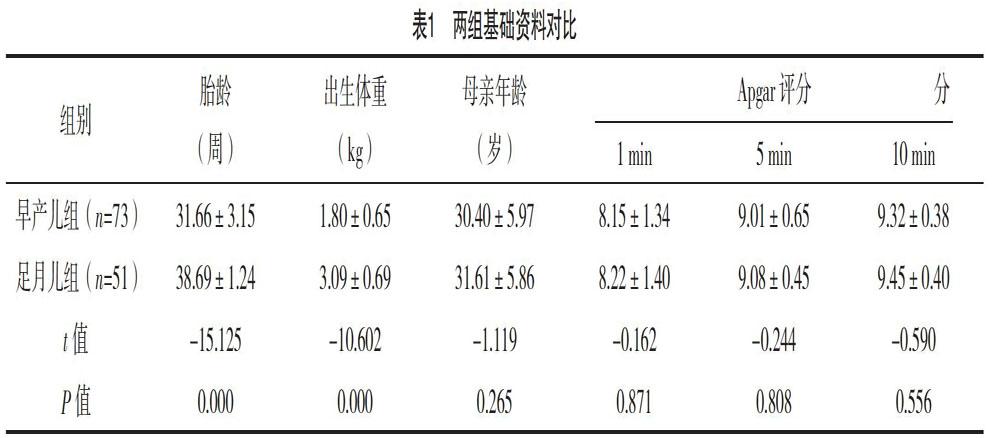
【摘要】 目的:探讨早产儿与足月儿发生新生儿持续性肺动脉高压(PPHN)的特点。方法:回顾性收集2010年1月-2019年9月本院确诊PPHN患儿的资料,根据胎龄分为早产儿组与足月儿组,分析两组基础资料、原发病资料及预后等情况。结果:共纳入124例患儿,早产儿组73例、足月儿组51例,两组胎龄、出生体重、羊水污染、生长受限比较,差异均有统计学意义(P<0.05);早产儿组PPHN原发病主要为新生儿呼吸窘迫综合征(RDS),更多合并肺出血,足月儿组PPHN原发病主要为胎粪吸入综合征,更多合并气胸,两组比较差异有统计学意义(P<0.05);早产儿组呼吸机辅助通气时间、住院时间均较足月儿组长,差异均有统计学意义(P<0.05);两组预后比较,差异无统计学意义(P>0.05)。结论:早产儿PPHN的原发病为RDS,更多合并肺出血,足月儿PPHN的原发病为胎粪吸入综合征,更多合并气胸;对合并相关并发症的患儿应加强临床管理,预防PPHN的发生。
【关键词】 新生儿持续性肺动脉高压 早产儿 足月儿
[Abstract] Objective: To investigate the characteristics of persistent pulmonary hypertension of newborn (PPHN) in preterm and term infants. Method: The data of neonates with PPHN from January 2010 to September 2019 were collected retrospectively. According to the gestational age, they were divided into the preterm group and the term group. The basic data, primary disease, complications and prognosis of two groups were analyzed. Result: A total of 124 neonates were collected, 73 cases in the preterm group and 51 cases in the term group. There were statistically significant differences in gestational age, birth weight, amniotic fluid pollution and growth restriction between two groups (P<0.05). The primary disease of PPHN in the preterm group was neonatal respiratory distress syndrome (RDS), more complicated with pulmonary hemorrhage, while the term group was meconium aspiration, and more complicated with pneumothorax, the differences between two groups were statistically significant (P<0.05). The durations of mechanism ventilation, noninvasive ventilation and hospital in the preterm group were longer than those in the term group (P<0.05), while the prognosis between two groups had no significant statistics (P>0.05). Conclusion: PPHN in preterm infants is mainly caused by RDS, more complicated with pulmonary hemorrhage, while the term infants is caused by meconium aspiration syndrome and more complicated with pneumothorax. We should strengthen the clinical management of neonates with related diseases and complications to prevent PPHN.
新生兒持续性肺动脉高压(PPHN)是新生儿常见的危重症之一,新生儿出生后肺血管阻力持续性增高,肺动脉压超过体循环压,使由胎儿型循环过渡至正常“成人”型循环发生障碍,而引起卵圆孔和/或动脉导管水平血液的右向左分流或双向分流,临床可出现严重低氧血症、呼吸急促等症状[1-3]。
其主要由围生期多种危险因素引起,PPHN常见病因包括宫内慢性缺氧或围生期窒息、胎粪吸入综合征、肺实质病变、肺发育异常(如先天性膈疝)、严重感染、先天性心脏病、母孕期使用非甾体类抗感染药物、孕晚期产妇使用抗抑郁药、低体温、低血糖等因素[4-6]。据资料显示,PPHN的发生率约1.9‰(0.4‰~6.8‰),病死率波动于4%~33%[7-8]。
而既往研究认为,足月儿或过期产儿更易发生PPHN[9-10],但临床越来越多早产儿出现PPHN。因此,此次研究主要结合本院PPHN患儿资料,探讨早产儿与足月儿PPHN的特点。……