基于微软Kinect的体感控制智能窗帘系统
2020-04-22罗伟梁世豪姜鑫安妮杜锐
罗伟 梁世豪 姜鑫 安妮 杜锐
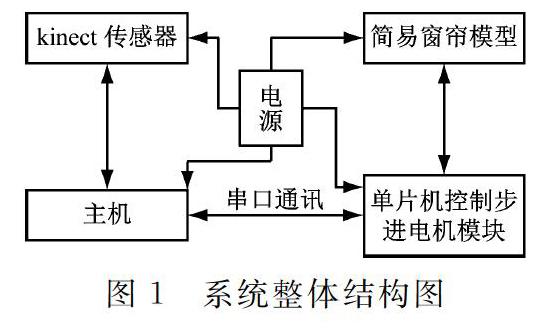

摘 要:设计了一种基于微软Kinect的体感控制智能窗帘系统。采用微软Kinect v1传感器及其开发者工具包(SDK)和Microsoft Visual Studio集成开发环境作为核心开发工具,并和基于80c51单片機的步进电机控制系统组成体感控制智能窗帘系统。能够通过Kinect体感传感器对人体肢体动作识别并做判断,并将判断结果通过串口通讯传送至单片机控制步进电机系统,从而使得通过肢体动作控制窗帘系统的开启和关闭。本系统具有动作判断准确、易于针对特殊群体进行拓展开发、使用方便等优点,在智能家居、残疾人士辅助工具方面有较大应用价值。
关键词:Kinect传感器; 智能窗帘; 体感识别; 单片机; 残疾人辅助
中图分类号: TN710
文献标志码: A
Abstract:A somatosensory control intelligent curtain system based on Microsoft Kinect was designed. Microsoft Kinect v1 sensor and its developer kit (SDK) was adopted and Microsoft Visual Studio integrated development environment was used as the core of development, and a somatosensory control intelligent curtain system was developed by using the stepping motor control system which was based on the 80c51 single-chip microcomputer. The Kinect sensor was used to identify and judge the human body motion, and the judgment result was transmitted to the single-chip microcomputer to control the stepping motor system through serial communication, thereby controlling the opening and closing of the curtain system through the limb motion. The system has the advantages of accurate action judgment, easy development and specialization for special groups, and has strong application value in smart home and assistive tools for the disabled.
Key words:Kinect sensor; Smart curtain; Somatosensory recognition; Microcontrollers; Disabled assistance
0 引言
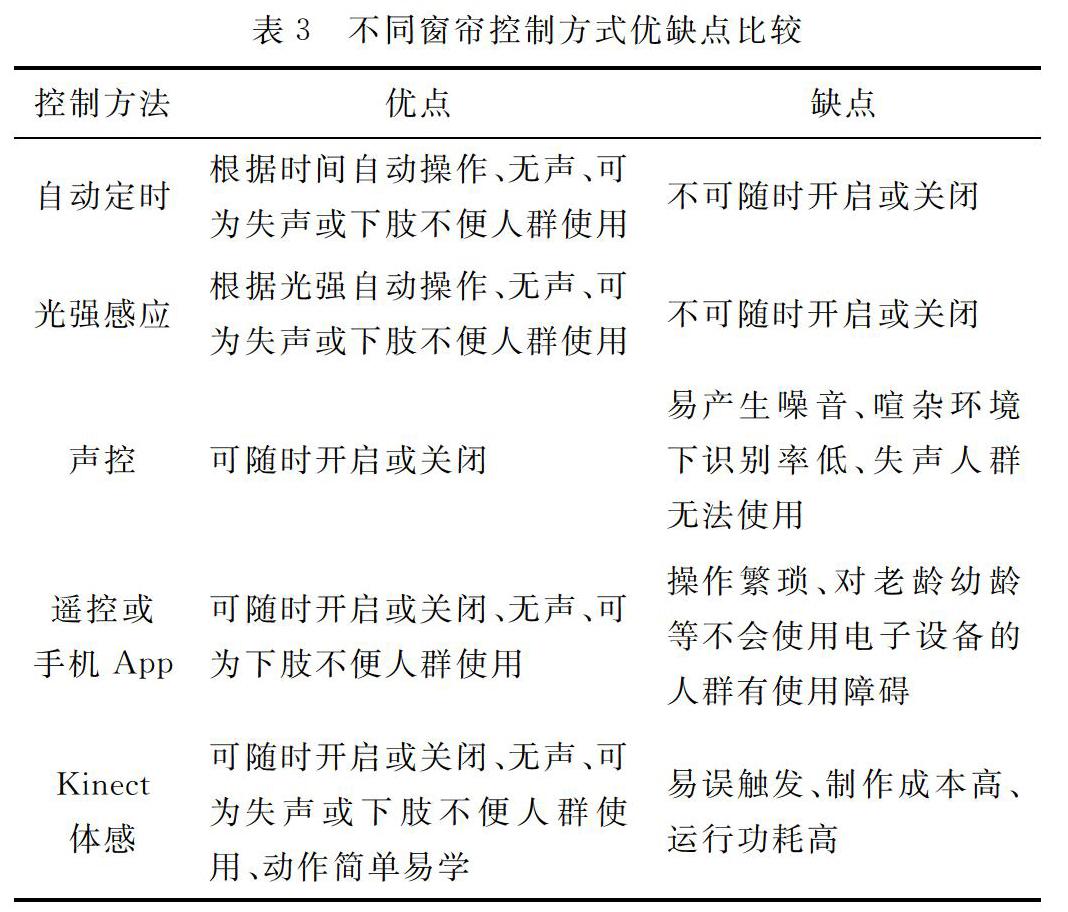
智能家居由于其独特的智能和便捷被人们广泛关注和使用。窗帘作为智能家居不可分割的一部分,其使用模式和便捷程度一直备受关注。在智能家居中传统的智能窗帘使用方式基本分为自动定时控制、光强感应控制[1-3]、声控控制[3]、传统遥控及手机App远程控制[4]等几类。上述几类传统智能窗帘为生活提供便利的同时也具有各自的局限性,如自动定时和光强感应窗帘不能满足用户随时需要开窗的需求、声控控制窗帘虽然可以满足用户随时开窗但不能应用于失声人群并且使用过程中必须发出声音可能会打扰到工作或休息的人群、遥控或App控制窗帘操作繁琐且遥控或手机经常会遗忘放在某个角落不易随时使用,并且对老龄幼龄或其他不会操作遥控或App的人群的使用产生障碍。……