半番鸭不同组织Cu/Zn-SOD基因表达及酶活性研究
2019-09-10郑嫩珠章琳俐李丽辛清武缪中纬朱志明黄一帆
郑嫩珠 章琳俐 李丽 辛清武 缪中纬 朱志明 黄一帆
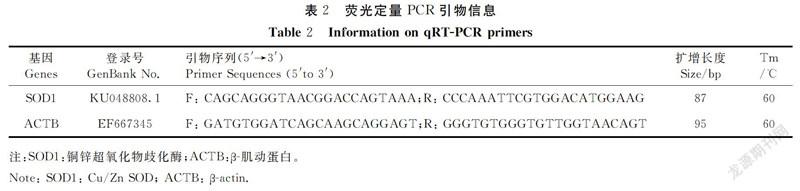
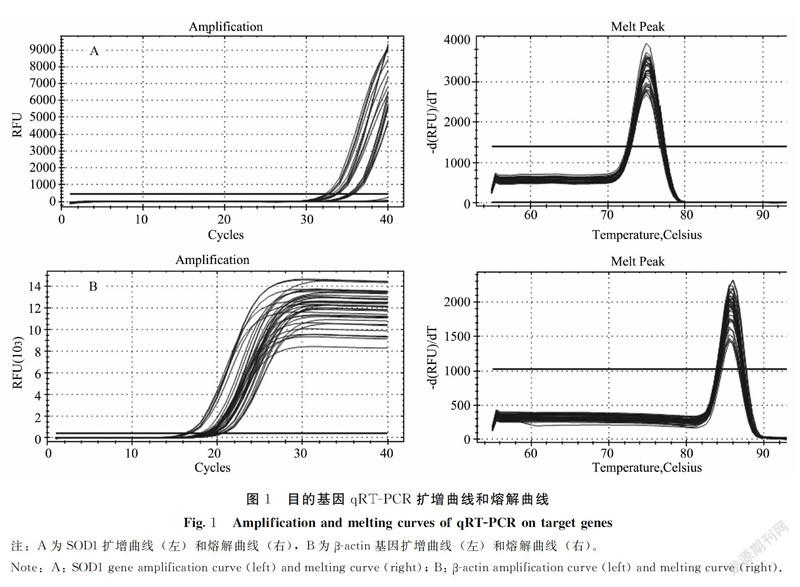
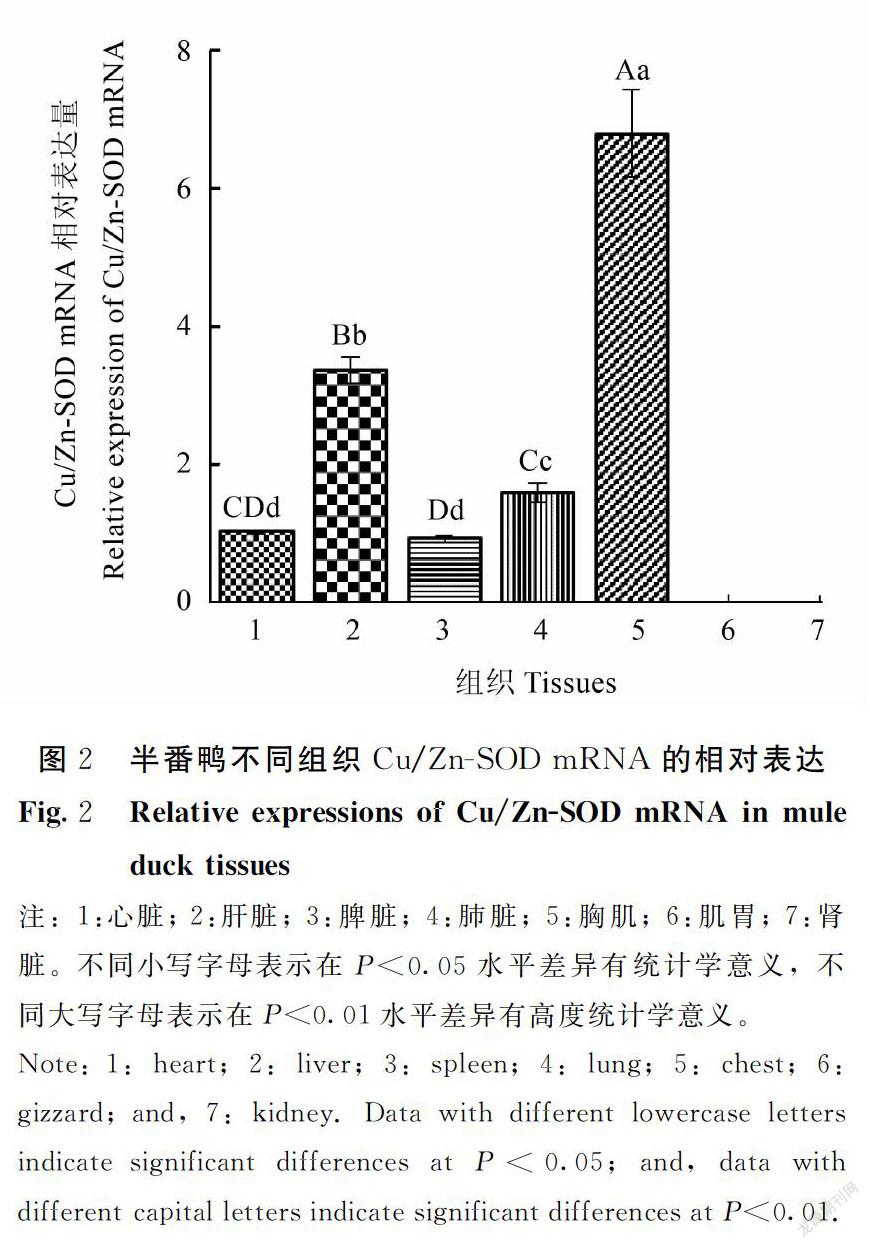
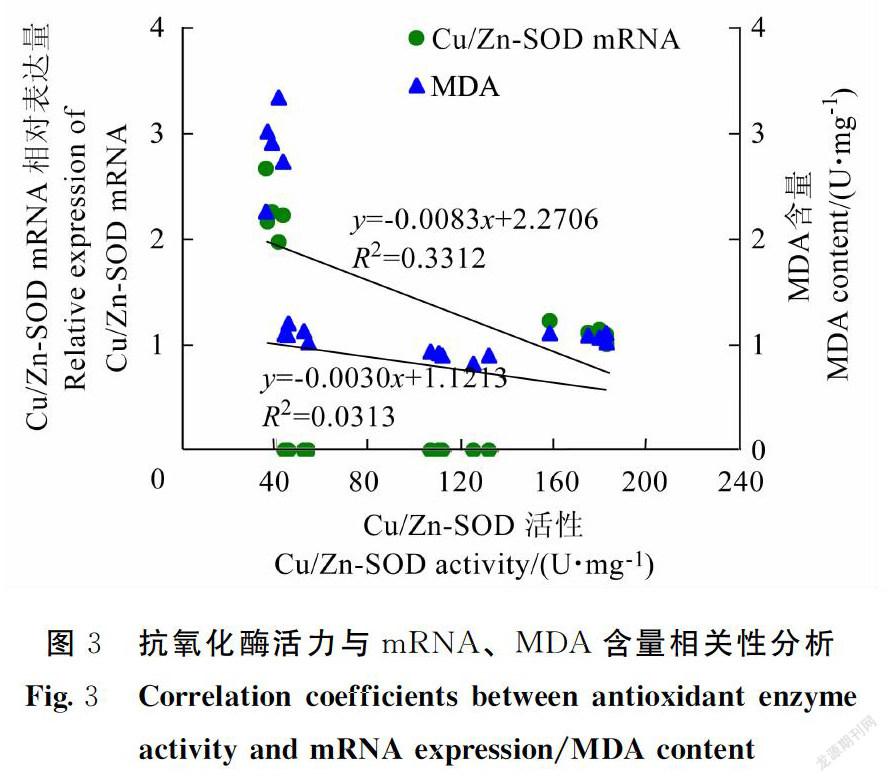
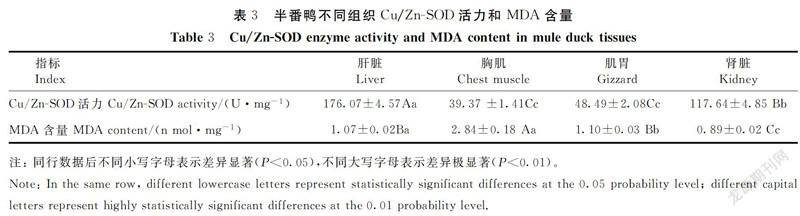
摘 要:【目的】首次对半番鸭不同组织Cu/Zn-SOD基因表达、酶活性进行研究,以期了解半番鸭不同组织抗氧化特性,为深入研究半番鸭对环境因子的响应能力及相关分子机制提供参考。【方法】通过实时荧光定量法、黄嘌呤氧化酶法和硫代巴比妥酸法分别测定了半番鸭心脏、肝脏、脾脏、肺脏、肾脏、肌胃和胸肌中的Cu/Zn-SOD mRNA相对表达量、酶活力和MDA含量。【结果】 Cu/Zn-SOD mRNA在胸肌中相对表达量最高,总体趋势为胸肌>肝脏>肺>心脏>脾脏>肾脏/肌胃。酶活力测定结果显示,肝脏和肾脏Cu/Zn-SOD酶活力显著高于胸肌和肌胃。半番鸭胸肌MDA含量显著高于肝脏、肌胃和肾脏,提示胸肌可能更易受到氧化应激损伤。相关分析结果显示Cu/Zn-SOD活力与MDA含量呈显著负相关,而抗氧化酶活力与mRNA表达水平相关性不显著。【结论】半番鸭Cu/Zn-SOD基因表达和酶活力具有组织特异性。不同组织Cu/Zn-SOD活力差异可能与Cu/Zn-SOD自身的生理功能以及组织代谢水平有关。
关键词:Cu/Zn-SOD; mRNA表达; 酶活力; 半番鸭
中图分类号:X 131;X 53文献标识码:A文章编号:1008-0384(2019)08-933-06
Abstract:【Objective】 Expressions of Cu/Zn-SOD gene and activities of the antioxidant enzyme in various organs of mule ducks were determined. 【Method】 The gene expression in the heart, liver, spleen, lung, kidney, gizzard and chest muscles,antioxidant enzyme activities,and MDA contents of mule duck were determined by the qRT-PCR, xanthine-xanthine oxidase, and thiobarbituric acid methods. 【Result】 The greatest mRNA expression of Cu/Zn-SOD gene was found in the chest muscle followed by the tissues in the order of liver>lung> heart>spleen>gizzard/kidney of the ducks. The activities of Cu/Zn-SOD enzyme in the liver and kidney were significantly higher than those in the breasts and gizzard. The higher MDA content in the breasts than in the liver, gizzard or kidney indicated a greater susceptibility of the chest muscle to damage by oxidative stress. There was no significant correlation observed between the antioxidant enzyme activity and the mRNA expression level in different organs. However, the Cu/Zn-SOD enzyme activity was inversely correlated to MDA content in the tissues. 【Conclusion】 The Cu/Zn-SOD mRNA expression and enzyme activity were organ-specific. The differences in the enzymatic activities might stem from the diverse physiological functions of the enzymes and/or the tissue metabolism per se.
Key words:Cu/Zn-SOD; mRNA expression; enzyme activity; mule duck
0 引言
【研究意義】动物机体有氧代谢过程中不断产生自由基和其他活性氧。正常生理条件下,机体能通过抗氧化系统清除自由基。抗氧化系统失衡或异常将导致自由基过度累积,引起脂质过氧化、DNA损伤、酶失活等氧化损伤[1]。畜禽生产中抗氧化系统失衡可表现为畜禽对运输或运动过程的应激易感,使宰后组织氧化损伤、肉质下降,甚至病理损伤[2]。越来越多的证据显示,家禽生产中的许多应激都与氧化应激有关[3]。……