不良生活、用药习惯对2型糖尿病血糖控制效果的影响
2019-08-19罗月梅青
罗月 梅青
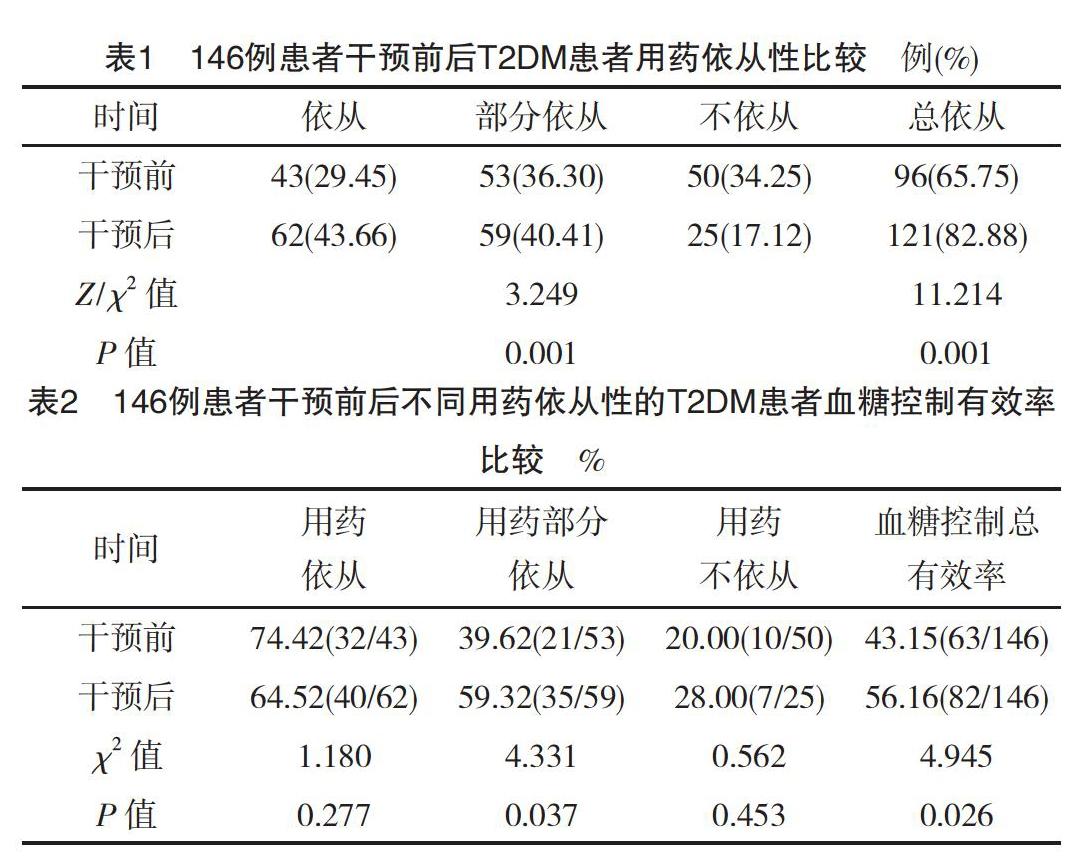
【摘要】 目的:通过调查和干预2型糖尿病患者生活、用药习惯,分析患者不良习惯对血糖控制的影响,为临床用药指导做出参考。方法:选择笔者所在医院收治糖尿病患者146例为研究对象,分发自制糖尿病用药习惯调查问卷,了解其生活习惯、用药习惯、遵医行为、糖尿病病情、血糖控制情况等,结合糖化血红蛋白等生化指标检测,针对其存在的不良习惯进行健康教育干预3周后再调查其用药习惯和血糖控制情况,分析用药习惯对血糖控制的影响。结果:生活习惯调查中,146例患者中45.89%吸烟,21.92%饮酒,42.47%未进行饮食控制,71.23%无规律运动习惯,且77.40%周运动时间<500 min;用药习惯调查中,76.71%服用2~3种降糖药物,其中以双胍类、α-葡萄糖苷酶抑制剂、磺酰脲类用药方案为主。43.15%血糖控制有效,34.25%服药不依从,不依从原因主要为忘记用药、不重视用药;经健康教育干预后,用药不依从率降至17.12%,与干预前比较差异有统计学意义(P<0.05),血糖控制有效率提升至56.16%,与干预前比较差异有统计学意义(P<0.05)。结论:糖尿病患者多存在运动不足、用药重视度不足、健康知识缺乏等不良习惯,临床用药应针对性给予健康宣教等方式干预,提高其服药依从性,改善血糖控制效果。
【关键词】 糖尿病; 用药习惯; 血糖控制; 用药依从性
doi:10.14033/j.cnki.cfmr.2019.15.076 文獻标识码 B 文章编号 1674-6805(2019)15-0-03
【Abstract】 Objective:To analyze the effects of poor habits on blood glucose control so as to make reference for clinical medication guidance by investigating the life and medication habits of patients with type 2 diabetes mellitus.Method:A total of 146 patients with diabetes mellitus in our hospital were selected for the study.The self-made questionnaires on diabetes medication habits were distributed.The life habits,medication habits,compliance behavior,diabetes conditions and blood glucose control were understood,and the glycosylated hemoglobin and other biochemical indexes detection were combined.The medication habits and blood glucose control were investigated again after 3 weeks of health education intervention for existing poor habits,and the effects of medication habits on blood glucose control were analyzed.Result:In the life habits survey,among 146 patients,45.89% patients smoked,21.92% patients drank,and 42.47% had no diet control,and 71.23% had irregular exercise habits,and 77.40% had weekly exercise time<500 min.In the medicine habits survey,76.71% patients took 2-3 kinds of hypoglycemic drugs,of which medicine regimen of biguanides,α-glucosidase inhibitor,sulfonylurea were the main.43.15% patients had effective glycemic control.34.25% patients did not comply with the medication,and the main reasons were forgetting to take medicine and not paying attention to the medicine.After health education intervention,the medicine non-compliance rate was 59.59%,which was significantly different from that before intervention(P<0.05),and the effective rate of blood glucose control was increased to 56.16%,which was significantly different from that before intervention(P<0.05).Conclusion:Patients with diabetes mellitus often have poor habits such as lack of exercise,insufficient attention to medication and lack of health knowledge.Clinical medication should be targeted to given health education and other intervention methods to enhance medication compliance and improve blood glucose control effects.
【Key words】 Diabetes mellitus; Medication habits; Blood glucose control; Medication compliance
糖尿病(diabetes mellitus,DM)主要以2型糖尿病(T2DM)为主,在全世界范围内发病率逐年上升,我国糖尿病发病率上升速度尤为迅猛,作为一种全球性慢性疾病,T2DM具有治疗周期长、影响因素多、难以治愈、需长期维持药物治疗效果等特点,这些特点不仅要求患者长期自律,同时也对个人、家庭、社会造成较大负担和资源消耗[1-2]。世界卫生组织调查显示,将近30%的患者死亡原因为不合理用药,不合理用药多源于不良用药习惯及不良生活习惯,我国居民合理用药的基本医疗素养不足10%,在糖尿病患者基数的逐年增大这一背景下,合理用药已成为临床用药研究的重要关注点[3]。为了解T2DM患者生活习惯及用药习惯,探究不良习惯对血糖控制效果的影响,本文对146例糖尿病患者进行调查研究,现报道如下。……