心电图与心脏超声联合检诊非心肌梗死异常Q波的临床意义
2019-08-01王晓霞
王晓霞
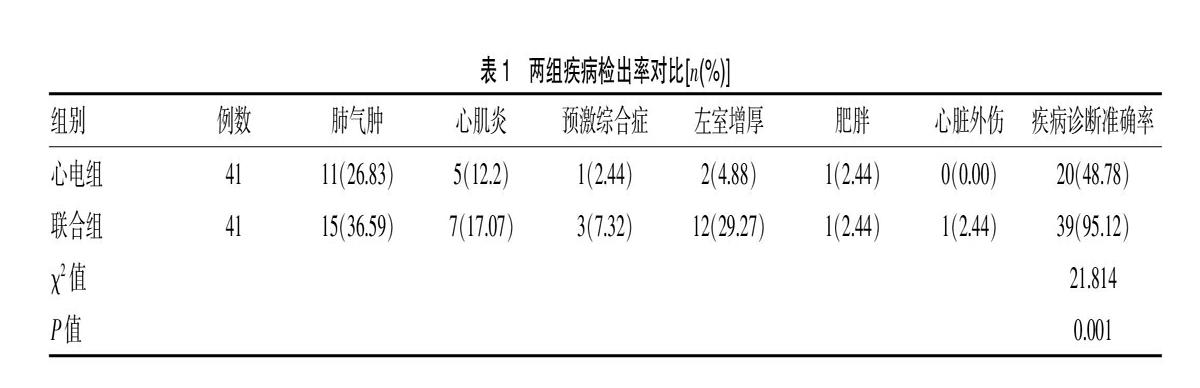
[摘要] 目的 分析心电图与心脏超声联合检诊非心肌梗死异常Q波的临床意义,利用心电图与心脏超声联合检诊诊断各种病例数据结果进行分析,降低误诊率。方法 回顾性分析并方便选取该院2014年12月—2015年12月入院期间接受的非心肌梗死伴异常Q波患者41例,经不同方式确诊疾病。心电组经心电图联合临床症状检查确诊,联合组经心电图联合心脏超声检诊,对比两组检出率差异。结果 联合组疾病检出率为95.12%,高于心电组48.78%,差异有统计学意义(t=21.814,P=0.001 <0.05)。结论 心电图与心脏超声联合见证非心肌梗死异常Q波可基本明确病因,可为后续治疗提供支持。
[关键词] 心电图;心脏超声;非心肌梗死;异常Q波
[中图分类号] R54 [文献标识码] A [文章编号] 1674-0742(2019)04(c)-0190-03
[Abstract] Objective To analyze the clinical significance of ECG combined with cardiac ultrasound examination for non-myocardial infarction abnormal Q wave. To analyze the data results of ECG combined with cardiac ultrasound for diagnosis of various cases, so as to reduce the rate of misdiagnosis. Methods A total of 41 patients with non-myocardial infarction accompanied by abnormal Q wave admitted to our hospital from December 2014 to December 2015 were convenient selected and reviewed and diagnosed by different methods. The ECG group was diagnosed by ECG combined with clinical symptom, while the combined group was diagnosed by ECG combined with cardiac ultrasound. The difference of detection rate between the two groups was compared. Results The disease detection rate in the combined group was 95.12%, which was higher than that in the ECG group (48.78%). The difference was statistically significant (t=21.814, P=0.001 <0.05). Conclusion The examination of ECG combined with cardiac ultrasound can basically identify the cause of the disease through abnormal Q wave of non-myocardial infarction, which can provide support for subsequent treatment.
[Key words] Electrocardiogram; Echocardiography; Non-myocardial infarction; Abnormal Q wave
该院依照市政府办公室《关于印发厦门市医疗联合体建设推进工作方案的通知》(政办发[2017]81号)和区医院委下发《厦门市医疗共同提建设实施方案》相关文件要求,在市卫计委领导的指导下,由该三甲医院为牵头医院,积极到全市区各乡镇街道卫生院启动医共体建设帮扶工作[1]。经过各乡镇街道卫生院走访帮扶调查了解,可见各院内设施陈旧,医疗水平非常有限,大多数院内有常规心电图检测设备,而不具备心脏超声设备。一旦常规心电图检测出非心肌梗死异常Q波,多数是依照患者临床症状判定疾病,行针对治疗,不确定性因素容易造成对病因分析不准确,且容易造成误诊,并且延误患者病情,耽误治疗时机。该文为探究两种检测方式检测效果差异,方便选取2014年12月—2015年12月见接收的非心肌梗死异常Q波者41例,现报道如下。……