Chinese Calligraphy and Painting (I)中国书法与中国画(上)
2018-01-06雷蒙道森彭发胜
文/雷蒙·道森 译/彭发胜
By Raymond Dawson
Chinese arts which were slowest to find appreciation and recognition in the West were painting and calligraphy. Although some Chinese paintings found their way to Europe as early as the seventeenth century, it was not until much later that serious attempts were made to understand the unfamiliar aesthetic which underlay them. In fluences were also slow to penetrate in the opposite direction. Jesuit painters at the Chinese court at first aroused intense interest, but their ultimate effect on Chinese artists was very slight. They were regarded as artisans, rather than painters, for they lacked the brush technique which was the hallmark of the true artist. Conversely Ricci, the founder of the Jesuit mission, and many later Western writers condemned Chinese painting for its apparent lack of perspective.Although the beauty of Chinese jade and porcelain has immediate appeal and even the ancient bronzes with their outlandish decoration make a dramatic impact on the European imagination,in order to appreciate Chinese painting(and more especially calligraphy) it is necessary to understand the intellectual world in which its underlying aesthetic developed. The predominant genre of painting is landscape, and to come to terms with Chinese landscape painting it is necessary to have a lively awareness of the Chinese attitude to nature,the origins of which lay deep in ancient Chinese thought. It is also necessary to be acutely conscious of the profound implications of the close relationship between painting and calligraphy, which is rooted in the fact that for both arts the same brush is used. For the calligrapher the pictographic nature of the characters he writes is never entirely forgotten, so they are felt to be beautifully condensed symbols of something far more complicated, essentially a kind of shorthand which gives intense aesthetic satisfaction. The same skills which the calligrapher develops to bring out the beauties of the Chinese script are transferred to the craft of setting down on paper or silk the shorthand versions of nature which is what Chinese landscape painting consists of. Painting is, in a sense, a kind of calligraphy.
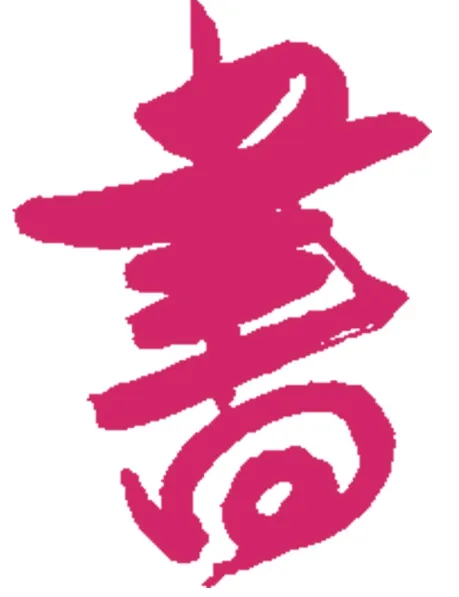
[2] The development of calligraphy as a fine art was a long process culminating in the Han Dynasty. It derived naturally from the practical need to compose the disparate elements out of which characters were formed into orderly symbols which could fit together neatly into a series and follow each other on the page with an appearance of symmetry and uniformity. Each character in itself presented a problem of composition before it could become an aesthetically satisfying element in an aesthetically satisfying whole. But the relationship between characters on the page was equally important, and the only effective solution was that, no matter how simple or complicated they were, they should all occupy imaginary squares of the same size. The transition from the untidy and disorderly oracle bone inscriptions to the orderly scripts of the Han period, the immediate precursors of the modern script, is a masterly achievement.
[3] The earliest writings which used the language of art criticism and contained aesthetic theories were concerned with calligraphy. This was natural since it was not only a most demanding art,but also one which every literate person necessarily practised. Admiration of fine calligraphy has continued into the present, and it has been a common practice to decorate the home with scrolls bearing moral maxims in fine handwriting. The beauty of the script can be seen very clearly when one compares a passage written with the brush with the printed version of the same characters.The latter possesses a dull and pedestrian symmetry and immobility, but the brush-written characters have an appealing asymmetry; and the individual strokes, skilfully yet spontaneously executed, broadening or narrowing,getting heavier or lighter on the page,give an air of vigour and mobility to the writing. The printed characters are like figures in a Victorian photograph, standing stiffly to attention; but the brushwritten ones dance down the pages with the grace and vitality of the ballet. The beautiful shapes of Chinese calligraphy were in fact compared with natural beauties, and every stroke was thought to be inspired by a natural object and to have the energy of a living thing. Consequently Chinese calligraphers sought inspiration by watching natural phenomena. The most famous of all, Wang Hsi-chih, was fond of watching geese because the graceful and easy movement of their necks reminded him of wielding the brush, and the monk Huaisu was said to have appreciated the in finite variety possible in the cursive style of calligraphy known as grass-script by observing summer clouds wafted by the wind.
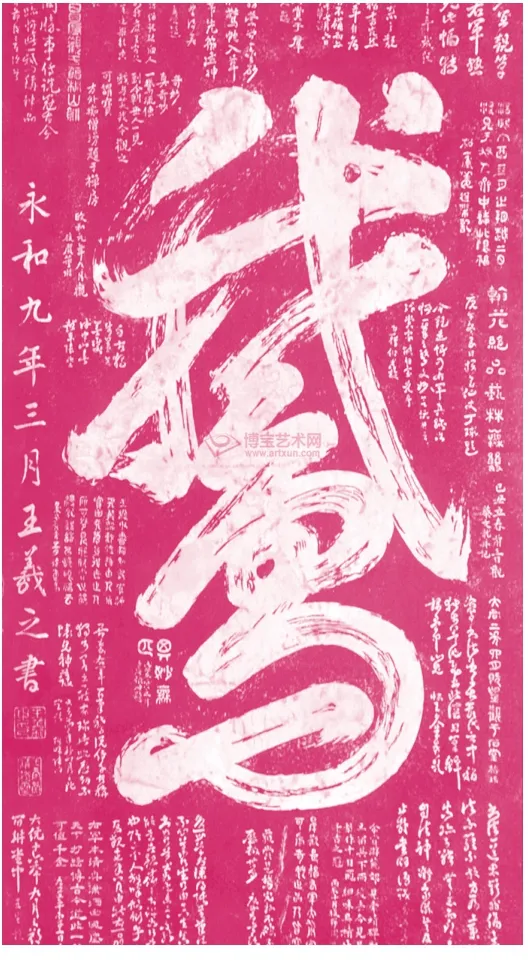
[4] Since the Han Dynasty calligraphy has also been thought to reveal the nature of the writer. For example, according to Chiang Yee, the calligraphy of the emperor Hui-tsung of the Sung Dynasty, a famous painter and patron of artists, shows him to have been a wellbuilt, handsome figure. The sample illustrated shows the beauty and vigour of the strokes, and reveals how a sense of movement is given to characters by making horizontal strokes tilt slightly,by making the brushline thicken or grow thin, by running informally from one stroke to the next, in a display of virtuosity which no simple alphabetic language can ever match, and which makes Egyptian hieroglyphs look static and graceless by comparison. ■
在中国各类艺术中,绘画和书法在西方获得欣赏和承认的过程最为漫长。虽然有些中国画早在17世纪就已经流入欧洲,但是西方人真正试图理解画面背后陌生的审美观却要晚得多。反过来说,西方美学对中国的影响也很缓慢。在中国宫廷奉职的耶稣会画家们起初确实引发了中国人浓厚的兴趣,但是他们对中国艺术家的影响最终却微乎其微。他们被看作画匠,而非画家,因为他们没有笔墨技法,而这才是画家的真本领。反过来说,耶稣会传教团的创始人利玛窦和许多后来的西方作者也批评中国画明显不合透视原理。虽然中国的玉器和瓷器之美具有立竿见影的吸引力,乃至古代青铜器的怪异纹饰也会对欧洲人的想象产生巨大的影响,但是如果要欣赏中国画(特别是中国书法),就必须要懂得中国审美艺术赖以发展的思想世界。中国画以山水画为主,要理解山水画,就必须将中国人的自然观融会于心,而中国人的自然观深植于古代中国思想。此外还必须清晰领会绘画与书法之间密切关系所具有的深刻内涵。其原因在于两种艺术所用的工具同样都是毛笔。书法家运笔时,从不忘记他所写的字具有象形性。所以,这些字看起来像是结构复杂、造型优美的符号,基本可算一种给人以强烈审美满足感的速写。而中国的山水画,正是把书法家精心发展、用以表现汉字之美的各种技巧,移用在纸上或绢上,化为自然景观的速写版。……
