没有工作的世界
2017-11-22ByYuvalNoahHarari
By+Yuval+Noah+Harari
人工智能的飛速发展正营造出一个全新的世界,一步步改变着人类的生活方式。如果有一天,高科技替我们完成了所有任务,人们不再需要工作,世界将变成怎样?当社会不再需要我们履行职责,当人类自身的智慧被我们缔造出的机器碾压,我们该去何处寻找生存的意义?虚拟现实是否会变成我们最重要的精神食粮?人类用智慧缔造出的那个超现实的未来究竟是福是祸,这一切都值得我们思考。
Most jobs that exist today might disappear within decades. As artificial intelligence outperforms humans in more and more tasks,1 it will replace humans in more and more jobs. Many new professions are likely to appear: virtual-world designers, for example. But such professions will probably require more creativity and flexibility, and it is unclear whether 40-year-old unemployed taxi drivers or insurance agents will be able to reinvent themselves as2 virtual-world designers. And even if the ex-insurance agent somehow makes the transition into a virtual-world designer, the pace of progress is such that within another decade he might have to reinvent himself yet again.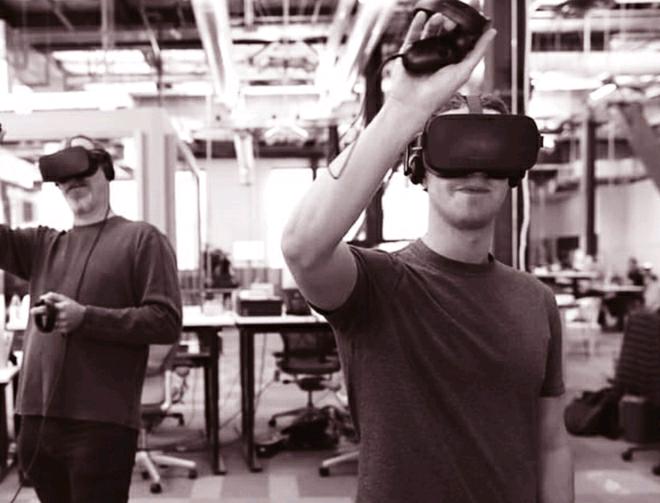
The crucial problem isnt creating new jobs. The crucial problem is creating new jobs that humans perform better than algorithms3. Consequently, by 2050 a new class of people might emerge— the useless class. People who are not just unemployed, but unemployable.4
The same technology that renders humans useless might also make it feasible to feed and support the unemployable masses through some scheme of universal basic income.5 The real problem will then be to keep the masses occupied and content. People must engage in purposeful activities, or they go crazy. So what will the useless class do all day?
One answer might be computer games. Economically redundant people might spend increasing amounts of time within 3D virtual reality worlds, which would provide them with far more excitement and emotional engagement than the “real world”outside.6
The virtual reality need not be encased7 inside an isolated box. Rather, it can be superimposed8 on the physical reality. In the past this was done with the human imagination, and in the 21st century it can be done with smartphones.
The idea of finding meaning in life by playing virtual reality games is common to secular ideologies and lifestyles.9 Consumerism10 too is a virtual reality game. You gain points by acquiring new cars, buying expensive brands and taking vacations abroad, and if you have more points than everybody else, you tell yourself you won the game.
You might object that people really enjoy their cars and vacations. Thats certainly true. But in the end, the real action always takes place inside the human brain. Does it matter whether the neurons are stimulated by observing pixels on a computer screen, by looking outside the windows of a Caribbean resort, or by seeing heaven in our minds eyes?11 In all cases, the meaning of life is always a fictional story created by us humans.endprint
In his groundbreaking essay, “Deep Play: Notes on the Balinese Cockfight” (1973), the anthropologist Clifford Geertz describes how on the island of Bali,12 people spent much time and money betting on cockfights. The betting and the fights involved elaborate rituals, and the outcomes had substantial impact on the social, economic and political standing of both players and spectators.13
The cockfights were so important to the Balinese that when the Indonesian government declared the practice illegal, people ignored the law and risked arrest and hefty14 fines. For the Balinese, cockfights were “deep play”—a made-up game that is invested with so much meaning that it becomes reality. A Balinese anthropologist could arguably have written similar essays on football in Argentina or Judaism in Israel.15
Indeed, one particularly interesting section of Israeli society provides a unique laboratory for how to live a contented life in a post-work world. In Israel, a significant percentage of ultraorthodox16 Jewish men never work. They spend their entire lives studying holy scriptures17 and performing religion rituals. They and their families dont starve to death partly because the wives often work, and partly because the government provides them with generous subsidies18.
Though they are poor and never work, in survey after survey these ultra-orthodox Jewish men report higher levels of life-satisfaction than any other section of Israeli society. In global surveys of life satisfaction, Israel is almost always at the very top, thanks in part to the contribution of these unemployed deep players.
You dont need to go all the way to Israel to see the world of post-work. If you have at home a teenage son who likes computer games, you can conduct your own experiment. Provide him with a minimum subsidy of Coke and pizza, and then remove all demands for work and all parental supervision. The likely outcome is that he will remain in his room for days, glued to the screen. He wont do any homework or housework, will skip school, skip meals and even skip showers and sleep. Yet he is unlikely to suffer from boredom or a sense of purposelessness19.
Hence virtual realities are likely to be key to providing meaning to the useless class of the post-work world. Maybe these virtual realities will be generated inside computers. Maybe they will be generated outside computers, in the shape of new ideologies. Maybe it will be a combination of the two. The possibilities are endless, and nobody knows for sure what kind of deep plays will engage us in 2050.endprint
1. artificial intelligence: 人工智能,简称AI;outperform:胜过,做得比??好。
2. reinvent oneself (as sth).: 以新形象示人,以新形式出现。
3. algorithm: //(计算机或数学)算法,运算法则。
4. 人们不仅仅是面临失业,而是根本无法就业。unemployable:(因缺乏所需技能或资质不足)不适于(被)雇佣的。
5. render: 使成为,使变得;feasible:可行的,行得通的;mass: 民众;universal basic income: 全民基本收入。
6. 经济上无用的人们可能会花越来越多的时间体验3D虚拟现实的乐趣。比起外面的“真实世界”,这些虚拟造物会给他们带来更多的精神刺激和情感享受。redundant:多余的,被解雇的。
7. encase: 包住,包装。
8. superimpose: // 重叠,附加。
9. secular: 世俗的,现世的;ideology:意识形态。
10. consumerism: 消费主义。
11. 观看电脑屏幕上纷繁的像素,欣赏加勒比海度假村窗外的美景,抑或看见脑海中想象出的天堂——人类的神经元以哪种方式被刺激,又有何要紧呢?neuron: 神经元,神经细胞;pixel: 像素;Caribbean: 加勒比海。
12. groundbreaking: 有突破性的,创新的;Balinese: 巴厘岛的,巴厘岛人,Bali(巴厘岛)是位于印度尼西亚的著名岛屿;cockfight:斗鸡;anthropologist: 人类学家;Clifford Geertz: 克利福德·格尔茨(1926—2006),美国人类学家。
13. 这些赌博和竞赛有着精心准备的盛大仪式,而比赛的结果对玩家和围观者的社会、经济和政治地位都有着巨大影响。……