戒掉你的“拍摄癖”
2017-11-22ByDavidButterfield
By+David+Butterfield
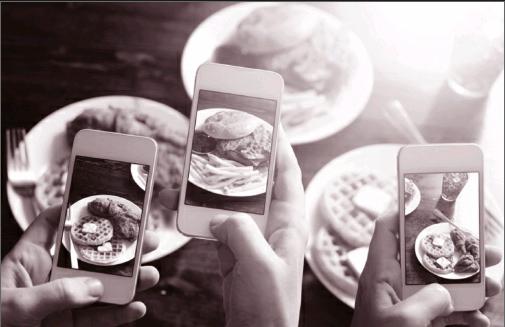
If youre lucky enough to see something truly remarkable, keep your phone in your pocket.
若你有幸看到真正美好的東西,请不要掏出手机。
Heres a paradox1: we are a people obsessed with visiting the worlds most alluring sites and experiencing the most important events in person; and yet, though we travel more eagerly and easily than ever, fewer of us end up seeing things with our own eyes. Take yourself to any place of beauty, or indeed any event that draws a crowd. Look around for a moment and youll see a solemn-faced, dull-eyed crowd with one arm collectively raised in cultic2 devotion. Each hand clutches a phone, and each phone cameos3 as camera. But what makes this Pavlovian4 response to All Things Worth Seeing so weird is that these have-a-go reporters are focused intently upon their tiny phone screens: even when only metres away, they fail to see the action with their own eyes. Being there no longer means seeing there.
Well, what does it matter if everyone is so keenly playing street reporter? Isnt it a splendid thing that seemingly every event on the planet is now effortlessly recorded by anyone with a phone? Not at all, Id say. Now and then, we do of course benefit from the quick-thinking filming of some exceptional event that would otherwise have no objective record. But these videos that successfully extend the scope of institutional reporting are a tiny fraction of whats being recorded every hour, every minute, every second worldwide.
Instead, we are paying a price for this perverse5 practice. Here are three sad—even disturbing—effects of our filming fetish6. First, phone-wielders establish a boundary between themselves and the events unfolding,
transforming them from present witnesses to mere closer-than-thou screen-gawpers.7 Since their eyes fail to see the action unmediated8, they are in some senses not really there at all. People boast at being at that gig9, or seeing the actual Mona Lisa at a few yards remove. But the digital proof they shove in your face ends up confirming that they, just like you, instead squinted at these spectacles through plastic.10 In thinking of their films future, the present moment passed them by.
Second, these ubiquitous recorders of all and sundry seem to have forgotten the purpose of what they are up to.11 You do have to wonder what all their data-collection is for. Millions of hours of footage, billions of photos; even the internet cant keep up with the surging surfeit.12 What secondary audience needs 20,000 versions of oblique, wobbly and tinny footage of an event already being filmed professionally?13 Or take Cambridge, where I live. Thousands of tourists stream each day from their coaches, snaking up the medieval streets. A good portion are filming their movements continuously: a bin here, a bench there, the occasional passing bus. Yes, wonderful architecture flits onto camera now and then, but these are rare interruptions of otherwise (literally) pedestrian fare.14 Perhaps there is an audience back home that will strap in for six hours of footage per diem; but, even if there is, their host wont be able to give any wider context beyond what he, like they, saw through this paltry,15 often pointless, window into the world.endprint
Third, and most worryingly, by privileging16 the framing and focus of their film with oh-so-steady hand, their engagement is limited in body as well as sight. If they became involved in the fray17, the thinking runs, then who would do the filming? Wont somebody please think of the YouTube channel! That there are dozens—and in many cases hundreds or thousands—recording exactly the same event seems not to register. But when I see videos of street fights, abuse on public transport or painful accidents, I cant help pausing to think about the person actually filming them. Isnt it a warped18 response to a moment of emergency or high drama to reach for the phone camera rather than to reach out to help—or, you know, use the phone as a phone? Often there wont be a word of support spoken from these alarming film-zombies: talking from behind the camera would really spoil the audio.
So, lets reset to keeping phones in pockets. If youre lucky enough to see something truly beautiful or remarkable, look at it, savour19 it and let your senses drink it in. If instead a sudden problem arises, offer what hand you can. Once youve done what humans are built to do, yes, happily film and click until your fingers fall off. But dont expect anyone—including yourself—to want to look at them.
這里有一个悖论:我们是一个痴迷于参观世界上最迷人的景观和亲自体验最重要的事件的民族;然而,虽然我们对旅行比以前更加热切,并且旅行也变得比以前更加简单,但我们却越来越少地用我们自己的眼睛看事物了。你可以随便去一个风景优美的地方,或者去旁观任何一个吸引人群的事件,环顾四周一段时间,你会看到一群神情肃穆、目光呆滞的人,他们像参加膜拜仪式一样,每个人都举着一只胳膊,每只手上都握着一部手机,每部手机都扮演着照相机的角色。但使得对“所有值得看的事物”产生的这种巴甫洛夫条件反射非常奇怪的原因是,这些踊跃尝试当记者的旁观者只把目光聚焦于他们小小的手机屏幕上:即便只离事件几米远,他们也没能用自己的眼睛看。在场已不再意味着亲见。
那么,如果每个人都非常渴望扮演街头记者的话,又会怎样呢?现在世界上似乎每一个事件都可以被任何一个有手机的人毫不费劲地记录下来,这难道不是一件极好的事情吗?我会说,这一点儿都不好。当然,我们有时候确实可以从对某个特殊事件的及时拍摄中得到些好处,如果没有这些视频的话,这个事件就得不到客观地记录了。但是这些成功地扩大了公共机构专业报道范围的视频,仅仅只是全世界每时、每分、每秒被记录的内容中极小的部分而已。
恰恰相反的是,我们正在为这种反常的行为付出着代价。……