纳帕海不同土地利用方式下土壤有机碳分布特征
2017-08-13李璇马旭晨
李璇 马旭晨
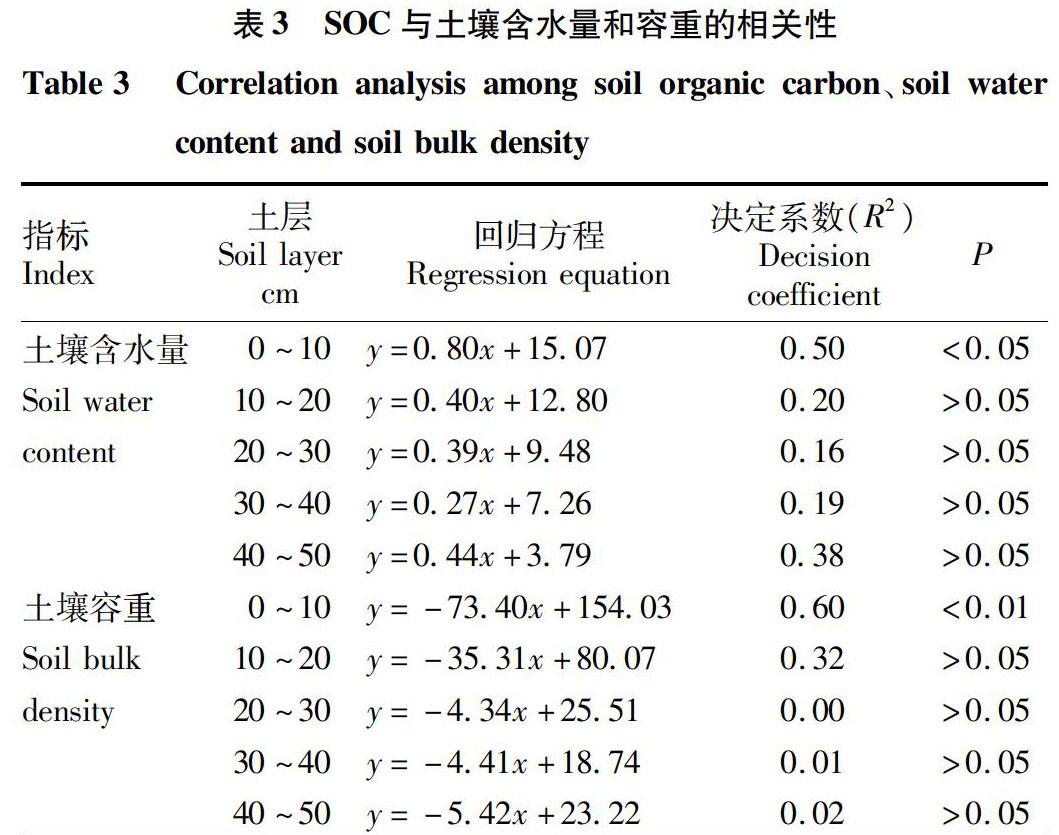
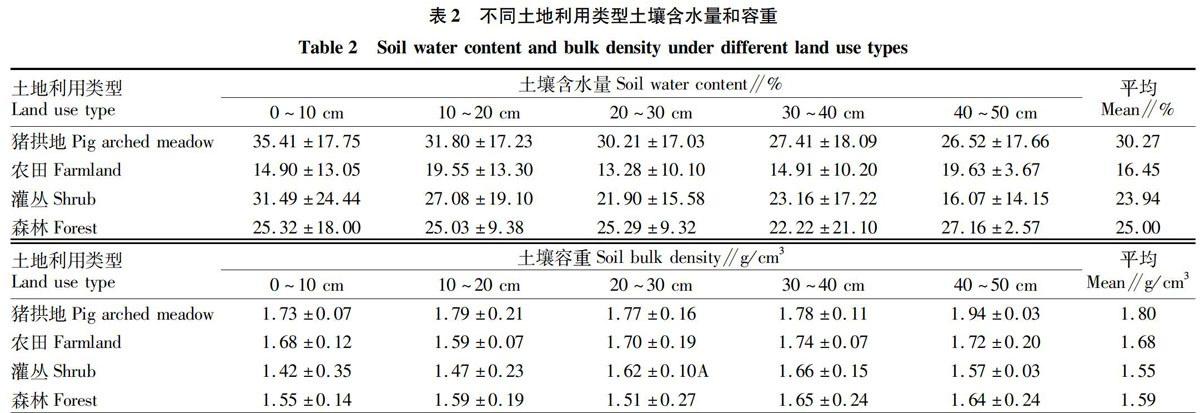
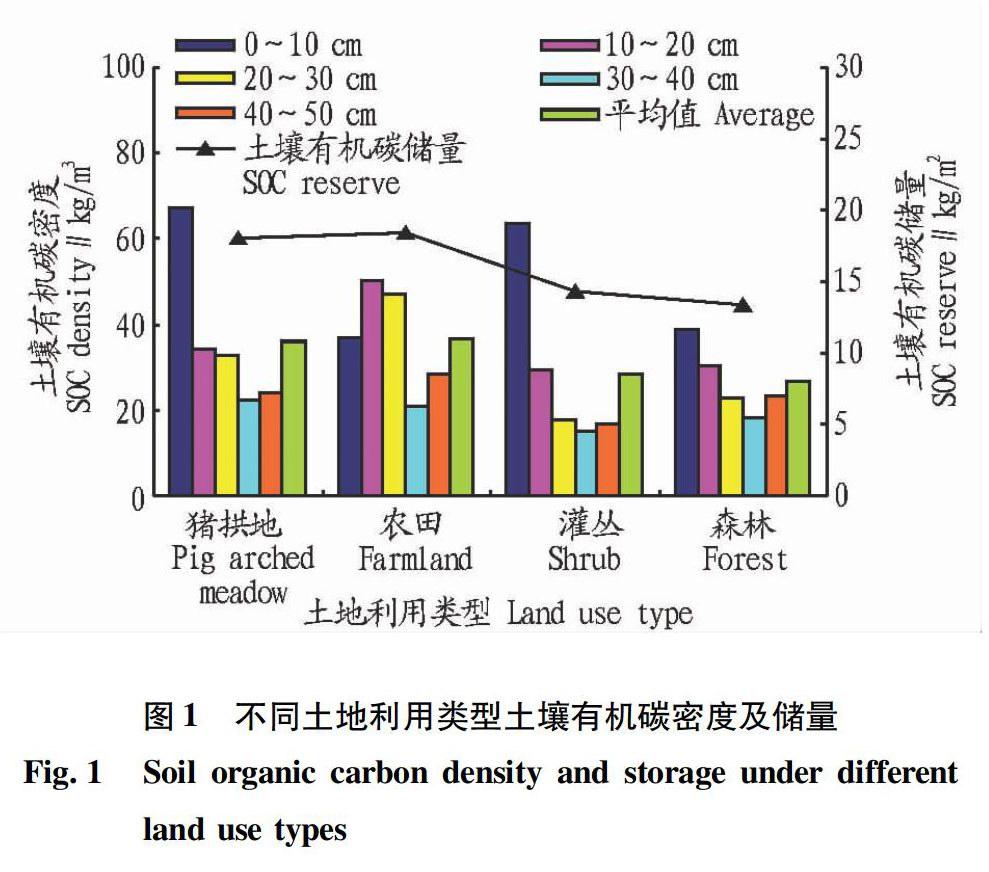
摘要 [目的]探讨纳帕海区域土壤有机碳(SOC)在不同土地利用方式下的剖面分布特征及其与土壤含水量、容重的相关关系,为该区域合理高效利用土地资源提供科学依据。[方法]对猪拱地、农田、灌丛和森林4种土地利用类型的SOC分布特征进行研究。[结果] 0~50 cm土层深度内,SOC含量由高到低依次为农田(26.43 g/kg)、猪拱地(20.95 g/kg)、灌丛(20.16 g/kg)、森林(17.25 g/kg);猪拱地、农田、灌丛和森林均为0~10 cm土层SOC含量最高,是主要的碳储层,分别占0~50 cm土层的37.42%、28.07%、49.81%和30.10%,随土壤深度的加深,SOC含量呈减少趋势;SOC 密度与SOC储量呈基本一致的变化趋势;各样地表层SOC与土壤含水量呈显著正相关(R2=0.50,P<0.05),与土壤容重呈极显著负相关(R2=0.60,P<0.01)。[结论]不同土地利用类型其SOC含量在垂直方向上的分布不同,湿地的退化会不同程度地导致SOC流失,表层SOC含量很大程度上受土壤含水量和土壤容重的制约。
关键词 高原湿地;土壤有机碳;土地利用类型;纳帕海
中图分类号 S151;X171 文献标识码 A 文章编号 0517-6611(2017)07-0100-04
The Distribution Characteristics of Soil Organic Carbon under Different Land Uses Patterns in Napahai
LI Xuan, MA Xu-chen
(College of Environmental Science and Engineering, Southwest Forestry University, Kunming, Yunnan 650224)
Abstract [Objective] To study the profile distribution characteristics of soil organic carbon (SOC) under different land use patterns and its correlation with soil water content and bulk density in Napahai plateau wetland in order to provide scientific basis for the rational and efficient use of land resource in the region. [Method]The pig arched meadow, farmland, shrub and forest were selected in this area and the study was carried out. [Result] In 0-50 cm soil depth, soil organic carbon content from high to low was farmland (26.43 g/kg), pig arched meadow (20.95 g/kg), shrub (20.16 g/kg), forest (17.25 g/kg) in Napahai plateau wetland area. SOC content was the highest at 0-10 cm soil layer and which was the main SOC reservoir accounted for 37.42%, 28.07%, 49.81% and 30.10% of 0-50 cm soil depth, and the SOC content decreased with soil depth enhance. The SOC density and SOC reserves showed a consistent trend. According to the regression equation, the soil water content was positively correlated with SOC(R2=0.50,P<0.05)and the soil bulk density was negatively correlated with SOC ( R2=0.60,P<0.01), and they all reached a significant level in the soil surface layer (P<0.05). [Conclusion] Different land use patterns have different storage capacity for SOC in vertical direction, and the degradation of wetland will lead to the loss of SOC in varying degrees. The content of SOC in the surface is largely affected by soil water content and soil bulk density.
Key words Plateau wetland;Soil organic carbon;Land use types;Napahai
土壤是陸地生態系统中最大的有机碳库,据估算,全球1 m深度的土壤中贮存的有机碳量约为1 500 Gt,超过了植被与大气有机碳储量之和[1],一方面为植被生长提供碳源,另一方面以CO2等温室气体的形式向大气释放碳,其微小波动将在很大程度上减缓或加剧大气CO2浓度升高,改变全球碳平衡格局[2-3]。土地利用/覆被变化(LUCC)对土壤有机碳(SOC)的贮量、性质、动态和稳定性有重大影响,具有源汇双重性[4],是影响土壤碳库变化的主要驱动力之一[5],也是影响地球陆地生态系统土气交换的关键因素[6]。
云南纳帕海地处青藏高原东南缘,横断山脉三江纵向岭谷区东部,属喀斯特型季节性高原沼泽湿地,高原湖泊湿地数量众多。与长江中下游湿地、北方平原湿地及若尔盖……
