鲁中地区作物系数确定及土壤水分预报模型研究
2017-06-29环海军姚丹丹刘岩夏福华
环海军++姚丹丹++刘岩++夏福华
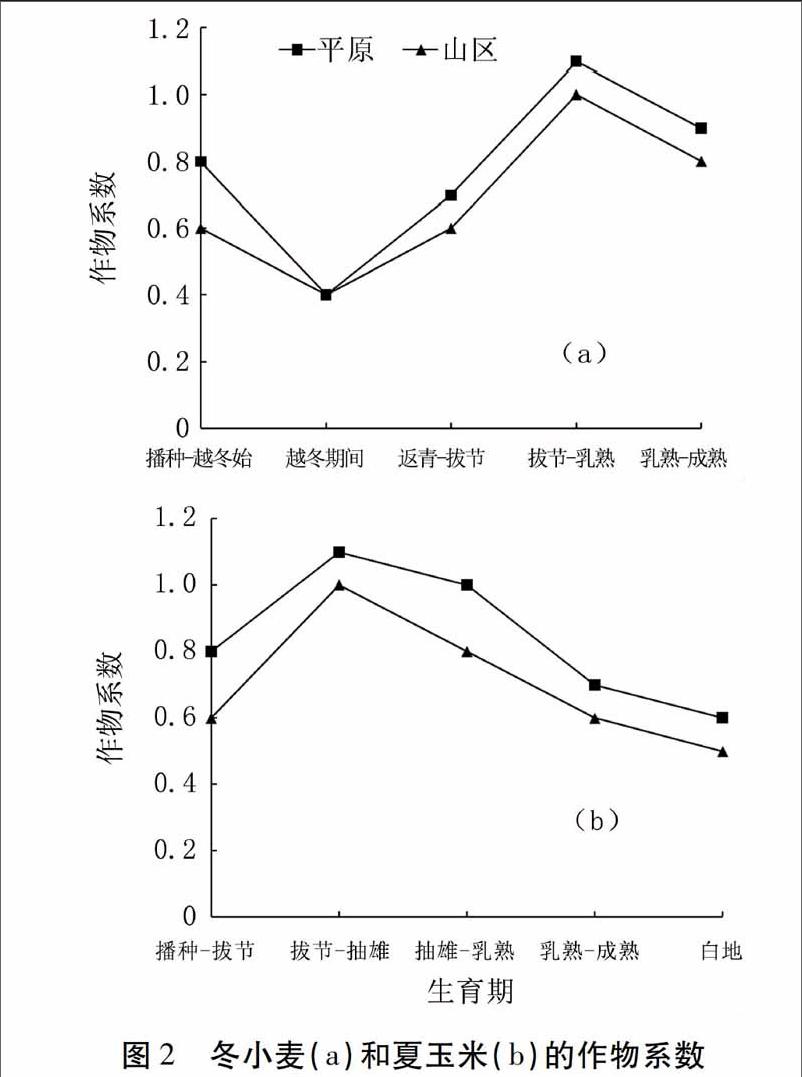
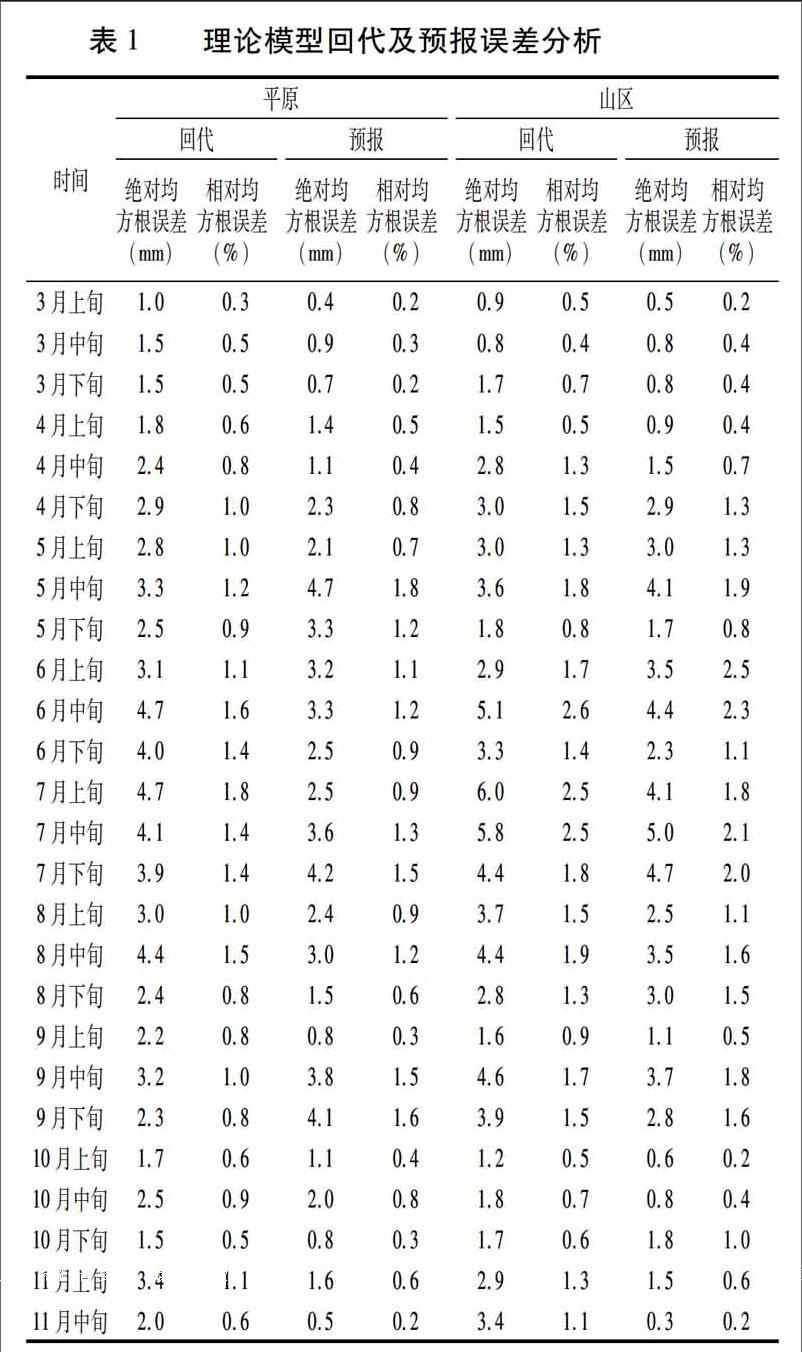
摘要:通过土壤水分平衡方程对鲁中地区平原和山区两种地形冬小麦和夏玉米的作物系数进行修正,建立了理论模型和统计模型,并进行了回代和预报对比分析。结果表明:鲁中地区冬小麦、夏玉米生育阶段作物系数山区较平原低,最大值分别出现在拔节至乳熟、拔节至抽雄阶段;两种模型多数时段回代和预报绝对均方根误差均在5 mm内,相对均方根误差基本在2%以内;两种模型对平原地区土壤水分的回代和预报效果接近,统计模型误差略偏小,对山区的回代和预报效果多数时段统计模型偏好;模型对平原土壤水分的预报效果较山区好。综上所述,统计模型基本能用于实际业务中,但其稳定性和机理机制仍需深入研究。
关键词:作物系数;小麦;玉米;预报模型;鲁中地区
中图分类号:S152.7+5文献标识号:A文章编号:1001-4942(2017)06-0143-05
AbstractThe crop coefficients of winter wheat and summer maize in the plain and mountain areas in the middle area of Shandong Province were modified by soil moisture balance equation, then the theoretical model and statistical model were established, and the backward substitution and prediction analysis were conducted. The results showed that the crop coefficients of winter wheat and summer maize in plain were higher than those in mountain area in the middle area of Shandong Province, and their peak values appeared at jointing-milky stage and jointing-tasseling stage respectively. The absolute root mean square errors of backward substitution and prediction were within 5 mm in most time of the two models, and their relative root mean square errors were basically less than 2%. The backward substitution and prediction results of two models on soil moisture in the plain were close to each other, in which, the error of statistical model was slightly smaller. The backward substitution and prediction results of statistical model in the mountain area was better in most time. The prediction results of two models in the plain were better than those in the mountain area. Thus, the statistical model could be used in the actual business, but its stability and mechanism still needed further research.
KeywordsCrop coefficient; Wheat; Summer maize; Forecast model; Middle area of Shandong Province
土壤水分是作物生長的物质基础,干旱是制约农业生产的主要气象灾害之一,所以研究土壤水分预报模型对农业生产和节水灌溉有重要意义。国内外有许多学者从多个方面研究了土壤墒情预报,如利用不同方法建立土壤水分经验模型[1-3],结合遥感卫星资料建立土壤水分预报模型[4-7],利用实测资料基于土壤水量平衡原理建立了研究区域的土壤墒情预报模型[8-11],基于BP神经网络模型和ARIMA模型等数学模型建立土壤水分预报方法[12-19],基于遥感和GIS建立土壤墒情预报模型[20-22]。现在国内对土壤墒情的研究已经有了很大进展,逐步在全国范围内建立了土壤墒情的实时监测系统。……
