子宫内膜异位症相关基因和microRNA的挖掘及生物信息学分析
2017-06-01王蕾欧阳玲
王蕾++欧阳玲
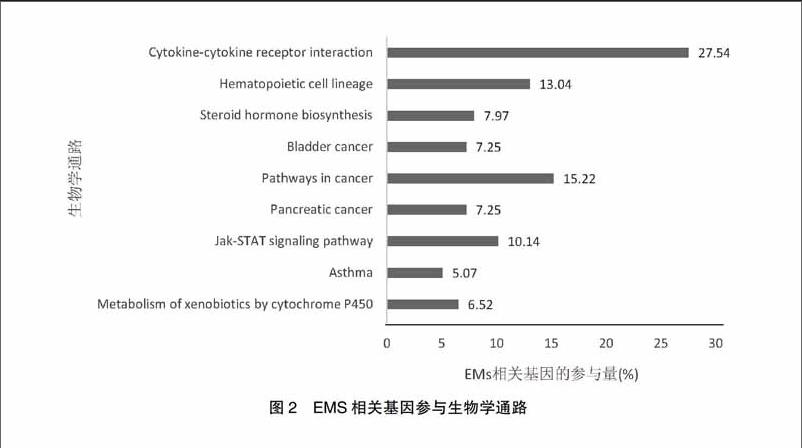
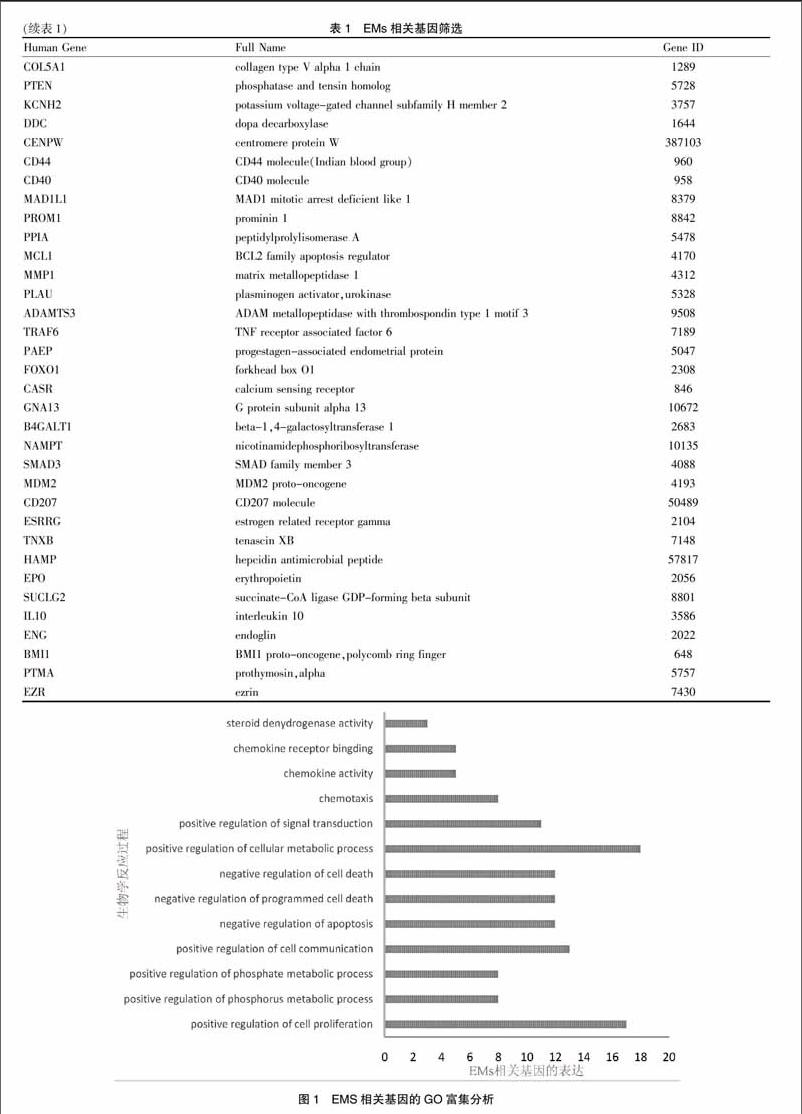

[摘要] 目的 应用生物信息学方法分析和预测子宫内膜异位症(EMs)患者相关基因的表达,为进一步在基因水平上揭示EMs的本质和发现药物治疗靶点、开发新型的治疗药物提供新的依据。 方法 在公共基因芯片数据库(GEO)中下载EMs相关基因数据,应用protparam、MotiScan、SignalP 4.0、NetPhos 2.0、TMHMM、GO、KEGG、STRING、BRB-Array Tools软件等生物信息学技术进行数据挖掘和生物信息学分析研究。 结果 共筛选出91个EMs相关基因以及54个microRNA。这些EMs基因主要与细胞增殖调控、细胞凋亡调控、趋化作用等过程有关。蛋白质网络互作预测得到了19个重要的EMs相关蛋白质靶标,联合靶基因的数据挖掘,发现了134个EMs相关的靶基因。 结论 用生物信息学方法分析基因芯片数据可以获取生物的内在信息,为子EMs的早期诊断提供了新的诊断标志物和思路。
[关键词] 基因芯片;子宫内膜异位症;生物信息学分析;靶基因;microRNA
[中图分类号] R711.710.46 [文献标识码] A [文章编号] 1673-7210(2017)04(a)-0012-05
[Abstract] Objective To analyze and predict the expression of endometriosis (EMs) genes by bioinformatics methods, in order to provide a new basis for revealing the essence of EMs at the gene level and developing new treatment drugs. Methods Download gene dates which were related to EMs in Gene Expression Omnibus(GEO), were mined and analyzed by a series of bioinformatics tools, such as protparam, MotiScan, SignalP 4.0, NetPhos 2.0, TMHMM, GO, KEGG, STRING, BRB-Array Tools. Results 91 EMs related genes and 54 microRNA had been found in this study. These genes mainly involved in the process of cell proliferation regulation, cell apoptosis regulation and chemotaxis. Protein interaction network predicted 19 important EMs-related protein targets. Combined with target gene data mining, 134 EMs-related target genes were found. Conclusion Using bioinformatics method to analyze gene microarray data can acquire inner information of organisms, and provide new diagnostic markers and diagnostic thoughts for the early diagnosis of EMs.
[Key words] Microarray; Endometriosis; Bioinformatics; Target gene; MicroRNA
子宮内膜异位症(endometriosis,EMs)是一种常见的慢性妇科疾病,在女性人群中,发病率为10%~15%[1],其临床表现为不孕、痛经、慢性盆腔痛、性交痛等[2],给年轻的女性带来巨大的痛苦和经济负担。EMs是在子宫腔外部出现经过增殖、出血和再生的子宫内膜样组织,其发病机制尚不清楚[3-4]。由于EMs病因复杂,目前主要治疗手段是手术和激素治疗,但该病的复发率高,达40%~50%[5]。因此,亟需新的有效的EMs治疗方法。
基因调控在EMs的发展中起重要作用[6]。研究EMs患者的基因特征是开发新疗法的有效步骤[7-8],基因芯片数据能够大规模地揭示基因遗传背景。根据基因芯片数据可以发现,免疫内分泌的功能障碍是影响子宫内膜异位的重要因素[9]。……