熊、布尔什维克、粗人、间谍
2017-05-02ByMeaganDay
By+Meagan+Day
Donald Trump is comfortable with Vladimir Putin—too comfortable, it seems, for American tastes.
On the one hand, objections to his admiration for the Russian leader are understandable. Putins authoritarian tendencies are well-documented, and its incumbent on any leader to at least act appalled by his hunger for annexation and repression of dissent.2
But when Americans react with horror to Trumps Putinfriendliness, theres something else going on, too. Americans are really, really freaked out3 by Russia. The Cold War is over, but Russophobia is still branded on the American psyche.4
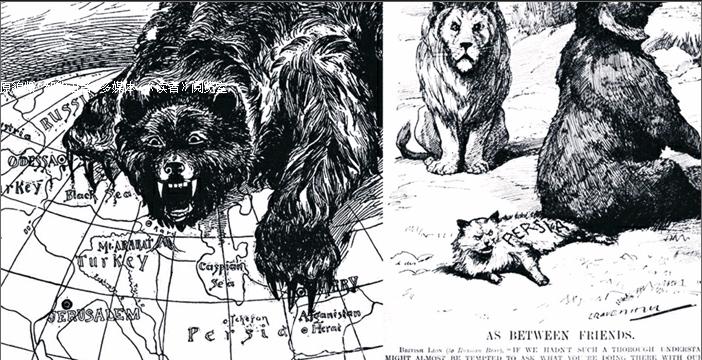
Even before the Cold War, Russia never really rubbed America the right way.5 The favored representation of Russia in 19th century political cartoons was the bear. Sometimes the bear was portrayed as a clumsy oaf who doesnt know his own strength; other times, the bear was a menacing predator.6 These two tropes7 continued to characterize American representations of Russia throughout the 20th century, and still do today.
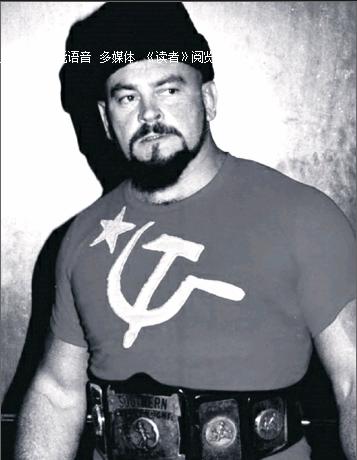
But when the Tsar was overthrown in 1917 and the Soviet Union was established a few years later, American fear of the Russians began to manifest in human form: namely, the Bolshevik agitator.8 Paranoia about Russian communists gripped the nation in what came to be known as the First Red Scare.9 In 1919 alone, anti-communist films included Bullin the Bullsheviki, Bolshevism on Trial and The Red Viper. That same year, U.S. Attorney General A. Mitchell Palmer ordered the arrest of more than 4,000 alleged10 communists, many of them Russian immigrants.
In the following years, a spate of films depicted in detail the horrors of Russian communism.11 Russians in the American imagination were either poor victims of Bolshevism abroad, or they were diabolical extremists intent on consolidating power and obliterating freedom and prosperity in America.12 The term “Russian reds”was as popular as “Islamic extremists” is now, and inspired a similar sense of revulsion13 and dread for many Americans.
As intense as the First Red Scare was, it was brief and small-scale compared to the Second Red Scare14, at the height of the Cold War. After World War II, the USSR had emerged as a formidable world power and adversary of the United States, strong enough to develop atomic weaponry,15 spy on Americans, and race to outer space.
Popular American culture throughout the mid-20th century portrayed Russians as sneaky16 and menacing. In the McCarthyist era—a time when even faint or alleged sympathies with communism could get you blacklisted for life, and convicted Russian spies were executed on American soil—Russia was synonymous with scheming, secrecy, espionage and intrigue.17 Cold War spy films produced a new round of Russian stock characters and stereotypes: the devious and clever double-agent, the unsmiling KGB officer, the sadistic mob boss, the lethal seductress, and so on.18
After the fall of the Soviet Union, the pendulum swung again from menacing to inept.19 As Russia began to emerge as a capitalist nation, it struggled to find its footing—and America laughed. Starting in the 1990s, a new group of Russian stereotypes emerged, including the heavy-drinking, hot-tempered Eastern cowboy (think the Russian astronaut in Armageddon bashing machinery with a wrench, exclaiming, “This is how we fix problems in the Russian space station!”), and the garish, tacky and eccentric Russian nouveau-riche.20 But Russian villainy never faded from view, even if it increasingly served as a punchline.21 In The New York Times, Steven Kurutz points out that action movie antagonists22 became more diverse in the final years of the Cold War, but seem to have actually become more uniformly Russian again in recent years.
The truth is, Americans are still uneasy with Russia; the stereotypes persist, and the mistrust lingers23. A century of mutual animosity24 still sticks in the average Americans imagination. And geopolitical alliances change quicker and with more facility than the hearts and minds of the populace.25 So, through various ups and downs in U.S.-Russia relations, American citizens have remained leery26 of Russians.
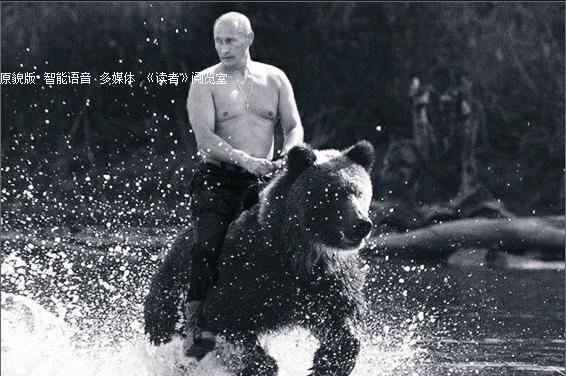
Trumps reverence for Putin is unbecoming, given Trumps own inclination toward authoritarianism—but thats not the only reason Americans are bristling.27 We have a special attachment to Russians, a special fixation28 on their shortcomings ranging from aggression to incompetence. For Americans today, Russia is still the bear.
唐纳德·特朗普和弗拉基米尔·普京处得颇好,也许,对于美国人来说,好得过了头。
一方面来说,美国人反感他对这位俄罗斯领导的赞赏是可以理解的。普京的独裁倾向显而易见,任何一位国家领导人至少应该对他的吞并野心和压迫异见者的行径表现出恐惧。
美国人对特朗普的“亲京”感到恐惧,还有其他一些原因。美国人真的特别害怕俄罗斯。尽管冷战早已结束,但美国人的头脑里早已烙下深深的“恐俄症”。
即便在冷战之前,俄罗斯也从不曾讨好过美国。19世纪时,最受欢迎的代表俄罗斯形象的政治漫画是一只熊。有时候这只熊被画成笨头笨脑的呆子,缺乏自知之明;有时候它又是险恶的猎食者。这两个形象代表了20世纪美国人对俄罗斯的印象,直至今天。
1917年俄国沙皇被推翻,几年后苏联成立,美国人对俄罗斯的恐惧开始有了具体的人形对象:鼓吹布尔什维克的人。对俄国共产主义者的猜疑笼罩整个美国,也就是所谓的“第一次红色恐慌”。仅在1919年,反共主题的电影就有《肃清布尔什维克》、《布尔什维克的审判》和《红蝰蛇》。同年,美国总检察长亚历山大·米切尔·帕尔默下令逮捕四千多名所谓的的共产主义者,大部分是俄罗斯移民。
接下来那几年涌现了一系列详细描述俄共产主义恐慌的电影。在美国人的想象中,俄罗斯人要不就是海外那些可怜的布尔什维克的受害者,要不就是可恶的极端主义分子,企图巩固强权以消灭美国的自由和繁荣。……