孕中期产前筛查和产前诊断在高龄孕妇中应用价值的探讨
2017-04-27靳春雷陈鹏龙翁梅芬单群达钱碧霞
靳春雷+陈鹏龙+翁梅芬+单群达+钱碧霞+蓝小芳+林小玲
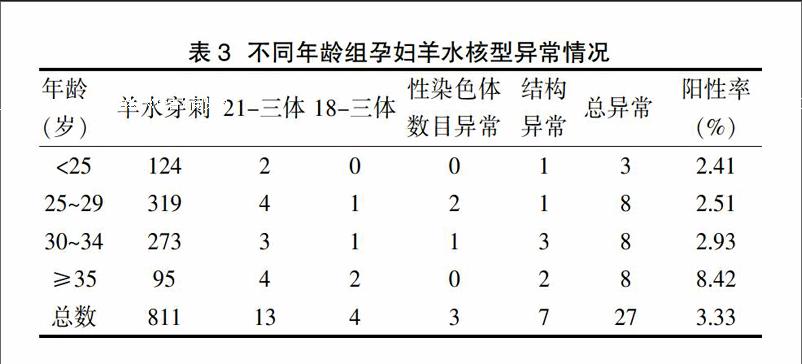
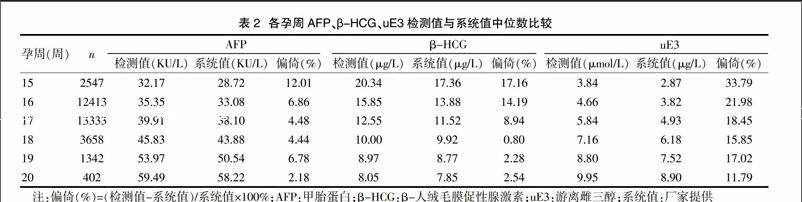
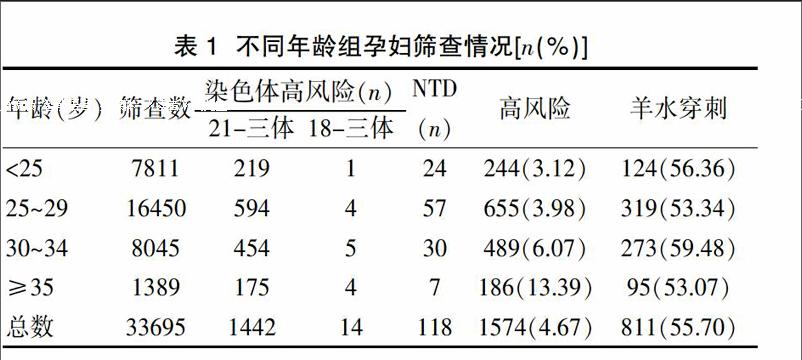
[摘要] 目的 對丽水地区孕中期产前筛查与诊断的结果进行分析,探讨产前筛查和产前诊断在高龄孕妇中的应用价值。方法 对2014年4月~2016 年4月在丽水市妇幼保健院产前诊断中心进行孕中期产前筛查的33 695例孕妇(孕15~20+6周)血清样本进行检测分析,用Lifecyle3.0软件计算胎儿患21-三体综合征(DS)、18-三体综合征(ES)、神经管畸形(NTD)的风险率,并对高风险孕妇进行遗传咨询和羊水的细胞遗传学分析。结果 33 695例孕妇中,筛选出高风险1574例,高风险率4.67%(DS 1442例、ES 14例、NTD 118例)。各个年龄组高风险率随着年龄的增高逐渐增加,差异有统计学意义(P<0.05)。低龄组(年龄<35岁)高风险率为4.29%,高龄组(年龄≥35岁)高风险率为13.39%,且两组差异有统计学意义(P<0.05)。1456例高风险中(21-三体综合征、18-三体综合征高风险)811例接受了羊水穿刺,穿刺率55.70%。确诊染色体异常27例,总阳性率3.33%。高龄组核型异常率(8.42%)明显高于低龄组(2.65%),差异有统计学意义(P<0.05)。结论 年龄对唐氏筛查高风险阳性率及核型异常发生率有很大的影响,随着年龄的增高,高风险阳性率及核型异常逐渐增高。对于高龄(年龄≥35岁)孕妇可以进行产前筛查,应加强高龄高风险的诊断率。
[关键词] 孕中期;产前筛查;产前诊断;孕妇;高龄
[中图分类号] R714.5 [文献标识码] B [文章编号] 1673-9701(2017)07-0049-04
[Abstract] Objective To analyze the results of prenatal screening and diagnosis at the second trimester in Lishui area, and to explore the application value of prenatal screening and prenatal diagnosis in elderly pregnant women. Methods The serum samples of 33 695 pregnant women(15-20 weeks+6) who were given prenatal screening at the second trimester in the prenatal diagnosis center of Lishui Women and Children's Hospital from April 2014 to April 2016 were tested and analyzed. Lifecycle 3.0 software was used to calculate the risk rate of 21-trisomy syndrome (DS), 18-trisomy syndrome(ES), and neural tube defects(NTD), and genetic counseling and cytogenetic analysis of amniotic fluid were performed for high-risk pregnant women. Results Among the 33 695 pregnant women, 1 574 cases were screened as high risk, and the high-risk rate was 4.67% (1442 cases of DS, 14 cases of ES, and 118 cases of NTD). The high-risk rate in each age group was increased gradually with the increase of age, and the difference was statistically significant (P<0.05). The high-risk rate in the lower-age group (age <35) was 4.29%, and the high-risk rate in the higher-age group (age≥35) was 13.39%. The difference between the two groups was statistically significant (P<0.05). Among the 1456 high-risk cases (high risk of 21-trisomy syndrome, 18-trisomy syndrome), 811 cases were given amniocentesis, with the puncture rate of 55.70%. 27 cases were diagnosed of chromosomal abnormalities, with the total positive rate of 3.33%. The karyotype abnormality rate in the higher-age group (8.42%) was significantly higher than that in the lower-age group (2.65%), and the difference was statistically significant(P<0.05). Conclusion Age has a great influence on the high-risk positive rate and the incidence rate of karyotype abnormality in down's screening. With the increase of age, high-risk positive rate and karyotype abnormalities gradually increase. For elderly pregnant women (age≥35), they can be given prenatal screening, and the diagnosis rate of higher age and higher risk should be strengthened.
[Key words] Second trimester; Prenatal screening; Prenatal diagnosis; Pregnant women; Advanced age
产前筛查是通过测定孕期的相关血清标志物对某些先天性异常胎儿风险程度的筛查,目的是预防和减少出生缺陷。目前对染色体异常的筛查主要是唐氏综合征和爱德华综合征。唐氏综合征(DS)又称21-三体综合征,是染色体疾病中最常见的一种,发病率为1/800~1/600。爱德华综合征(ES)又称18-三体综合征,发生率为1/8000~1/3500[1];分别由于患者21号、18号染色体比正常人多一条。孕妇年龄越大,发病率越高,其原因可能是卵巢细胞的老化,导致减数分裂染色体着丝粒不分离[2,3]。目前对于高龄孕妇一般建议直接进行产前诊断,但羊膜腔穿刺有流产的风险,很多高龄孕妇不愿接受。同时,随着国家“二胎”政策的放开,高龄孕妇不断增多,有限的医疗资源并不能满足其需求。……