基于RC简化传热模型的混凝土辐射顶板传热及供冷能力研究
2017-04-14李念平潘楚阳黄小君顾昭阳苏林常
李念平+潘楚阳+黄小君+顾昭阳+苏林+常丽娜
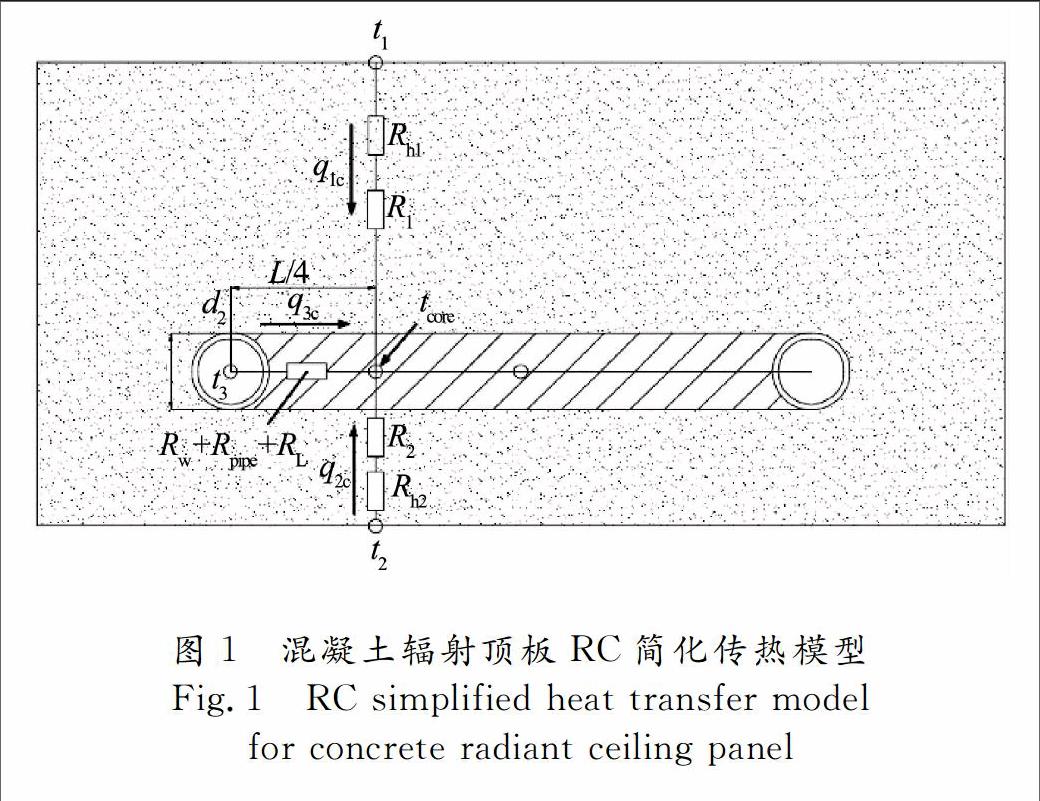
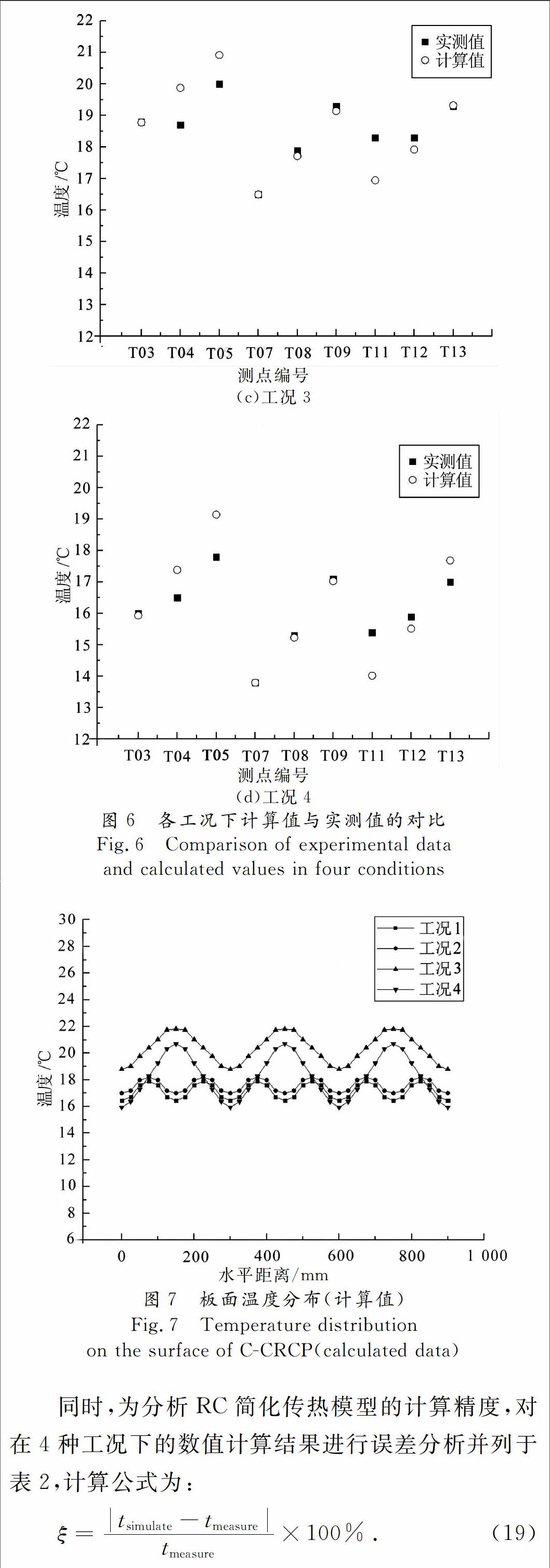
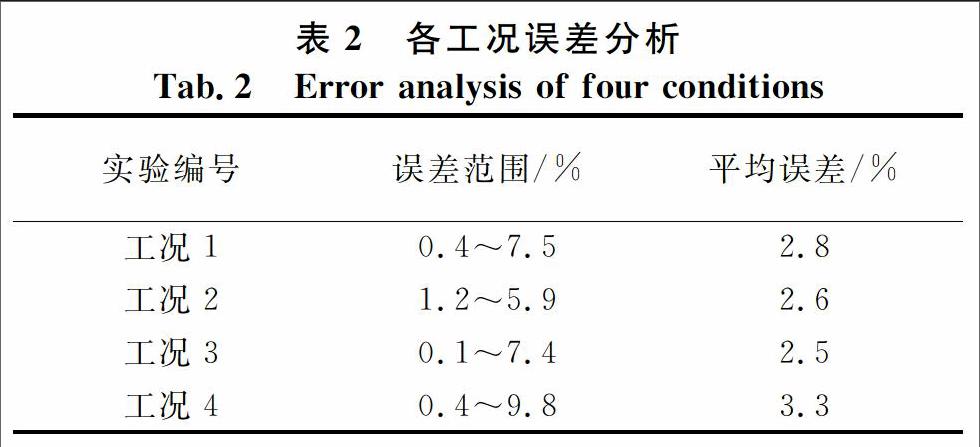
摘 要:为研究混凝土冷辐射板的传热情况并对其供冷能力进行分析,采用RC简化传热模型建立混凝土辐射板二维稳态的传热模型,对混凝土辐射板内部传热情况进行模拟,计算得到混凝土内部及表面温度场.根据计算结果分析不同供水温度、埋管间距情况下,冷顶板表面的温度分布情况及供冷能力.经过实验验证,RC简化传热模型对板内温度和供冷能力的计算误差小于6%;混凝土冷辐射板供冷能力受供水水温、埋管间距及流量的直接影响,当供水温度为11~14 ℃,总流量为0.26~0.33 m3/h,室内空气温度为25~26 ℃时,混凝土辐射板平均供冷量为40~50 W/m2.
关键词:混凝土辐射冷顶板;RC简化传热模型;稳态传热;供冷能力;实验测试
中图分类号:TU831.3 文献标志码:A
Abstract:This paper aims to study the characteristics of heat transfer for concrete radiant ceiling and its cooling capacity. A two-dimensional stead-state heat transfer model on the basis of simplified RC (Resistance and Capacity) Method was adopted to simulate the inner heat-transfer condition of concrete ceiling as well as the temperature fields. The calculated results showed that the cooling capacity of concrete radiant ceiling was affected by the temperature of supply water, distance of tubes and water flow rate. When the supply water temperature, flow rate and indoor air temperature ranged from 11~14 ℃, 0.26 ~0.33 m3/h and 25~26 ℃, respectively, the cooling capacity varied from 40 to 50 W/m2. The simulation models were also validated by experimental results, and the calculation error was less than 6%.
Key words:concrete radiant cooling panel; simplified RC model; steady-state heat transfer; cooling capacity;experimental tests
顶板辐射供冷系统因其良好的热舒适性和节能性而受到人们越来越多的关注.混凝土辐射供冷系统作为顶板供冷系统的一种,将流体管道嵌入建筑体楼板内部,在建筑构件内部形成冷量的存储与传递,通过混凝土楼板表面与人体、家具及室内壁面的辐射换热,以及与空气的对流换热,实现对室内热环境的控制[1-2].顶板辐射供冷系统采用的是以辐射换热为主,对流换热为辅[3]的换热形式.室内大部分显热负荷由顶板处理,风系统仅有独立新风系统,因此风机能耗大大降低[4];冷表面通过辐射方式与人体直接换热,房间内没有明显的吹风感[5],同时由于天花板供冷所造成的……