基于情感词典方法的情感倾向性分析
2017-03-21杨奎段琼瑾
杨奎+段琼瑾

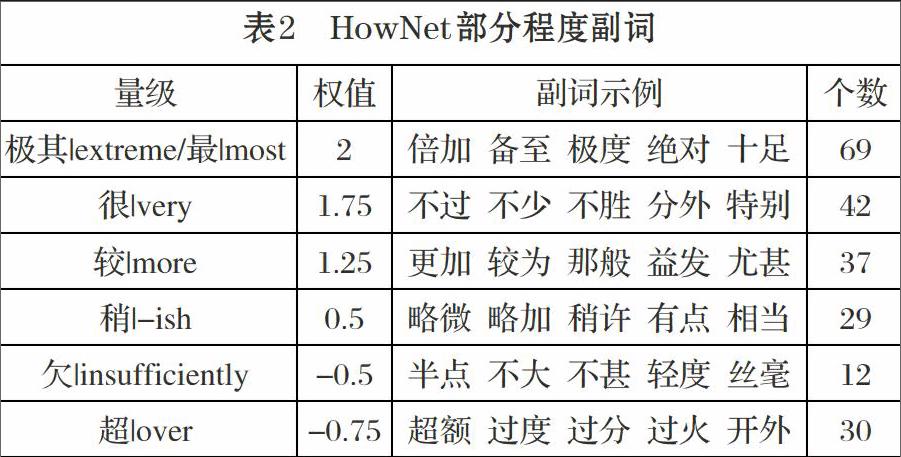
摘 要: 针对网络舆情中观点的获取问题,提出了基于情感词典的情感倾向性分析方法。介绍了情感词的基本概念,给出了基于HowNet概念词典通过计算词汇相似度构建情感字典的方法,探讨了不同类型情感词对文本情感的影响程度并设计了情感得分策略。根据得分挖掘人们对舆情的褒贬态度,从而准确的分析文本的情感走向。
关键词: 舆情分析; 情感词典; 情感倾向性分析; 词汇相似度
中图分类号:TP302.7 文献标志码:A 文章编号:1006-8228(2017)03-10-03
Abstract: Aiming at the problem of acquisition of viewpoints in the network public opinion, this paper puts forward the method of emotional tendency analysis based on emotional dictionary. This paper introduces the basic concept of emotional words, gives the method of constructing emotional dictionary by calculating lexical similarity based on HowNet concept dictionary, and discusses the influence degree of different types of emotional words on text emotion and designs emotional score strategy. According to the scores the people's attitude of praise or censure to the public opinion is mined, so as to accurately analyze the emotional direction of the text.
Key words: public opinion analysis; emotional dictionary; emotional tendencies analysis; lexical similarity
0 引言
隨着互联网的迅速发展,网络成为了一个巨大的民意聚集地。微博、新闻、论坛等,都成为人们发表言论和观点的场所。因为网络上言论自由度很高,人们对待事物各持己见,想要得到一个正确的观点,便需要对大量的信息进行分析。舆情信息量不断增大,要了解当前社会的舆情走向变得更加困难,网络舆情分析系统便应运而生。
中文语义倾向性分析的研究方法可以分为两类:基于规则和基于统计。基于规则是依据知识库和规则进行文本倾向性分析,比如简单的基于情感词典,统计文本中的正、负面情感词汇的词频;基于统计是将倾向性分析看成是文本对正、负情感倾向性的分类问题,可以使用朴素贝叶斯、SVM等统计学习的方法进行倾向性分析。
本文采用基于情感词典[1]的方法,对舆情信息进行观点挖掘,获取人们对事物的褒贬态度。
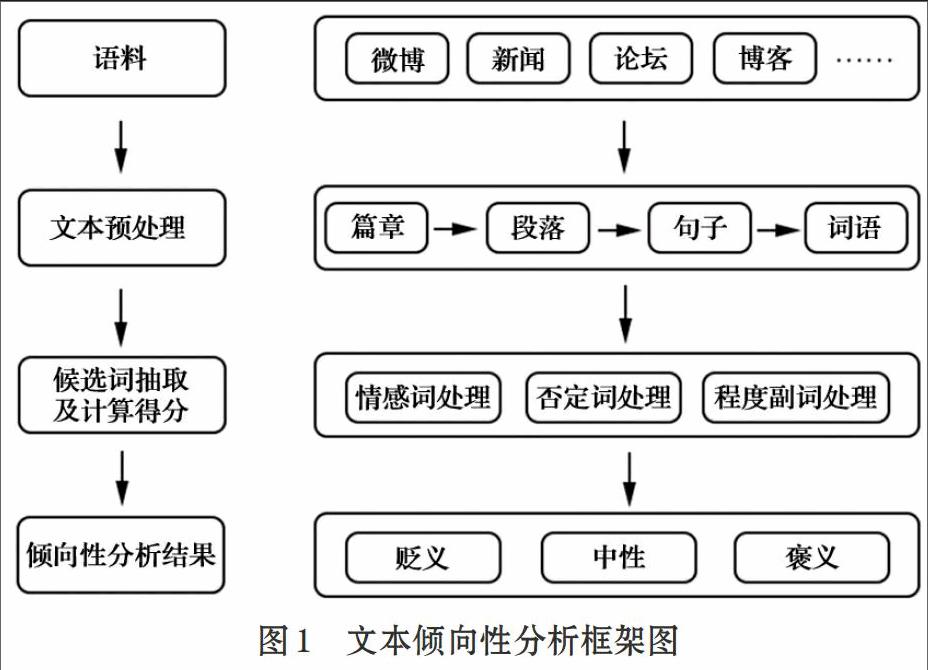
1 基于情感词典的文本倾向性分析框架
情感分析是指挖掘文本表达的观点,识别主体对某客体的评价是褒还是贬,根据褒贬态度进行倾向性研究。……