我院ICU病房病原菌临床分布及耐药分析
2017-03-18杨萌萌赵妍刘运喜周飞虎
杨萌萌++赵妍++刘运喜++周飞虎

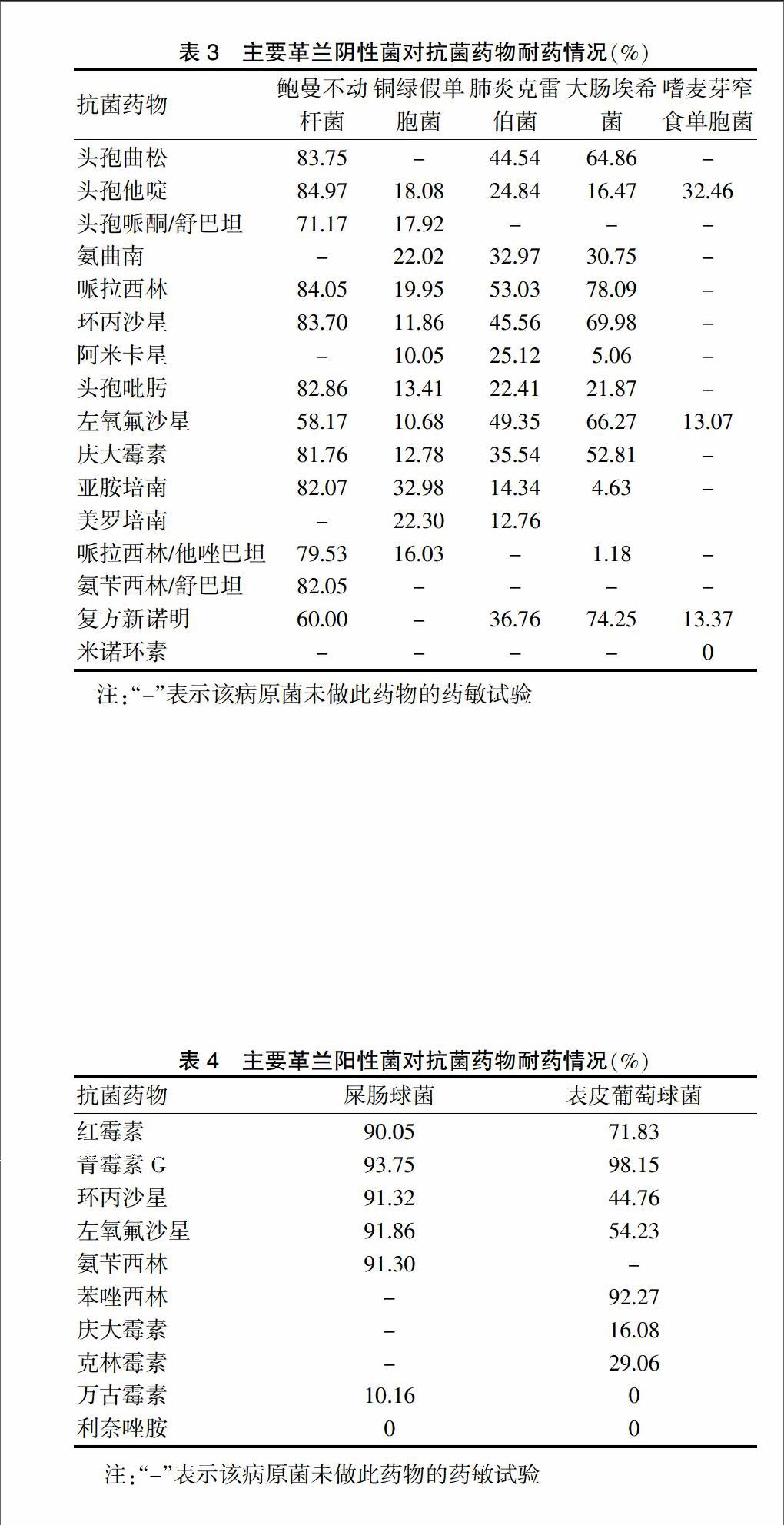
[摘要] 目的 分析解放軍总医院(以下简称“我院”)ICU病房病原菌临床分布及耐药情况,为合理选择抗生素提供临床依据。 方法 回顾性研究2014年1~12月我院ICU病房患者的病原菌分布,分析其临床分布及耐药情况。 结果 共分离出病原菌1296株,其中革兰阴性菌823株,占63.5%,革兰阳性菌327株,真菌146株,分别占25.2%和11.3%。最常见的病原菌为鲍曼不动杆菌(19.1%)、铜绿假单胞菌(10.4%)、肺炎克雷伯菌(9.1%)、凝固酶阴性的葡萄球菌(8.8%)和大肠埃希菌(7%)。标本主要来源于痰液(45%),其次为尿液(20%)、静脉血(11%)、组织(9%)、伤口分泌物和胸腹水等。鲍曼不动杆菌对12种所测抗生素的耐药率达58.17%~84.97%,耐药率最低的为左氧氟沙星,最高的为头孢他啶。铜绿假单胞菌对所测抗生素的耐药率均<40%,其中对亚胺培南的耐药率最高,为32.98%。肺炎克雷伯菌总体耐药率较高,对哌拉西林的耐药率最高为53.03%,虽然对亚胺培南和美罗培南的敏感性最好,其耐药率也分别达到了14.34%和12.76%。表皮葡萄球菌是凝固酶阴性的葡萄球菌的主要类型,尚未发现对万古霉素和利奈唑胺耐药的菌株。上述两种碳青霉烯类抗生素对大肠埃希菌具有较好的抗菌活性,耐药率分别为4.63%和1.18%。真菌以白色念珠菌最为常见,对5种所测抗真菌药物的耐药率均<10%。 结论 我院ICU病房分离的病原菌主要为革兰阴性菌,且耐药现象严重,应结合细菌耐药性监测结果,加强抗菌药物滥用的管理。
[关键词] ICU病房;病原菌分布;抗生素;耐药率
[中图分类号] R978.1 [文献标识码] A [文章编号] 1673-7210(2017)01(b)-0114-05
Analysis of the clinical distribution and drug resistance of pathogenic bacteria isolated from intensive care unit
YANG Mengmeng ZHAO Yan LIU Yunxi ZHOU Feihu ZHANG Yu KANG Hongjun▲
Department of Critical Care Medicine, PLA General Hospital, Beijing 100853, China
[Abstract] Objective To analyze the clinical distribution and drug resistance of pathogenic bacteria isolated from intensive care unit in PLA General Hospital and provide evidence for choosing antibiotics reasonably. Methods The clinical distribution and drug-resistance of pathogenic bacteria in patients of intensive care unit from January to December 2014 was studied retrospectively. Results A total of 1296 strains were isolated, including 823 strains of Gram-negtive bacteria, accounting for 63.5% of all the pathogens, there were 327 strains of Gram-positive bacteria and 146 strains of fungi, accounting for 25.2% and 11.3% respectively. The most common pathogenic bacteria were Acinetobacter baumannii (19.1%), Pseudomonas aeruginosa (10.4%), Klebsiella pneumoniae (9.1%), Coagulase-negative Staphylococcus (8.8%) and Escherichia coli (7%). The specimens mainly came from sputum (45%), followed by urine (20%), venous blood (11%), tissues (9%), wound secretion and abdominal and pleural fluid etc.. Drug resistance rate of Acinetobacter baumannii to 12 kinds of antibiotics were from 58.17% to 84.97%, the lowest was Levofloxacin and the highest was Ceftazidime. Pseudomonas aeruginosa to the prevalence of antibiotic resistance were less than 40%, among them, meropemem showed the highest drug resistance of 32.98%. In general, drug resistance rate of Klebsiella pneumoniae at a high level, Piperacillin, the highest resistent antibiotic, whose drug resistance rate was 53.03%, although it had the best sensitivity to meropemem and impenem, the drug resistance rate also reached to 14.34% and 12.76% respectively. Staphylococcus epidermidis was the main type of Coagulase-negative Staphylococcus, there have not found strains which resistent to Vancomycin and Linezolid yet. While two kinds of carbapenem antibiotics, meropemem and impenem, had a better antibacterial activity to Escherichia coli, the drug resistance rate were 4.63% and 1.18%. Fungi were given priority to Candida albicans and the resistant rate to five anti-fungal agents were all less than 10%. Conclusion Gram-negtive bacteria is the main pathogenic bacteria isolated from intensive care unit in our hospital but drug resistance phenomenon is serious, it is essential for strengthening the mangement of antimicrobial abuse combined with the monitoring results of antibiotic resistance.
[Key words] Intensive care unit; Distribution of pathogenic bacteria; Antibiotics; Drug resistance rate
ICU是各种危重患者集中的科室,感染发生率高。在美国,每年有超过500万例患者需要在ICU进行治疗,虽然ICU病房的床位数目不及整个医院床位的10%,但超过20%的院内感染发生在ICU[1]。随着抗生素的广泛使用,病原菌耐药现象日趋严重,尤其是在ICU病房,已经成为耐药菌产生、传播和蔓延的“工厂”[2],这不仅提高了患者的病死率,同时也给社会带来巨大的经济负担,因此,抗生素耐药管理已经成为当代医学面临的极大挑战[3]。了解ICU病房病原菌的分布和耐药情况,从而指导临床用药,对降低病原菌耐药率及ICU患者的病死率具有重要作用。本研究对2014年解放军总医院(以下简称“我院”)ICU病房病原菌分布及耐药情况进行了如下回顾性分析。……