某车型后端低速碰撞的安全性能分析及优化
2017-01-11崔淑娟陈可明史爱民符志李气辉
崔淑娟+陈可明+史爱民+符志+李气辉
摘 要:根据GB 17354—1998法规要求对某车型进行了低速后碰撞的仿真分析,结果不满足法规要求。针对分析结果提出了一种改进方案,经过分析,采用新方案的车型满足法规性能要求。但基于经验的设计方案并不能代表最优解,以影响后端碰撞性能的关键组件材料厚度为设计变量,质量为目标函数,建立了二阶响应面近似模型,并选用自适应响应面法(Adaptive Response Surface Method,ARSM)进行优化,优化后质量减轻了22.7%,并且满足法规要求。
关键词:低速碰撞;防撞横梁;自适应响应面法;轻量化
中图分类号:U461.91 文献标文献标识码:A文献标DOI:10.3969/j.issn.2095-1469.2016.06.09
Abstract:A FE model of a car under low-speed rear end impacts was established according to the regulation of GB17354—1998, and it was found that the protective performance of the rear bumper did not meet the requirements. An improved rear bumper design based on experience was proposed which satisfies the requirements of the regulation; however, it may not be the best solution. To further optimize the improved structure, an adaptive response surface method was adopted in which the material thicknesses of key components were designated as design variables, the weight of the components as an objective function and the second order response surface approximation model was established. The result indicates that the optimized solution meets the requirements of the regulation and the weight of the bumper system is reduced by 22.7%.
Keywords:low-speed crash; bumper beam; adaptive response surface method; light weight
在城市中,低速碰撞是发生频率最高的交通事故之一。低速碰撞是指汽车速度低于15 km/h的碰撞,由于低速碰撞一般不会造成人员伤亡,所以没有引起人们足够的重视。但针对低速碰撞的研究,有利于降低事故发生后汽车的维修费用和理赔费用,对延长车辆的使用寿命也有重要意义。
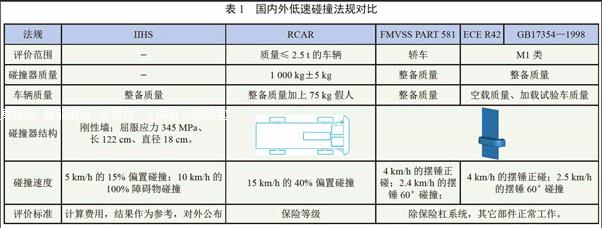
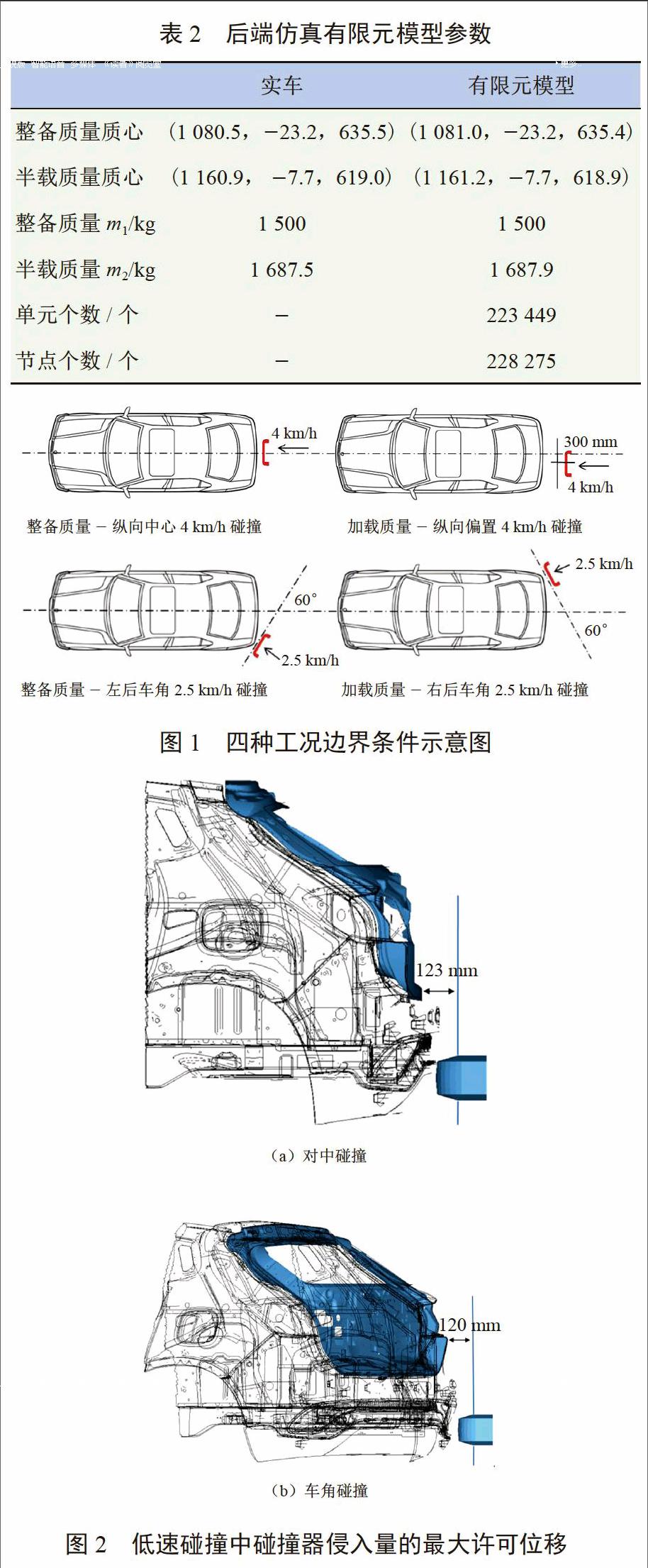
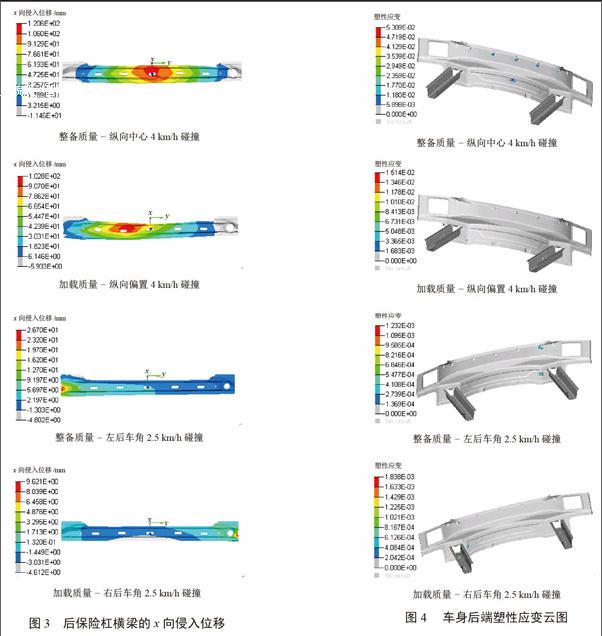
目前国内针对低速碰撞安全性能的研究,侧重于其前端结构的安全性能,而对后端低速碰撞安全性能研究得较少。本文研究的主要内容是:(1)简单介绍国内外有关低速碰撞的法规,并对它们的试验要求进行对比分析。(2)根据GB 17354—1998《汽车前后端防护装置》[1]的要求对某车型进行低速后碰撞的仿真分析。(3)针对仿真结果,对车体后端结构提出优化设计方案。(4)为了降低优化方案的成本,运用Altair Hyperworks中的ARSM,基于目标值和约束响应,以影响后端保护性能的关键组件的材料厚度为设计变量,计算出优化解并进行验算,满足法规要求。……