基于顺序向前选择算法的制冷系统故障诊断分析
2016-11-05胡永攀李瑛姚熠凯王彩霞
胡永攀+李瑛+姚熠凯+王彩霞
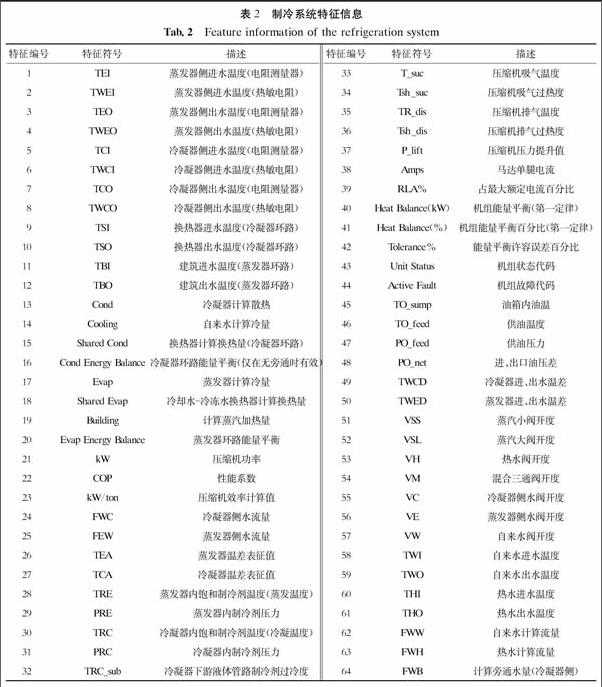
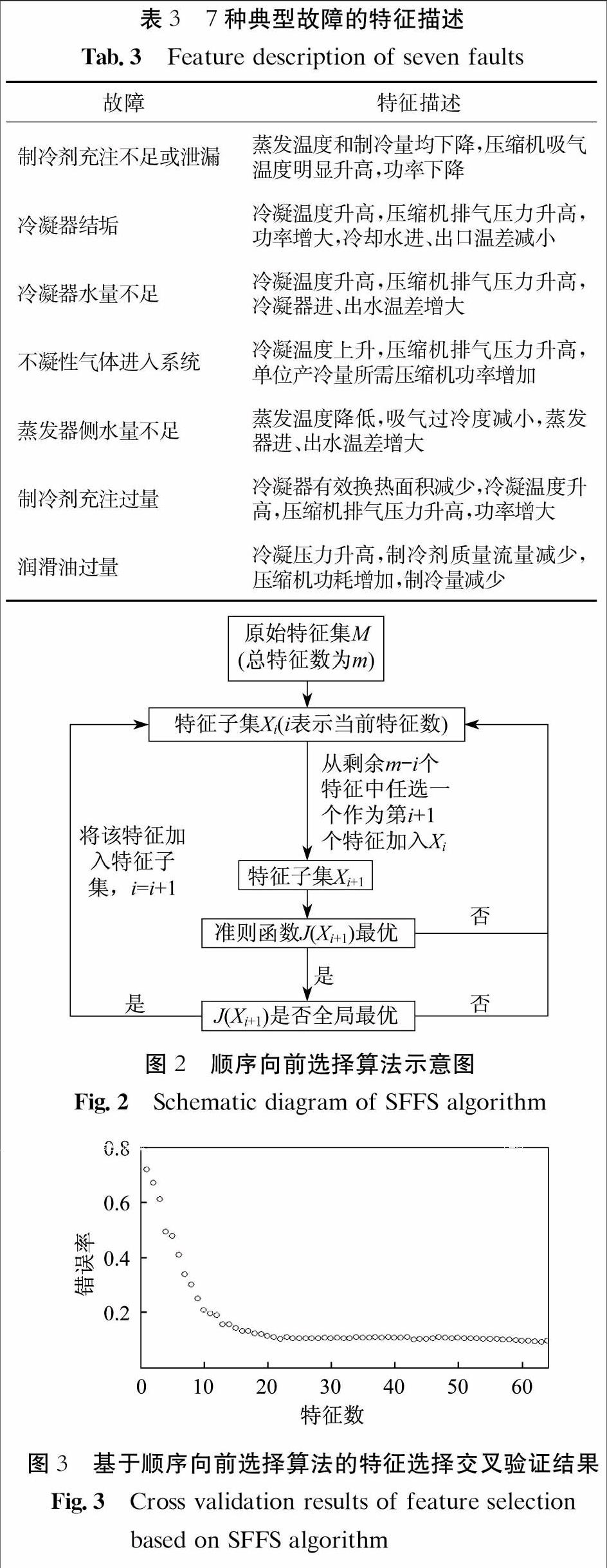
摘要:以一台制冷量为90冷t(约316 kW)、制冷剂为R134a的离心式制冷机组为实验对象,从理论上分析该制冷系统的7种典型故障,分析故障征兆与故障间的理论关系,运用基于顺序向前选择(SFFS)算法的封装模型进行特征选择,降低乃至消除特征间的相关度,去除信息冗余,获得不同的能较好表征故障的特征子集.结果显示:运用SFFS算法时选择了22个特征,诊断正确率为89.63%,与原特征集的诊断正确率90.36%基本相当,极大地减少了原特征集的特征数,从64维降为22维;在保证故障检测与诊断正确率的前提下,减少了诊断所需传感器种类和数量,节约了初始投入成本.
关键词:制冷系统; 顺序向前选择算法; 故障诊断
中图分类号: TH 311 文献标志码: A
Abstract:An refrigeration system with a 90 t centrifugal chiller using R134a as refrigerant and its seven typical faults were analyzed theoretically.The relationship between the symptoms and faults was attained.The encapsulation model based on sequential forward order feature selection(SFFS) algorithm was adopted for feature selection,which could find better feature subset for reducing or even removing the feature correlation and eliminating the redundancy.The results showed that 22 features were selected by SFFS algorithm and diagnosis accuracy of 89.63% was achieved,which was close to the diagnosis accuracy of 90.36% for original feature set.But it could significantly eliminate the features of original feature set from 64 to 22.Due to the guarantee of the accuracy of fault detection and diagnosis,the type and quantity of sensor could be reduced.The first investment cost could be saved.
Keywords:refrigeration system; sequential forward order feature selection algorithm; fault diagnosis
制冷系统一旦发生故障,会造成环境的舒适性或所要求的冷冻温度得不到保证,严重的将导致系统设备损坏.其次,当制冷系统运行在故障状态时,系统能耗往往增大,造成能源浪费.因此,对制冷系统的故障机理进行研究,建立有效、准确的故障诊断模式对实现制冷系统的实时在线监控、故障先兆预测和优化运行十分重要[1].
近年来,制冷系统故障诊断的方法随着人工智能、计算机、模式识别、数据通讯、信号分析处理等技术的发展而不断完善和更新[2].常用的诊断方法有经典专家系统[3]、模糊理论[4]、神经网络[5]等.直接运用上述方法对制冷系统进行故障检测与诊断,需要测量的过程变量较多, 这意味着需要……