高职院校大学生上课打瞌睡与主观幸福感关系研究
2016-10-19王木生刘雪峰谭冰罗志红方丽霖
王木生 刘雪峰 谭冰 罗志红 方丽霖
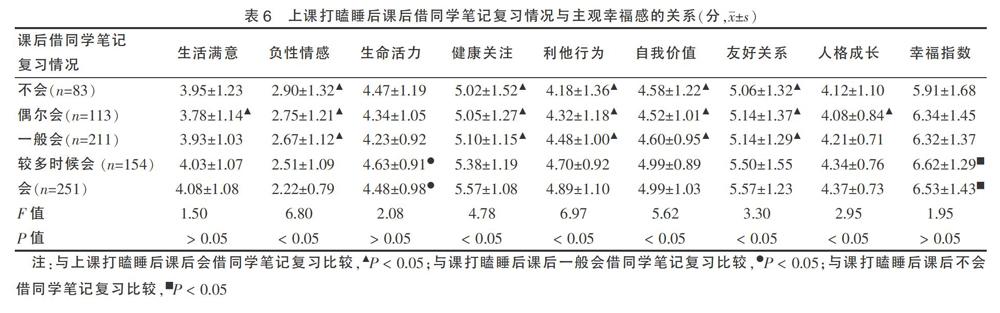
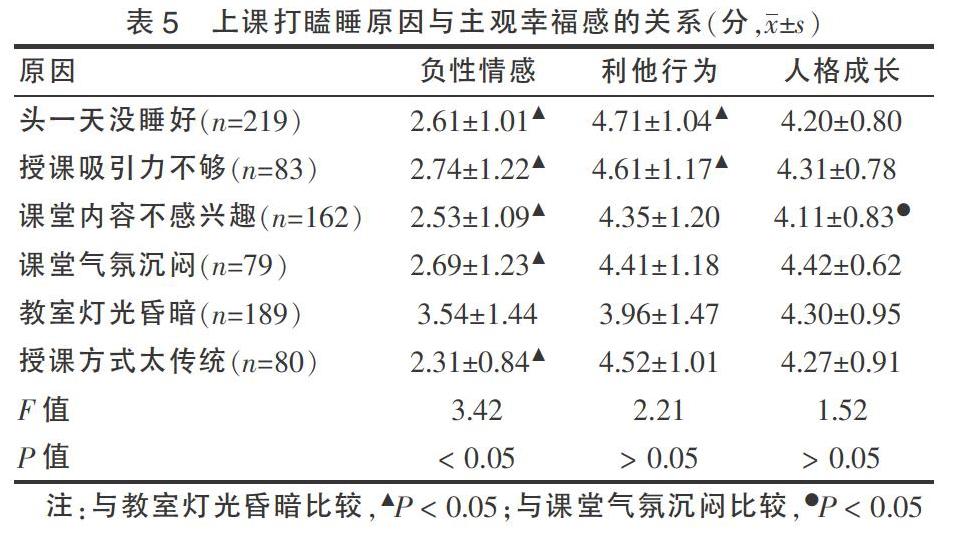
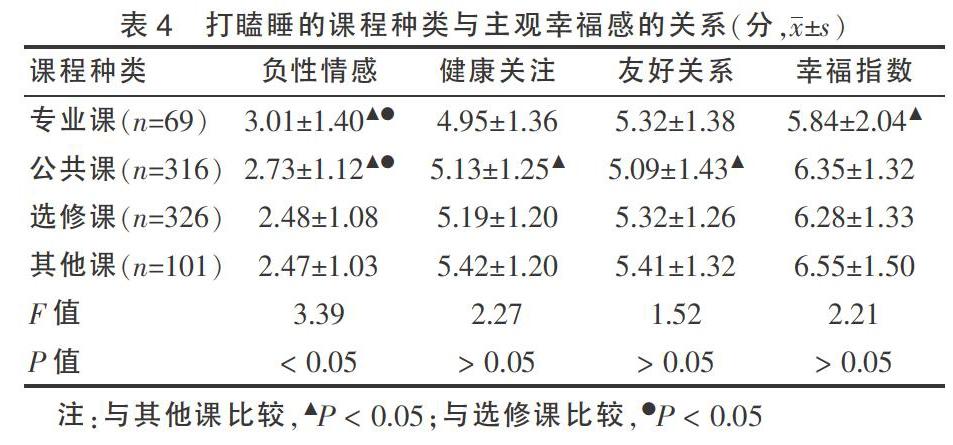
[摘要] 目的 探討高职大学生上课打瞌睡与主观幸福感的关系,为心理干预提供理论依据。 方法 本研究采用大学生上课打瞌睡情况调查问卷及综合幸福问卷,对江西省内4所高职院校812名大学生进行调查,对其中的1所学校2个年级、3个专业上课经常打瞌睡的6名同学进行深度访谈。 结果 方差分析显示:①不同上课打瞌睡的频率在负性情感维度的得分差异有高度统计学意义(F=11.19,P < 0.01),在健康关注及友好关系维度的得分差异均有统计学意义(F=6.71、3.17,P < 0.05);②上午打瞌睡发生时间的不同在负性情感维度的得分差异有统计学意义(F=5.58,P < 0.05),下午打瞌睡发生时间的不同在负性情感、健康关注、友好关系维度的得分差异均有高度统计学意义(F=23.39、9.64、9.66,P < 0.01),在生命活力、利他行为维度的得分差异均有统计学意义(F=3.31、6.41,P < 0.05);③打瞌睡课程种类的不同在负性情感维度的得分差异有统计学意义(F=3.39,P < 0.05);④上课打瞌睡原因不同在负性情感维度的得分差异有统计学意义(F =3.42, P < 0.05);⑤上课打瞌睡后课后借同学笔记复习情况不同在负性情感、健康关注、利他行为、自我价值、友好关系及人格成长维度的得分差异均有统计学意义(F=6.80、4.78、6.97、5.60、3.30、2.95,P < 0.05)。 结论 高职大学生上课打瞌睡的频率、原因、打瞌睡发生的时间、课程种类及打瞌睡后课后借同学笔记复习情况受消极情绪、不关注健康、缺乏良好的生活与行为方式等因素影响。
[关键词] 打瞌睡;负性情感;主观幸福感
[中图分类号] R64 [文献标识码] A [文章编号] 1673-7210(2016)03(c)-0092-05
[Abstract] Objective To explore the relationship between dozing off in class and subjective well being of vocational college students, in order to provide theoretical basis for psychological intervention. Methods College class dozing questionnaire and multiple happiness questionnaire were used in the study. 812 college students in 4 vocational colleges of Jiangxi Province were investigated and 6 classmates often had doze off in 3 professional class of 2 grades in 1 school were in-depth interviews. Results Variance analysis results showed that: ①There was highly significant difference of negative emotion dimension scores in different frequency of dozing off in class (F=11.19, P < 0.01); while scores of health concern and friendly relationship had statistically significant differences (F=6.71, 3.17, P < 0.05). ②There was significant difference of negative emotion dimension scores in different time of dozing off in the morning (F=5.58, P < 0.05); there were highly statistically significant differences of scores of negative emotion, health conscious, and friendly relationship in different time of dozing off in the afternoon (F=23.39, 9.64, 9.66, P < 0.01), while scores of vitality of life, altruistic behavior had statistically significant differences (F=3.31, 6.41, P < 0.05). ③There was significant difference of negative emotion dimension scores in different types of dozing off classes (F=3.39, P < 0.05). ④There was significant difference of negative emotion dimension scores in different reasons of dozing off in class (F=3.42, P < 0.05). ⑤There were significant differences of scores of negative emotion, health conscious, altruistic behavior, self-worth, friendly relationship and personality development in different review conditions of borrowing notes from classmates after class (F=6.80, 4.78, 6.97, 5.60, 3.30, 2.95, P < 0.05). Conclusion Frequency, reasons, time in the morning or afternoon, class types and review conditions of borrowing notes from classmates after class of dozing off in vocational college students are related with negative emotions, not paying attention to health and lack of good life and behavior manners.
[Key words] Doze off; Negative emotion; Subjective well-being
高职院校教师面临的一种普遍现象就是学生上课打瞌睡,有的时候该现象非常严重,影响了高职的教育教学质量。国内有关学生上课打瞌睡研究报道较少,且仅限于大学生[1],专门针对高职学生上课打瞌睡的研究较罕见。目前,大学生主观幸福感的研究较多[2-14],将学生上课打瞌睡与主观幸福感相结合的研究则较少。本文探讨了高职大学生上课打瞌睡与主观幸福感间的关联,现报道如下:
1 对象与方法
1.1 研究对象
2014年3月1日~2014年5月1日以班级为单位,运用整群随机取样法,选择江西省内4所高职院校2个年级、4个专业、12个班的812名大学生进行问卷调查;选择1所学校2个年级、3个专业上课经常打瞌睡的6名同学进行深度访谈。共发出问卷850份,回收812份,回收率为95.5%。
1.2 方法
1.2.1 调查问卷 采用自编大学生上课打瞌睡情况调查问卷及苗元江[15]编制的综合幸福问卷(multiple happiness questionnaire,MHQ)进行调查。自编大学生上课打瞌睡情况调查问卷包括上课打瞌睡情况调查、个人基本情况两部分,共计37个问题。……